
Best Paint for Porcelain: 3 Options by Project

For most porcelain craft projects, LM-Kreativ Vivid Vision Porcelain Paint is the best fit because its 11-color set is designed for porcelain and cures with a specified oven-bake process. Choose DWIL White Porcelain Touch-Up Paint instead for small white chips or scratches on fixtures; FolkArt Gloss Acrylic Enamel Set suits broader glass and ceramic craft work, not a focused porcelain repair.
We earn a commission if you buy through links on this page. As an Amazon Associate I earn from qualifying purchases. Products are compared on manufacturer specifications, not hands-on testing.
- Best overall: LM-Kreativ Vivid Vision Porcelain Paint – The 11 colors and stated 320°F, 90-minute bake process suit decorative porcelain projects.
- Best for white touch-ups: DWIL White Porcelain Touch-Up Paint – The 1.5-ounce brush applicator is made for small chips, scratches and spots on porcelain fixtures.
- Best for glass crafts: FolkArt Gloss Acrylic Enamel Set – Sixteen 2-ounce colors work on glass and ceramic projects and cure by oven baking.
| Product | Best for | Colors | Package size | Cure method | Shop |
|---|---|---|---|---|---|
| LM-Kreativ Vivid Vision Porcelain Paint | Colorful dish designs | 11 | 1.52 fl oz each | 320°F for 90 minutes | Check Price on Amazon |
| DWIL White Porcelain Touch-Up Paint | Small white repairs | White | 1.5 fl oz | Quick-drying; no cure time given | Check Price on Amazon |
| FolkArt Gloss Acrylic Enamel Set | Glass and ceramic crafts | 16 | 2 fl oz each | Oven-bake; temperature not given | Check Price on Amazon |
Porcelain Paint Options
Match the paint to the object and finish: small fixture repairs call for a different formula than decorative designs.
LM-Kreativ Vivid Vision Porcelain Paint

For colorful porcelain designs, this set stands apart with 11 shades and a defined oven-bake cure. Each water-based bottle holds 1.52 fl oz, and the creamy formula is intended for smooth porcelain, ceramic and glass. The maker says the cured finish is waterproof, heat resistant and dishwasher safe. It suits mugs, plates and other decorative pieces when the full bake-and-cool process is practical. The main limitation is the oven requirement: it is not the convenient choice for a tiny white fixture chip or an item that cannot be oven-cured.
Bottom line: Choose this for multicolor porcelain designs on oven-safe items.
DWIL White Porcelain Touch-Up Paint

For a white scratch, spot or small chip on a porcelain fixture, this is the only option here presented as a dedicated touch-up product with a built-in brush. The 1.5 fl oz bottle is formulated with acrylic resin, and the maker says it dries quickly and resists water, flaking and chipping. Its surface range also includes tubs, sinks, tile, enamel and refrigerators, making it more suited to localized repairs than full decorative painting. The limitation is color and scale: one white bottle is not a choice for colorful designs or broad coverage.
Bottom line: Pick this for localized white porcelain fixture touch-ups.
FolkArt Gloss Acrylic Enamel Set
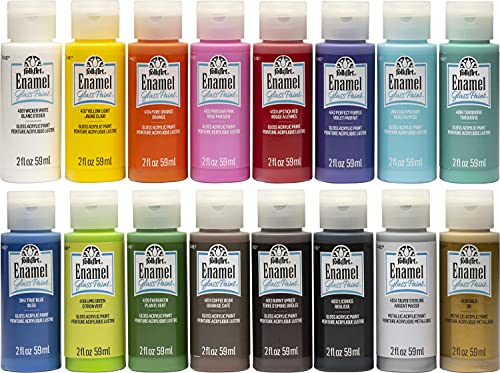
For a larger palette that spans glass and ceramic projects, this set offers 16 colors in 2-ounce bottles, more paint per color than the porcelain-focused craft set. Its acrylic enamel dries to a gloss finish; the maker says oven curing makes it dishwasher safe. That makes it a related option for porcelain craft work when the project also includes glass or ceramic.
Bottom line: Choose this for mixed glass-and-ceramic craft projects, not fixture repairs.
How to choose porcelain paint
Choose porcelain paint by the job: repair paint covers localized white damage, while craft enamel is made for planned color and patterns. Smooth, glazed surfaces are difficult for ordinary acrylic craft paint to grip, so use a formula intended for porcelain or ceramic and follow its cure method. A decision rule: for a chip or scratch under about 1 inch on a white fixture, favor a brush-on touch-up; for a multicolor design on a removable dish, favor a paint with a defined oven cure. Paint will not rebuild missing porcelain or correct a crack through the fixture. Keep repair coating off surfaces that contact food or drinking water unless the maker explicitly approves that use.
The cure method is part of the finish, not an optional shortcut. Air-dry and oven-cured products are not interchangeable, and heating an item beyond its maker’s specified process can damage the object.
Oven-bake porcelain paint and durability
Oven-bake paints generally need a controlled heat cycle after drying; the precise temperature and time vary by formula. For LM-Kreativ Vivid Vision Porcelain Paint, the maker specifies a cold oven, 320°F and 90 minutes, followed by cooling with the door closed. That is a concrete process rather than a general instruction for every craft enamel. FolkArt Gloss Acrylic Enamel Set also calls for oven curing, but its specifications do not give a temperature or duration, so confirm the cure process before using it. Dishwasher-safe claims apply only after the specified cure and do not mean a painted surface is suitable for food contact.
Use an oven-safe, fully dry item and avoid applying paint to rims or interiors that touch food or drink unless the product explicitly permits that contact. Never place a cold item into a hot oven for a bake process that calls for starting cold.
Porcelain repair paint versus craft paint
Repair coatings and decorative paints solve different problems. Brush-on white touch-up paint is intended to camouflage small imperfections on fixtures, while multi-color enamels are better suited to surface designs on smooth craft objects. A glossy glaze also makes surface preparation important: clean away soap, grease and residue, then let the item dry completely before applying paint. Do not sand a finished porcelain surface unless the product maker directs it, since abrasive work can leave visible marks.
Use repair paint for a small, stable surface blemish, not a leak, structural crack or area with missing material. For a painted dish, keep the coating away from food-contact zones unless the maker specifically identifies the paint as safe for that purpose.
Porcelain paint use and care
Apply thin, even coats rather than one heavy coat; thick paint can dry unevenly or leave brush marks. Let each coat dry as directed before adding another or beginning an oven cure. Keep the painted item undisturbed during drying, and do not test water resistance until the full curing process is complete.
For oven-cured finishes, cooling matters as much as heating: gradual cooling reduces abrupt temperature change to the ceramic or glass. Hand washing is a cautious choice when a painted object has an unknown cure schedule or frequent dishwasher cycles could wear the surface. Avoid painting handles, rims or interiors used for food and drink unless the product explicitly approves those areas.
Frequently Asked Questions
Can porcelain paint go in a dishwasher?
Some oven-cured porcelain paints are described as dishwasher safe after curing, but that claim depends on the specific formula and full bake process. For the 11-color set, the maker’s process is 320°F for 90 minutes, followed by cooling in the closed oven.
How do you prepare glazed porcelain for paint?
Wash off grease, soap and residue, then let the glazed surface dry fully before painting. Smooth glaze gives paint less texture to grip, so use a formula intended for porcelain or ceramic rather than ordinary craft acrylic.
Is porcelain paint safe for plates and mugs?
A paint made for decorating plates or mugs is not automatically safe on food-contact surfaces. Keep paint off the rim and interior unless the maker explicitly confirms food-contact suitability.
Can touch-up paint fix a cracked porcelain sink?
Touch-up paint can cover a small surface blemish, but paint does not restore a structural crack or stop a leak. A crack that passes through the sink needs a repair method intended for structural damage, not a cosmetic coating.