
Best Wheel Lock Removal Tool Kits Compared by Fit

1/2-Inch Drive 10-Piece Lug Nut Removal Kit suits most buyers because its 1/2-inch drive kit includes eight metric extractor sizes from 14 to 27 mm and reverse spiral flutes. Choose aremnry Master Anti-Theft Wheel Lock Kit if impact-rated Cr-Mo construction is your priority; confirm the socket size and wheel clearance before ordering.
Wheel lock removal tools are extractor sockets that bite into a locking nut when its key is missing or the nut is damaged. Removal can ruin the lock, so use them only on wheels you own or are authorized to service.
We earn a commission if you buy through links on this page. As an Amazon Associate I earn from qualifying purchases. Products are compared on manufacturer specifications, not hands-on testing.
- Best overall: 1/2-Inch Drive 10-Piece Lug Nut Removal Kit – Eight metric sizes and reverse spiral flutes cover common damaged lug nut sizes.
- Best for reinforced collar: Thinkpro 10-Piece Lug Nut Extractor Kit – Its thickened collar is designed to resist splitting under high torque.
- Best for impact use: aremnry Master Anti-Theft Wheel Lock Kit – The maker says its Cr-Mo extractor set is impact-rated.
| Product | Best for | Socket sizes | Construction | Shop |
|---|---|---|---|---|
| 1/2-Inch Drive 10-Piece Lug Nut Removal Kit | Metric size range | 14, 16, 17, 19, 21, 22, 24, 27 mm | Cr-Mo steel; black oxide | Check Price on Amazon |
| Thinkpro 10-Piece Lug Nut Extractor Kit | Reinforced collar | 14, 16, 17, 19, 21, 22, 24, 27 mm | — | Check Price on Amazon |
| aremnry Master Anti-Theft Wheel Lock Kit | Impact-rated use | — | Cr-Mo steel | Check Price on Amazon |
Wheel Lock Removal Tool Kits
Compare the drive, size range and construction claims to match an extractor to the fastener and tools you have.
1/2-Inch Drive 10-Piece Lug Nut Removal Kit

The reverse spiral flutes distinguish this kit: turning the extractor tightens its bite on a rounded or stripped fastener. The kit includes eight metric sockets from 14 to 27 mm, a 1/2-inch drive, a socket adapter and a knockout pin. Its Cr-Mo steel construction has a black oxide coating. It suits buyers who want a broad listed metric range and removal aids in one kit. The sizes do not cover every vehicle; check the locking nut’s dimensions and the socket’s clearance against the wheel before using it.
Bottom line: Choose this kit if its eight socket sizes match the locking nuts you need to remove.
Thinkpro 10-Piece Lug Nut Extractor Kit

The reinforced, thickened collar around the socket opening is the distinguishing feature here; the maker says it is intended to resist splitting under high torque. The eight metric extractor sizes run from 14 to 27 mm, and the kit uses a 1/2-inch drive. The maker’s instructions call for tapping the selected extractor onto the damaged nut and turning it with a breaker bar or impact tool. This is a fit for users who prioritize collar reinforcement.
Bottom line: Choose it if the reinforced collar is more important to you than a steel alloy.
aremnry Master Anti-Theft Wheel Lock Kit
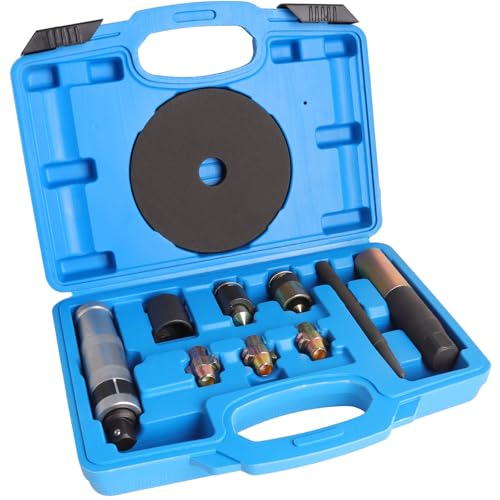
Impact-rated construction sets this kit apart: the maker says the Cr-Mo steel extractors are designed for air or electric impact wrenches. It is intended for lost keys and damaged locking nuts, with use described for cars, SUVs and trucks. That focus may suit a user who expects to use an impact wrench rather than a hand tool. The maker does not establish which socket sizes are included, so check that the kit covers the target nut and that the extractor fits the wheel before relying on it.
Bottom line: Choose it if impact-rated construction matters and you can verify the required socket size.
How to Choose a Wheel Lock Removal Tool
Match the extractor’s size and drive to the locking nut and tool before applying force. These kits list metric socket sizes from 14 to 27 mm, but a nut’s nominal size must match the extractor; a socket that is too large may slip, while one that is too small may not seat. The kits use a 1/2-inch drive, so a 1/2-inch breaker bar fits directly. Reverse-flute extractors bite harder as they turn, which makes firm seating important. If the socket does not sit squarely or clears the wheel by less than about 1/8 inch, stop and choose a better-fitting method rather than levering against the rim.
How Extractor Sockets Remove Locking Lug Nuts
An extractor socket grips the outside of a damaged nut, unlike the coded key that fits a specific wheel lock. Spiral flutes are angled to bite as the socket turns counterclockwise, the normal direction for loosening a right-hand-thread lug nut. Seat the socket fully and squarely before turning; an off-angle hit can damage the wheel or make the extractor slip. Use a breaker bar for controlled force unless the specific tool is rated for impact use. Impact tools deliver repeated high torque and can break an unrated socket or damage a stud. Once removed, the locking nut is generally unusable, so have a correctly matched replacement ready.
Wheel Lock Removal Kit Types Compared
Choose the kit type by its fit and intended drive method, not by the number of pieces alone. A reverse-flute set gives you a range of extractor sizes; a reinforced collar is intended to help resist socket splitting under high torque; an impact-rated set is the option to consider for an impact wrench. Those features are not interchangeable, and a kit still has to fit the nut and clear the wheel. Use this comparison to narrow the method, then verify the exact extractor size before applying force.
| Need | Look for | Key check |
|---|---|---|
| Several nut sizes | Multiple metric extractors | Match nut size to socket |
| High torque by hand | Reinforced collar | Seat socket squarely |
| Impact wrench use | Explicit impact rating | Use only a rated extractor |
Protect the Wheel and Replace the Lock
Keep the extractor centered on the nut and avoid letting its outside edge contact the wheel; even small slips can mar a painted or machined rim. Do not use a cheater pipe or uncontrolled impact on a socket that is not impact-rated. After removal, replace the damaged lock with a lug nut that matches the vehicle’s thread pitch, seat shape and shank length; conical, ball and flat seats are not interchangeable. Tighten replacement hardware in a star pattern with a torque wrench to the vehicle maker’s specification, because correct torque varies by vehicle and wheel. If the lock is recessed or the extractor cannot seat without touching the wheel, a tire shop can remove it with dedicated equipment.
Frequently Asked Questions
What size wheel lock removal socket do I need?
Use an extractor that matches the outside size of the locking nut; the kits here list metric sizes from 14 to 27 mm. Measure the nut across its flats and confirm the extractor seats fully without contacting the wheel.
Can I use an impact wrench with a lug nut extractor?
Use an impact wrench only with a socket explicitly rated for impact use. Impact tools apply repeated high torque, so an unrated extractor can crack or fail; a 1/2-inch breaker bar offers more controlled force.
Do wheel lock removal tools damage the locking lug nut?
Usually, the extractor’s bite damages the lock, so plan to replace it after removal. Replacement lug hardware must match the vehicle’s thread pitch and the wheel’s seat style.
Which way do I turn a wheel lock extractor?
Most passenger-vehicle lug nuts use right-hand threads and loosen counterclockwise. Seat the extractor squarely first, then turn steadily; stop if it slips or begins to contact the wheel.
How tight should replacement lug nuts be?
Use the vehicle maker’s torque specification with a torque wrench, since the correct value varies by vehicle and wheel. Tighten in a star pattern so the wheel seats evenly.