
Best White Tire Paint Marker: 4 Pens Compared

SELEAD Jumbo Tire Marker, White suits most tire-lettering projects because its nib can switch between 3 and 15 mm widths. Choose a different pen if you prefer a thicker fixed tip or want an oil-based marker for multiple surfaces.
Tire paint markers apply color to raised sidewall lettering; careful surface preparation and staying clear of the tread help keep the job neat.
We earn a commission if you buy through links on this page. As an Amazon Associate I earn from qualifying purchases. Products are compared on manufacturer specifications, not hands-on testing.
- Best overall: SELEAD Jumbo Tire Marker, White – Its nib switches between fine, medium and jumbo widths from 3 to 15 mm.
- Best for a thicker tip: ConceptInks Premium Tire Marker, White – The thicker tip is intended to make application smoother and more even.
- Best for measured ink capacity: TOOMGGA White Oil-Based Paint Pens – Each pen contains 5 ml of oil-based ink.
| Product | Best for | Tip | Pack count | Ink capacity | Shop |
|---|---|---|---|---|---|
| SELEAD Jumbo Tire Marker, White | Variable-width lettering | 3–15 mm, 3-in-1 nib | 4 markers | 20 g per marker | Check Price on Amazon |
| ConceptInks Premium Tire Marker, White | Thicker fixed tip | Thicker fixed tip | 3 markers | — | Check Price on Amazon |
| Artsunlvy White Oil-Based Paint Pens | Multiple surfaces | Medium point | 2 markers | — | Check Price on Amazon |
| TOOMGGA White Oil-Based Paint Pens | Measured ink amount | Medium tip | 2 markers | 5 ml each | Check Price on Amazon |
White Tire Paint Markers
Compare tip style, pack size and ink capacity to find a pen that matches your lettering approach.
SELEAD Jumbo Tire Marker, White

SELEAD Jumbo Tire Marker, White stands out for its three-width nib, which switches from fine to jumbo by changing how you hold the pen. The set contains four white markers, each filled with 20 g of ink. The maker says the ink is waterproof, quick-drying and intended for tires, and says the nib produces smooth, even marks. This option suits lettering that mixes narrow details with broader strokes. Its jumbo width can be difficult to control on small letters, so choose a fixed finer tip if your sidewall lettering is compact.
Bottom line: Pick this set if you want one pen style for both fine details and broad letters.
ConceptInks Premium Tire Marker, White

ConceptInks Premium Tire Marker, White is the fixed-tip choice: its thicker tip is intended to make application smoother and more even, without the width-changing nib on SELEAD Jumbo Tire Marker, White. The three-marker set is made in Japan. The maker says one marker can generally cover two coats on four tires of a medium-size car, with some ink left for touch-ups. That coverage estimate may help plan a lettering job, but it is expressly a general estimate rather than a guarantee. Choose another option if you need a tip width or measured ink amount.
Bottom line: Choose it if you prefer a thicker fixed tip and want three markers for touch-ups.
Artsunlvy White Oil-Based Paint Pens

Artsunlvy White Oil-Based Paint Pens uses a medium point and is presented for tire rubber as well as materials such as wood, metal, canvas and plastic. The two-pack suits buyers who want white paint pens for tire lettering and other marking projects rather than a tire-only set. The maker describes the ink as opaque, fast-drying and waterproof. No tip measurement or ink volume is given in the specifications, so this choice offers less sizing guidance than SELEAD Jumbo Tire Marker, White and less capacity guidance than TOOMGGA White Oil-Based Paint Pens.
Bottom line: Pick these if you want medium-point pens for tires and a variety of craft surfaces.
TOOMGGA White Oil-Based Paint Pens
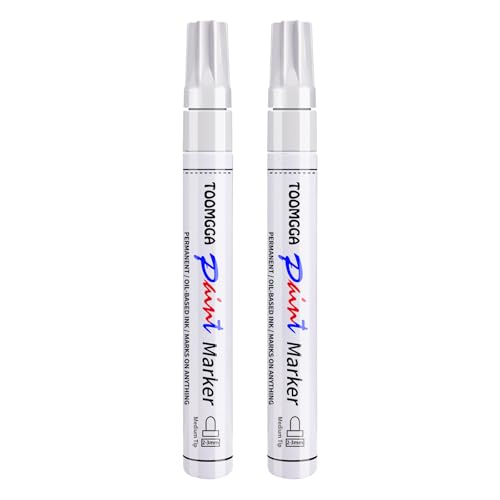
TOOMGGA White Oil-Based Paint Pens pairs a medium tip with a 5 ml of ink in each pen, making its fill amount the clearest capacity comparison here. The two-pack is intended for car tires and other surfaces, including metal, plastic, canvas and wood. The maker says the oil-based ink dries within a minute and resists water and fading. A medium tip may not suit very small lettering or broad fills as well as a variable-width nib, so consider the letter size before choosing.
Bottom line: Choose these if a per-pen ink volume matters more than adjustable tip width.
How to Choose a White Tire Paint Marker
Start with the letter size: a nib that is too broad can cover narrow raised characters and make edges harder to control. A variable-width 3–15 mm nib covers a wider range of strokes than a fixed medium point, while a thicker fixed tip favors broader marks. Paint markers and paint sticks also differ in format; a crayon-like paint stick is less pen-like for tracing small lettering. For sidewall work, choose a marker intended for rubber or tires, and follow its preparation and drying directions. Before marking, clean away road grime and dressing, then let the rubber dry completely. Test a small, inconspicuous patch first to check how the ink looks and adheres.
Where to Apply Tire Lettering
Keep decorative paint on the sidewall lettering, away from the tire tread and bead area. The tread is the road-contact surface, and paint there can wear quickly; the bead seals the tire to the wheel. Raised lettering provides a natural boundary, so use a narrow tip for small characters and work slowly around curves. Do not paint over cracks, bulges or other damage, and do not treat a cosmetic marker as a repair product. If the tire has visible damage, have it assessed before adding decoration. Clean with mild soap and water, rinse, and allow the sidewall to dry before writing.
Preparing and Applying Tire Paint
Clean, dry rubber is the useful starting point for even lettering: tire dressing, dust and moisture can interfere with a fresh mark. Apply the marker in controlled strokes along the raised letters rather than trying to cover the entire sidewall. A thicker tip can fill broad characters more quickly, while fine strokes give better control on narrow shapes. Let each pass dry before adding another coat; this reduces smearing while you move around the tire. The specifications do not establish one drying time for every pen, so follow the individual pen’s directions and avoid touching fresh paint. Work in a ventilated area and keep ink off skin and clothing.
Common Tire Marker Mistakes
Rushing surface preparation is a common cause of uneven lettering: residue and moisture can keep paint from laying down consistently. A second mistake is choosing a tip wider than the raised characters, which can leave paint outside the letter edges. Match the tip to the narrowest part of the lettering, and test the stroke on one small letter before continuing. Do not assume a waterproof claim means a new mark is immediately ready for rain or washing; allow the paint to dry as directed. Keep the marker away from tread, bead and damaged rubber, and use it for decoration rather than any safety-critical tire repair.
Frequently Asked Questions
How many coats should I use on tire lettering?
Use a light first pass and add another coat only after the paint dries, if the letters need more coverage. One marker maker gives a general estimate of two coats across four tires on a medium-size car, but actual coverage depends on letter size and application.
How do I clean a tire before using a paint marker?
Wash the sidewall with mild soap and water, rinse it, and let it dry fully before writing. Tire dressing and road grime can interfere with an even mark, so avoid applying paint over residue.
Can tire paint markers be used on the tread?
Keep decorative paint on the sidewall and away from the tread and bead. The tread contacts the road and the bead seals the tire to the wheel, so neither area is an appropriate place for cosmetic lettering.
How wide should a tire marker tip be?
Choose a tip that fits the narrowest part of the raised letters you plan to color. A 3–15 mm variable-width nib covers more stroke sizes, while a fixed medium point or thicker tip may be easier for consistently sized lettering.
How long should tire paint dry before driving?
Wait until the paint is fully dry according to the marker’s directions before handling or driving. Drying times differ by ink and conditions, so do not assume a waterproof claim means the paint is ready immediately.