
Blue Dye for Ponds: 5 Formats Compared

For a one-acre application, Blue Lake and Pond Dye, 1 Gallon is a straightforward pick because its gallon is specified to treat up to an acre. Pond dye is a water colorant that changes the water’s appearance; choose a different format if you want soluble packets, a concentrated quart, or a formula that also includes beneficial bacteria.
We earn a commission if you buy through links on this page. As an Amazon Associate I earn from qualifying purchases. Products are compared on manufacturer specifications, not hands-on testing.
- Best overall: Blue Lake and Pond Dye, 1 Gallon – The one-gallon jug is specified to treat up to one acre.
- Best for concentrated liquid: Pond Worx Blue Dye, 1 Quart – The quart is identified as 4X concentrated and treats up to one acre.
- Best for measured packets: Airmax Nature’s Blue Soluble Packets, 16-Pack – Sixteen soluble packets are sized for a half acre at 4–6 feet deep.
- Best for dye plus bacteria: Airmax Pond Dye Plus, 1 Gallon – Combines blue colorant with beneficial bacteria in a ready-to-use gallon.
| Product | Best for | Format | Package size | Coverage | Shop |
|---|---|---|---|---|---|
| Blue Lake and Pond Dye, 1 Gallon | One-acre ponds | Liquid | 3.79 liters | Up to 1 acre | Check Price on Amazon |
| Pond Worx Blue Dye, 1 Quart | Concentrated liquid | Liquid concentrate | 0.95 liters | Up to 1 acre | Check Price on Amazon |
| Airmax Nature’s Blue Soluble Packets, 16-Pack | No-measure packets | Soluble packets | 16 packets | ½ acre at 4–6 ft deep | Check Price on Amazon |
| Blue Lake and Pond Dye, 4-Gallon Pack | Larger supply | Liquid | 15.14 liters | — | Check Price on Amazon |
| Airmax Pond Dye Plus, 1 Gallon | Dye and bacteria | Liquid, ready to use | 3.79 liters | — | Check Price on Amazon |
Blue Dye for Ponds Compared
Compare the application format and stated coverage, then match the treatment to your pond’s area and depth.
Blue Lake and Pond Dye, 1 Gallon
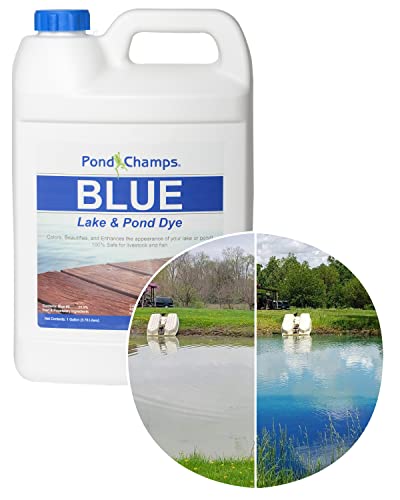
Blue Lake and Pond Dye, 1 Gallon is the standard liquid-jug option here, with one gallon specified to treat up to one acre. The royal-blue color and formula for residential or commercial water suit buyers looking for a familiar bulk application rather than individual doses. The maker says it is safe for fish and wildlife. Pond dye appearance can vary with existing water conditions, and a surface-acre figure alone does not tell you the water volume at every depth; confirm the intended treatment rate for your pond before applying.
Bottom line: Pick this for a one-gallon liquid treatment with coverage up to one acre.
Pond Worx Blue Dye, 1 Quart

Pond Worx Blue Dye, 1 Quart stands apart as a 4X-concentrated quart, with coverage specified up to one acre. Its feature notes distinguish clear water, which it says can take on a deep-blue appearance, from muddy or brown water, where it may give a lighter tint until the water clears. That makes existing water conditions especially relevant to color expectations. The compact quart format may suit buyers who prefer concentrate to a full gallon, but the specifications do not give a pond-depth basis for the acre coverage, so verify the dosing instructions for your water volume.
Bottom line: Choose this if you want a concentrated quart and understand color depends on water conditions.
Airmax Nature’s Blue Soluble Packets, 16-Pack

Airmax Nature’s Blue Soluble Packets, 16-Pack is the packet-format choice: the package contains 16 water-soluble doses, with one packet specified for a half acre at 4–6 feet deep. That depth qualification makes it more useful for matching a treatment to pond volume than a coverage figure without a depth. The maker says the packets require no mixing or measuring and can be used year-round. It also describes the dye as providing shade from ultraviolet light. The tradeoff is that the coverage is expressed per packet and a particular depth range, so ponds outside that range need a rate check.
Bottom line: Pick these if you prefer soluble doses and your pond matches the depth range.
Blue Lake and Pond Dye, 4-Gallon Pack

Blue Lake and Pond Dye, 4-Gallon Pack is the larger-supply version of the royal-blue liquid dye, with four gallons in the value pack. Its maker describes the dye as intended to add color and says it is safe for fish and wildlife; it also mentions residential and commercial water applications. Do not infer coverage from the one-gallon product; confirm the label’s dose for your pond size and depth before using it.
Bottom line: Choose this when you specifically want a four-gallon supply and can verify its dosing rate.
Airmax Pond Dye Plus, 1 Gallon

Airmax Pond Dye Plus, 1 Gallon differs from plain dye by combining Nature’s Blue colorant with Liquid PondClear beneficial bacteria in a ready-to-use gallon. The maker says the dye shades plants and algae from sunlight and that the bacteria targets suspended organic debris associated with cloudy water, muck, and weed growth. The maker describes the resulting tint as neutral blackish-blue or deep blue.
Bottom line: Pick this if you want a ready-to-use dye formula that also includes beneficial bacteria.
How to Choose Blue Dye for Ponds
Start with the pond’s surface area and average depth, because dye coverage often depends on water volume rather than acreage alone. A one-acre pond averaging 4 feet deep holds about 4 acre-feet; a one-acre pond averaging 8 feet deep holds about 8 acre-feet. Compare the package’s coverage basis with your pond’s dimensions before dosing. Choose liquid if you prefer pouring a measured amount, concentrate if you want a smaller container, and soluble packets if you want preset units. A combination dye-and-bacteria formula serves a different purpose from colorant alone. Dye changes appearance and shades water; it is not a substitute for managing nutrient inputs, circulation, or aquatic weeds.
Measure Pond Area and Depth Before Dosing
Estimate a regular pond’s area by multiplying length by width, then use a shape factor: about 0.8 for an oval or 0.9 for a roughly round pond. For an irregular shoreline, divide the pond into simple shapes and add their areas. Average depth matters because a surface-acre treatment rate can differ from an acre-foot rate. As a practical rule, if average depth differs by more than 2 feet from the package’s depth basis, check the dose rather than assuming acreage alone is enough. Avoid applying a full packet or jug based only on a visual guess of the shoreline; over-application can make the color darker than intended.
Liquid, Concentrate, Packets, and Combination Formulas
Liquid jugs make sense when the package gives a rate that matches the pond and you can measure the needed amount. Concentrates reduce package volume, but concentration does not eliminate the need to calculate the proper dose. Soluble packets are convenient preset portions; check that each packet’s area and depth rating fit the pond. Combination formulas add another treatment component, so do not assume their dye dose or purpose matches a plain colorant.
| Format | Useful when | Check before applying |
|---|---|---|
| Liquid | You can measure a needed volume | Coverage basis and depth |
| Concentrate | You want a smaller container | Concentration and dose |
| Soluble packets | You want preset portions | Area and depth per packet |
| Dye plus bacteria | You want both formula components | Separate purpose and dose |
Application, Water Conditions, and Safety
Apply pond dye only at the labeled rate for the pond’s size and depth, and distribute it where water circulation can carry the colorant through the pond. Clear, muddy, or brown water can make the same blue dye look different, so do not judge the final shade from the product’s color alone. Dye may also leave the pond through overflow or water exchange, shortening its visible effect; heavy inflow can dilute it. Keep concentrated products and treated water away from unintended contact until the label’s precautions are followed, especially around people, pets, and livestock. Use only products whose labels allow the intended pond use, and take care not to spill concentrate onto skin or clothing.
Frequently Asked Questions
How deep does a pond dye coverage estimate assume?
Coverage can be based on surface acres, acre-feet, or a specified depth range. For example, a pond covering one acre with a 4-foot average depth contains about 4 acre-feet, so check which basis the dose uses.
Will blue pond dye look the same in muddy water?
No, water conditions can alter the visible tint. Muddy or brown water may show a lighter blue appearance than clear water, so allow for the existing water color when choosing a target shade.
How do I calculate pond volume for dye?
Multiply the pond’s area in acres by average depth in feet to estimate acre-feet. A ½-acre pond averaging 6 feet deep is about 3 acre-feet; irregular ponds require a reasonable area and depth estimate.
Can pond dye leave through an overflow?
Yes, inflow and overflow can dilute or carry colorant out of a pond. Frequent water exchange can shorten the visible effect, so account for it when planning an application.
Can I use pond dye around fish and pets?
Use only a pond dye whose label permits the intended aquatic use, and follow its safety directions. Keep concentrates out of reach and avoid spills or unnecessary contact, particularly around children and animals.