
Open Road Winch: 5 Models Compared by Fit and Use

For powered truck recovery, OPENROAD 10,000 lb Electric Winch is the closest fit because its 10,000-pound capacity, 12-volt electric drive, and synthetic rope suit that job. Choose another option if you need a hand-cranked trailer winch or a smaller portable utility unit rather than a vehicle-mounted recovery winch.
We earn a commission if you buy through links on this page. As an Amazon Associate I earn from qualifying purchases. Products are compared on manufacturer specifications, not hands-on testing.
- Best overall: OPENROAD 10,000 lb Electric Winch – Its 10,000-pound capacity and 12-volt electric setup target powered vehicle recovery.
- Best for boat trailers: OPENROAD 2,000 lb Trailer Winch – A 2,000-pound manual winch comes with a 26-foot polyester strap and two-way ratchet.
- Best for portable electric use: RUGCEL 4,500 lb Portable Electric Winch – The 12-volt unit packs 4,500 pounds of single-line pull, synthetic rope, and wired and infrared remotes.
| Product | Best for | Capacity | Line | Drive | Shop |
|---|---|---|---|---|---|
| OPENROAD 10,000 lb Electric Winch | Truck recovery | 10,000 lb | Synthetic rope | 12V electric | Check Price on Amazon |
| OPENROAD 2,000 lb Trailer Winch | Boat trailers | 2,000 lb | 26 ft polyester strap | Manual crank | Check Price on Amazon |
| RUGCEL 4,500 lb Portable Electric Winch | Portable utility | 4,500 lb | Synthetic rope | 12V electric | Check Price on Amazon |
| Smittybilt XRC Gen 2 9,500 lb | Steel cable recovery | 9,500 lb | Wire rope | Electric | Check Price on Amazon |
| Road DAWG 600 lb Hand Crank Winch | Light manual pulls | 600 lb | 26.3 ft cable | Manual crank | Check Price on Amazon |
Open Road Winches and Alternatives
Match the winch type and rated capacity to the load and mounting setup before choosing a model.
OPENROAD 10,000 lb Electric Winch
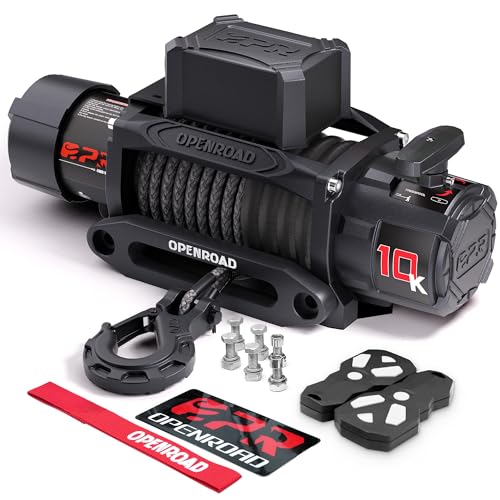
For powered truck recovery, this OPENROAD unit pairs a 10,000-pound capacity with a 12-volt electric motor and synthetic rope. The kit includes two wireless handheld remotes and a wired handle, giving the operator control options. Its IP68 waterproof rating is a maker claim, not a substitute for proper installation or line care. The dimensions are about 12 inches on each side. This is the closest match for buyers seeking an OPENROAD electric recovery winch; it is not a hand crank trailer winch, and the vehicle mount and wiring must suit the installation.
Bottom line: Pick this for 12-volt powered truck recovery with synthetic rope.
OPENROAD 2,000 lb Trailer Winch

Unlike the electric recovery model, this OPENROAD winch is a manual trailer unit with a 2,000-pound capacity and a 26-foot polyester strap. Its two-way ratchet supports pulling in either direction, and the galvanized steel construction is intended for corrosion resistance. The 8.27-inch crank handle is an important practical distinction for repeated pulls. It suits boat, trailer, or similar hand-cranked applications, not powered vehicle recovery. The strap is 2 inches wide, so check that its hook and attachment points work with the trailer’s rigging.
Bottom line: Choose this for manual trailer pulling with a long strap.
RUGCEL 4,500 lb Portable Electric Winch

For portable electric utility work, this RUGCEL provides a 4,500-pound single-line pull rather than the 10,000-pound rating of the OPENROAD recovery unit. The package includes a mounting plate, integrated hawse fairlead, synthetic rope, two D-shackles, two straps, and both infrared and wired remotes. Its carrying box keeps the accessories together, which fits ATV or UTV use better than a fixed trailer hand winch. The lower capacity makes it a different class of tool, so do not treat it as an equivalent choice for a vehicle requiring more pull.
Bottom line: Pick this when portability and a 12-volt utility setup matter.
Smittybilt XRC Gen 2 9,500 lb
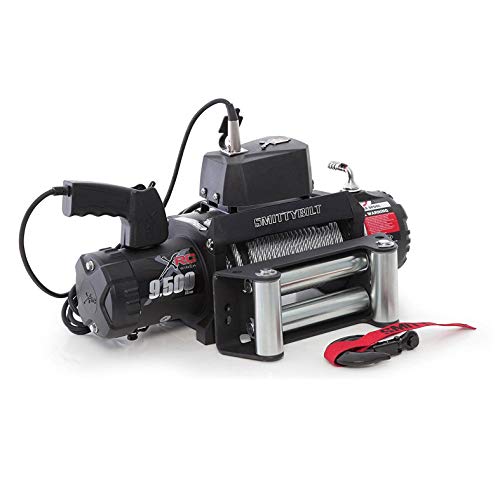
For buyers who prefer wire rope, the Smittybilt XRC Gen 2 pairs a 9,500-pound capacity with a three-stage planetary gear train and a four-way roller fairlead. The 6.6-horsepower motor and waterproof 500-amp solenoid are maker specifications; the unit weighs 78 pounds and includes installation wiring. Compared with the OPENROAD model, the rated capacity is 500 pounds lower and the line is steel cable rather than synthetic rope. This is a vehicle recovery option, but its weight and cable handling requirements make it less suitable for someone prioritizing a lighter line.
Bottom line: Choose this for a steel-cable recovery setup with a roller fairlead.
Road DAWG 600 lb Hand Crank Winch

At 600 pounds, the Road DAWG is a light-duty manual cable winch rather than a truck recovery alternative. It has a 26.3-foot cable, zinc-plated carbon-steel construction, and a 7.3-inch anti-slip crank handle; its body measures 8.6 by 8.6 by 6.5 inches with the handle. The compact 4.7-pound unit suits lighter pulls where a portable hand crank is useful. Its capacity is far below the powered recovery models, so it is not appropriate for recovering a stuck truck or for loads beyond its rating.
Bottom line: Pick this for light manual pulling where a compact cable winch is enough.
How to choose an electric recovery winch
Choose a recovery winch by comparing its rated line pull with the vehicle’s loaded weight and the recovery conditions. A common starting rule is a winch rating at least 1.5 times the vehicle’s gross vehicle weight; mud, steep slopes, and a buried vehicle can require more pulling force. The rating is typically measured on the first layer of rope or cable, and pull capacity falls as line layers build on the drum. A snatch block can redirect the line and increase mechanical advantage, but it also changes the rigging and anchor loads. Match the winch, mounting plate, electrical system, and recovery points as one setup rather than choosing by capacity alone.
Winch types and line choices
Electric recovery winches, hand crank trailer winches, and portable utility winches solve different jobs. Electric models draw from a vehicle power system; manual trailer models use a crank and ratchet, while portable units trade fixed installation for a carrying setup. Synthetic rope is lighter to handle than steel cable but needs protection from abrasion, heat, and sharp edges. Steel cable tolerates rough contact better, but can develop broken wires and needs careful handling. Polyester strap is a flat pulling line commonly used on trailer winches, not a substitute for a winch cable or recovery strap. The table separates these options by application and line type.
| Winch type | Typical application | Line |
|---|---|---|
| Electric recovery | Vehicle recovery | Synthetic rope or wire rope |
| Manual trailer | Boat or trailer loading | Strap or cable |
| Portable electric | ATV, UTV, utility pulling | Synthetic rope or cable |
Capacity, mounting, and safe rigging
Start with the load’s weight and the winch rating, then verify the mount and anchor are rated for the forces involved. A winch should pull from a secure, aligned anchor; side pulls can crowd line onto one side of the drum and damage the line or equipment. Keep the line as straight as the setup permits, use rated shackles and straps, and keep people clear of a tensioned line. Never exceed the winch, line, mounting, or recovery-point rating. For a vehicle recovery, a winch does not replace a rated recovery point, and a tow ball is not a safe winching anchor.
Line care and common mistakes
Inspect the line before and after each pull: look for fraying, cuts, kinks, crushed cable sections, or broken wire strands. Synthetic rope can be weakened by abrasion and heat, so use a suitable line guard where it contacts a rough edge and keep it away from hot exhaust parts. Steel cable can form sharp burrs, so wear gloves when handling it and replace damaged sections rather than continuing to pull. Trailer straps should lie flat and be kept clear of sharp edges. Wind each line evenly under light tension; crossed or piled layers can jam the drum on the next use. Follow the winch maker’s duty-cycle limits to avoid overheating an electric motor.
Frequently Asked Questions
How much winch capacity does a truck need?
A common starting point is a winch rated at least 1.5 times the vehicle’s gross vehicle weight. Mud, steep slopes, and a buried vehicle can demand more pull, so consider the recovery conditions and line layers rather than relying on curb weight alone.
Is synthetic rope safer than steel cable?
Neither line is automatically safer; each can fail under overload or damage. Synthetic rope is lighter but vulnerable to abrasion and heat, while steel cable can develop sharp broken strands, so inspect either type and keep people clear of a tensioned line.
Can a boat trailer winch recover a truck?
A hand crank trailer winch is designed for trailer loading, not routine truck recovery. Its capacity, mounting, line, and anchor need to be rated for the recovery load; a low-capacity trailer unit should not be used to pull a stuck vehicle.
What does a snatch block do with a winch?
A snatch block redirects a winch line and can provide mechanical advantage when rigged appropriately. The added pulley changes force on the anchor and equipment, so use a rated block and compatible shackles and rigging.
How should a winch line be wound onto its drum?
Wind the line evenly across the drum under light tension so it does not bunch at one side. Crossed or uneven layers can jam or damage the line, and the rated pull generally decreases as more line layers build up.