
Bone-on-Bone Knee Sleeves: 5 Options Compared by Support

For a sleeve marketed for bone-on-bone walking support, Griqos Knee Pro Bone-on-Bone Sleeve is the closest match because it explicitly targets walking support; the right choice depends on fit and the amount of stabilization you want. Bone-on-bone knee osteoarthritis is a medical diagnosis, and a sleeve cannot restore lost cartilage.
Choose a different design if you want side stabilizers or a patella pad, or prefer an infrared-fabric sleeve rather than compression.
We earn a commission if you buy through links on this page. As an Amazon Associate I earn from qualifying purchases. Products are compared on manufacturer specifications, not hands-on testing.
- Best overall: Griqos Knee Pro Bone-on-Bone Sleeve – Specifically marketed for bone-on-bone walking support and supplied as a two-pack.
- Best for kneecap support: NEENCA Patella Gel Pad Knee Brace – Includes a patella gel pad and side stabilizers.
- Best for non-compression wear: Incrediwear Infrared Knee Sleeve – Uses infrared-fabric language and is positioned as circulation support rather than compression.
| Product | Best for | Support design | Material or fabric | Pack count | Shop |
|---|---|---|---|---|---|
| Griqos Knee Pro Bone-on-Bone Sleeve | Walking support | Compression sleeve | — | 2 pack | Check Price on Amazon |
| NEENCA Patella Gel Pad Knee Brace | Kneecap stabilization | Patella gel pad, side stabilizers | — | — | Check Price on Amazon |
| Incrediwear Infrared Knee Sleeve | Non-compression support | Side stays | Element-infused fabric | — | Check Price on Amazon |
| BLITZU Compression Knee Sleeve | Breathable compression | Compression sleeve | Moisture-wicking fabric | 2 pack | Check Price on Amazon |
| Copper Knee Support with Straps | Adjustable compression | Adjustable straps | 3D knitted nylon with copper ions | 2 pack | Check Price on Amazon |
Bone-on-Bone Knee Sleeves Compared
Compare the support styles and fit considerations before choosing a sleeve for walking or activity.
Griqos Knee Pro Bone-on-Bone Sleeve

Unlike general-purpose knee sleeves, this gray Griqos model is specifically presented as bone-on-bone walking support and comes as a two-pack. The maker describes it as a compression sleeve for walking, sports and arthritis-related stiffness. A sleeve can add support during movement, but it does not correct the underlying joint changes associated with osteoarthritis.
Bottom line: Pick this if you want a sleeve explicitly positioned for bone-on-bone walking support.
NEENCA Patella Gel Pad Knee Brace
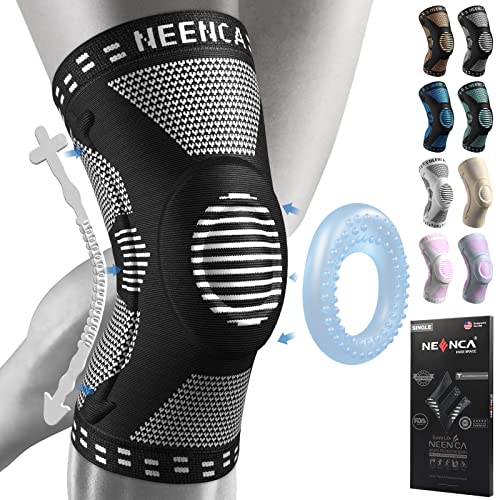
The NEENCA design stands out for its patella gel pad and dual spring side stabilizers, rather than a simple fabric sleeve. The maker says the contoured pad surrounds the kneecap and the stabilizers provide side support; it is a compression knee support in black, size Large. This may suit someone seeking a more structured feel around the kneecap. It is not specifically identified as a bone-on-bone walking sleeve, so choose it for its support design rather than assuming it is tailored to a particular arthritis diagnosis. Its weight is 0.35 pounds.
Bottom line: Choose this if kneecap padding and side stabilizers matter more than a basic sleeve.
Incrediwear Infrared Knee Sleeve

Unlike the compression options, Incrediwear describes this gray sleeve as circulation support rather than compression, and it has side stays. The maker says body heat activates infrared waves from its element-infused fabric; that is a manufacturer claim, not a substitute for medical treatment. The size range runs from Medium to 3XL, with this option in Large. It may suit someone who does not want a tight, compressive brace. The specifications do not give a thigh measurement range, so check fit guidance before buying if sizing is uncertain. Its weight is 0.15 pounds.
Bottom line: Pick this if you want side stays without a compression-first design.
BLITZU Compression Knee Sleeve

BLITZU emphasizes breathable, moisture-wicking fabric, which distinguishes this compression sleeve from the stabilizer-focused and infrared-fabric alternatives. The product is a black Large pair, weighing 0.25 pounds, and its maker positions it for exercise and everyday knee support. It may fit buyers who prioritize a form-fitting sleeve for activity. The maker gives no circumference range, so a Large label alone may not settle fit; use the brand’s sizing guidance before choosing if measurements are near a size boundary. Its arthritis-related language should not be read as proof that a sleeve treats osteoarthritis.
Bottom line: Choose this if breathable compression for movement is your priority.
Copper Knee Support with Straps

The adjustable straps make this copper knee support distinct from the pull-on sleeves in this comparison. It comes as a two-pack in Medium and uses 3D-knitted nylon blended with copper ions; the maker also notes a small amount of latex. The product is intended to be sized using thigh circumference, so measure at the location and in the manner shown on its size chart rather than relying on a usual clothing size. People with latex sensitivity should avoid it, as the specifications specifically flags latex content. It is a general knee support, not a dedicated bone-on-bone model.
Bottom line: Choose this if adjustable straps and thigh-measurement sizing suit your needs.
How to Choose a Knee Sleeve for Bone-on-Bone Knees
Choose a sleeve by the support it provides and the movement you need, not by a claim that it can fix bone-on-bone arthritis. A pull-on compression sleeve supplies circumferential pressure; a brace with stays or a kneecap pad adds more structured support. A sleeve may feel different during walking than during bending or exercise, so match the design to the activity you want help with. If the knee gives way, locks, or has sudden swelling, seek clinical advice rather than relying on a sleeve. Osteoarthritis care can include exercise and other options a clinician can discuss. For extended wear, remove a sleeve if it causes numbness, tingling, color change, or increasing pain, and make sure it does not bunch behind the knee.
Compression, Stays, and Straps Compared
Compression sleeves, stabilizing braces, and strap supports solve different fit and support needs. Compression fabric surrounds the joint, while side stays can limit side-to-side movement and a patella pad frames the kneecap. Adjustable straps let the wearer change tension, but too much tightness can cause discomfort or numbness. Use this guide to identify the construction, then choose based on comfort and the activities where support is wanted.
| Construction | What it adds | Consider when |
|---|---|---|
| Pull-on compression sleeve | Fabric pressure around knee | You prefer a simple sleeve |
| Side stays or patella pad | More structured knee support | You want added stabilization |
| Adjustable straps | Changeable tension and fit | You want an adjustable wrap-style support |
No sleeve construction rebuilds cartilage or guarantees pain relief.
How to Get a More Reliable Knee Sleeve Fit
Measure where the maker’s size chart directs, because knee sleeves often use thigh circumference rather than a person’s usual clothing size. The copper support here specifically calls for a thigh measurement; other products may use their own chart and sizing points. A sleeve should feel secure without cutting off circulation, slipping down, or creating sharp pressure at the back of the knee. Check the fit while standing and bending, since a sleeve can shift with movement. If your knee is between sizes, use the brand’s guidance rather than assuming tighter compression is better. Confirm the size range before ordering when it is essential to a safe fit.
When a Knee Sleeve Is Not Enough
A knee sleeve is an external support, not a treatment that reverses osteoarthritis. Bone-on-bone commonly refers to advanced joint-space narrowing seen on imaging, but symptoms and treatment needs vary; a clinician can interpret imaging alongside pain and mobility. A walking aid, physical therapy, activity changes, medication, or other care may be discussed depending on the individual. Seek prompt medical care for a hot, markedly swollen knee, inability to bear weight after injury, or new severe pain. Stop wearing a sleeve if it causes numbness, skin irritation, or worsening symptoms. For persistent walking limits, ask a clinician whether a sleeve, a brace with greater stabilization, or another support is appropriate.
Frequently Asked Questions
Can a knee sleeve fix bone-on-bone arthritis?
No, a sleeve cannot restore cartilage or reverse joint-space loss. It may provide external support or compression, but persistent pain or walking limits warrant a conversation with a clinician.
Should a knee sleeve feel very tight?
No, a sleeve should feel secure without causing numbness, tingling, color change, or increasing pain. Remove it if those symptoms occur, and reassess the size and fit.
How do I measure for a knee sleeve?
Use the exact body location and method on the maker’s size chart; some supports use thigh circumference rather than knee circumference. Measure with a flexible tape and avoid pulling it tight enough to compress the skin.
Can I wear a knee sleeve while walking?
Many sleeves are designed for activity, but comfort and fit determine whether walking in one is appropriate for you. Start with a short period and stop if the sleeve slips, bunches, or causes tingling or pain.
When should knee pain be checked by a doctor?
Get prompt care for a hot, very swollen knee, inability to bear weight after an injury, or sudden severe pain. Persistent pain, locking, or giving way also merits clinical assessment rather than relying only on a sleeve.