
Car DAB Signal Amplifier: Antennas and Boosters Compared

For a car DAB signal amplifier, choose Kaunosta DAB/DAB+ Glass-Mount Aerial if your radio supports DAB/DAB+ and has an SMB port, because it is the only option here made specifically for digital radio. Choose another product only if you need an AM/FM booster rather than a DAB aerial, or your receiver cannot supply the required power.
We earn a commission if you buy through links on this page. As an Amazon Associate I earn from qualifying purchases. Products are compared on manufacturer specifications, not hands-on testing.
- Best overall: Kaunosta DAB/DAB+ Glass-Mount Aerial – Designed for DAB/DAB+ and includes a built-in amplifier powered by 5V or 12V.
- Best for mixed radio bands: AM/FM/DAB Car Antenna Amplifier – Compatible with DAB, FM and AM signals.
- Best for 12V AM/FM setups: 12V 25dB AM/FM Antenna Booster – A 12V antenna booster with a 25dB amplifier.
| Product | Best for | Radio bands | Connector or fit | Power | Shop |
|---|---|---|---|---|---|
| Kaunosta DAB/DAB+ Glass-Mount Aerial | DAB head units | DAB/DAB+ | SMB right-angle plug | 5V/12V | Check Price on Amazon |
| AM/FM/DAB Car Antenna Amplifier | Multi-band radios | DAB, FM, AM | Wiring accessory | — | Check Price on Amazon |
| TTLCFP 12V AM/FM Antenna Booster | AM/FM reception | AM/FM | Quick connector, clamps | 12V | Check Price on Amazon |
| 12V 25dB AM/FM Antenna Booster | 12V AM/FM radios | AM/FM | — | 12V | Check Price on Amazon |
| Bingfu 12V DIN FM Booster | DIN FM systems | FM | DIN plug | 12V switched | Check Price on Amazon |
Car DAB Signal Amplifiers Compared
Match the antenna or booster to your radio’s bands, connector and power setup before choosing.
Kaunosta DAB/DAB+ Glass-Mount Aerial

Unlike the general AM/FM boosters here, this is a glass-mount aerial built specifically for DAB/DAB+ reception. It has an SMB right-angle plug, a 10-foot RG174 cable and an active RF amplifier powered by 5V or 12V from the connected device. That makes it the closest match for an aftermarket head unit or receiver with DAB support and the matching port. The key limitation is connector fit: SMB is push-on, not SMA screw-on, so confirm your receiver has an SMB socket and can provide the required power.
Bottom line: Pick this if your receiver supports DAB/DAB+ and has an SMB input.
AM/FM/DAB Car Antenna Amplifier
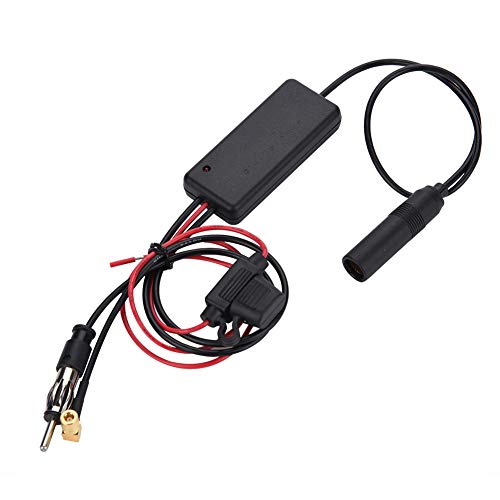
AM/FM/DAB Car Antenna Amplifier is the broad-band option here, with compatibility for DAB, FM and AM rather than a DAB-only aerial. Its package includes a wiring accessory, two magnetic rings and glue, and the amplifier itself is compact at about 6.7 inches long. That combination may suit a buyer seeking one inline amplifier for several radio bands. The limitation is that the specifications do not identify a radio-side connector or operating voltage, so verify wiring compatibility with the vehicle before installation.
Bottom line: Choose it when one amplifier needs to cover DAB, FM and AM.
TTLCFP 12V AM/FM Antenna Booster

TTLCFP 12V AM/FM Antenna Booster is an AM/FM booster rather than a DAB-specific antenna, so its useful distinction is the 12V setup and included connection hardware. The kit contains double-sided tape, a quick connector and two cable clamps, and the shielded metal housing is intended to limit outside interference. It fits a buyer troubleshooting terrestrial AM/FM reception, including in a car, truck, SUV or van. It is not the best match for someone specifically seeking a DAB aerial, since DAB compatibility is not among its bands.
Bottom line: Pick it for a 12V AM/FM system, not a DAB-only installation.
12V 25dB AM/FM Antenna Booster

12V 25dB AM/FM Antenna Booster stands apart with a 25dB signal amplifier and a 12V system, while its radio-band compatibility is AM/FM. The product uses copper conductors and a metal shield, and its ABS shell includes a fuse holder with a protective cap. This is a potential choice for a 12V car stereo setup where AM/FM reception is the goal. Its bands do not include DAB, so choose a DAB-specific aerial instead when digital-radio reception is the priority.
Bottom line: Choose it for a 12V AM/FM stereo where the 25dB rating matters.
Bingfu 12V DIN FM Booster

Bingfu 12V DIN FM Booster is the most connector-specific option among these general boosters: it uses a DIN plug and a switched 12V power supply cable. The product is described for vehicle, truck, SUV and car stereo head units, with a copper signal wire intended to improve FM reception. That makes it a closer fit for a receiver with a matching DIN antenna connection than for a universal DAB upgrade. Its band is FM, so it is not the right pick when the main need is DAB or AM reception.
Bottom line: Pick it for an FM receiver with a matching DIN connection and switched 12V supply.
How to choose a car DAB signal amplifier
Start with the radio band and connector, not the word “booster”: a DAB aerial must support DAB/DAB+, while a general AM/FM amplifier may not. DAB broadcasts use Band III at 170–240 MHz in the Kaunosta specification; its aerial also lists L-band at 1452–1492 MHz. Check the receiver’s antenna socket next: SMB is a push-on fitting, whereas SMA screws on, and they are not interchangeable. For an active aerial, confirm the head unit can supply the 5V or 12V power. If the receiver has no DAB tuner, an antenna amplifier alone will not add DAB reception.
Active DAB aerials versus AM/FM boosters
A DAB active aerial combines an antenna with an amplifier, while an inline AM/FM booster is intended to strengthen an existing antenna signal. An amplifier cannot recover a broadcast that is absent from the coverage area or fix a broken antenna connection. Use the comparison table to narrow by system type and connection; match the connector and power before installation.
| Setup need | Suitable type | Check before fitting |
|---|---|---|
| DAB/DAB+ reception | Active DAB aerial | Receiver has DAB tuner, compatible port and power |
| AM/FM reception | AM/FM antenna booster | Supported bands, wiring and voltage |
| FM with DIN input | DIN FM booster | Matching DIN socket and switched 12V supply |
Do not treat an advertised signal-gain figure as proof that a booster will solve every reception problem; antenna placement, wiring and local coverage still matter.
Check antenna connectors and power first
Connector mismatch is a common installation mistake: SMB push-on and SMA screw-on plugs require different sockets, and a DIN connection is different again. Active antennas also need power; the DAB aerial here specifies 5V or 12V from the connected device, while some vehicle boosters specify a 12V supply. Before routing cable, identify the receiver’s antenna port and power output in its manual. Avoid forcing a plug or improvising a connection, since a poor fit can interrupt reception or damage the socket. For vehicle wiring, disconnect power as directed by the vehicle and radio maker, and keep wiring clear of pedals and moving parts.
Improve car radio reception safely
Reception problems can come from a loose antenna lead, damaged aerial, poor grounding or weak broadcast coverage, not just low signal strength. Inspect existing connections first and test reception in more than one location; a signal that drops only in remote areas may reflect coverage rather than a faulty amplifier. Keep any adhesive-mounted aerial positioned according to its installation design and do not obstruct the driver’s view. A booster is electrical equipment: use the specified vehicle voltage and secure its wiring so it cannot interfere with controls or become pinched by trim.
Frequently Asked Questions
Will an AM/FM booster improve DAB reception?
Only if the product is designed for the DAB band and the receiver supports DAB. An AM/FM-only booster does not become DAB-compatible simply because it connects to a car radio.
What connector does a DAB aerial need?
The connector must match the receiver’s antenna socket; SMB push-on and SMA screw-on fittings are different. Check the socket type before ordering or fitting an active aerial.
Does an active DAB antenna need power?
Yes, an active aerial needs its amplifier powered; the DAB model here specifies 5V or 12V from the connected device. Verify that the receiver can supply the required voltage.
Can an amplifier fix weak radio coverage?
An amplifier can strengthen a signal reaching the antenna, but it cannot create a broadcast where coverage is absent. Test the radio in another location and check the antenna lead before adding a booster.
Can I use a 12V booster in any car?
Not without checking the vehicle and receiver wiring: a 12V unit requires a compatible 12V supply and correct connections. Keep the wiring secured away from pedals and moving parts.