
Chainstay Protectors for Mountain Bikes Compared by Fit

For most mountain bikes, ZTTO Silicone Protector Set is the most versatile choice because its set includes a 260 mm chainstay pad plus a separate downtube protector. Choose a different option if you want a single pad, a specified 3M adhesive, or a narrower, measured profile.
A chainstay protector is a pad or wrap that cushions the frame where a moving chain can strike it; measure the available stay area and check the frame shape before choosing.
We earn a commission if you buy through links on this page. As an Amazon Associate I earn from qualifying purchases. Products are compared on manufacturer specifications, not hands-on testing.
- Best overall: ZTTO Silicone Protector Set – Includes a 260 mm chainstay pad and a separate 360 mm downtube protector.
- Best for adhesive backing: CYSKY 3M Silicone Protector – Uses 3M adhesive and measures 220 × 53 × 2 mm.
- Best for measured fit: Quweiz 2-Piece Silicone Protector – A two-piece silicone set with each protector measuring 260 × 41 × 10 mm.
| Product | Best for | Size | Adhesive | Shop |
|---|---|---|---|---|
| ZTTO Silicone Protector Set | Two-area coverage | 260 × 41 mm; downtube 360 × 70 mm | Adhesive backing | Check Price on Amazon |
| Silicone Chainstay Protector, Medium | General pad coverage | Medium | — | Check Price on Amazon |
| Quweiz 2-Piece Silicone Protector | Two-piece set | 260 × 41 × 10 mm each | — | Check Price on Amazon |
| CYSKY 3M Silicone Protector | Specified adhesive | 220 × 53 × 2 mm | 3M adhesive | Check Price on Amazon |
Chainstay Protectors for Mountain Bikes
Compare the pad dimensions and attachment method against the usable, clean area on your frame.
ZTTO Silicone Protector Set

Unlike the single-pad options, this set pairs a 260 × 41 mm chainstay protector with a 360 × 70 mm downtube protector. The silicone pieces are designed to cushion impacts and protect against scratches, and the maker says the adhesive backing is intended to hold on rugged terrain. Choose it if you want to cover two frame areas with one set. The wider downtube piece needs room to sit flat, so check the available surface and avoid covering cable ports or moving parts.
Bottom line: Pick this set if you want both chainstay and downtube coverage.
Silicone Chainstay Protector, Medium

This medium silicone pad is the straightforward option among the four for buyers who want a chainstay-only protector rather than a multi-area set. The maker describes a raised 3D design intended to reduce friction and chain slap, and says it can be removed without professional assistance. It is presented for several bicycle types, including mountain bikes. Because the size is given as “Medium” rather than a measurement, compare its shape with the usable stay area before choosing if a close dimensional fit matters.
Bottom line: Choose this if you prefer a medium silicone pad and can confirm its fit.
Quweiz 2-Piece Silicone Protector
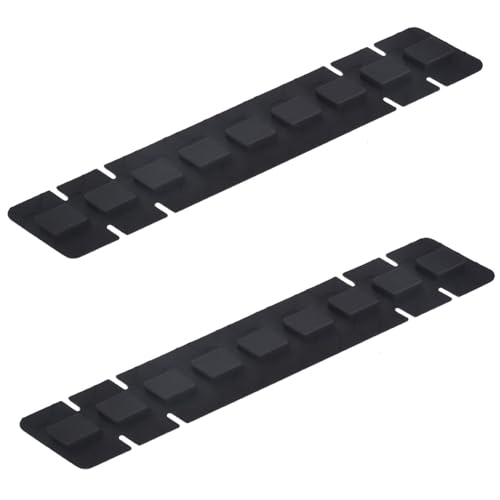
Each of the two Quweiz silicone protectors measures 260 × 41 × 10 mm, making this the clearly dimensioned two-piece set in the group. The maker says the pads are intended for mountain, road, folding and BMX bicycles, and recommends cleaning dust and oil from the frame before installation. This is a useful choice when two matching pads suit your frame layout. The 10 mm thickness may not suit a tight clearance, so check nearby tire, cable and pivot space before applying either piece.
Bottom line: Pick this set if two measured pads match your available frame area.
CYSKY 3M Silicone Protector

CYSKY uses a 3M adhesive backing and has the thinnest profile here at 2 mm, unlike the 10 mm Quweiz pads. The silicone protector measures 220 × 53 mm and comes as a two-piece set. Its installation guidance calls for a clean, dry, smooth frame surface; the maker warns against applying it to stained or uneven surfaces. This suits riders whose stay offers a broad, flat patch, but its shorter length may leave more of a long stay uncovered.
Bottom line: Choose this if you want a thin pad with a specified 3M adhesive.
How to Choose a Mountain Bike Chainstay Protector
Start with the chain-contact area and the shape of your frame, not the word “universal.” Chain slap happens when chain movement lets it strike the chainstay, especially over rough ground; a protector cushions that contact and shields the finish. Measure the usable length and width with a ruler, then compare them with the pad dimensions. A pad that overhangs a curved edge or bridges a weld may not sit flat. With less than 2 mm of clearance to a tire, cable, pivot or other moving part, choose a thinner pad or a different placement. Adhesive backing and material matter too: a secure bond depends on a clean, dry surface.
Measure the Chainstay Before Applying a Pad
Measure the flat, unobstructed area where the chain can hit, including its narrowest width; a protector’s full length is useful only if its edges can lie against the frame. Stays taper and curve, so compare the pad width at both ends rather than checking only the center. Leave space around cable ports, pivots, welds and suspension hardware, and check tire clearance through the wheel’s rotation. Clean away oil and dirt, dry the frame completely, and test the position before exposing adhesive. Trapped grit can scratch paint under a pad, while a wrinkle or lifted edge can collect dirt and weaken adhesion.
Silicone, Foam and Other Chainstay Pad Types
Silicone pads are flexible and washable, while foam sleeves can add cushioning and fabric wraps can conform to irregular shapes; thickness and attachment method differ by product. Adhesive-backed pads sit close to the frame, but their bond relies on a smooth, dry surface. A wrap or sleeve can be repositioned more readily, though it may need periodic cleaning and can shift if poorly sized. Use the comparison below to match a pad style to the frame surface and maintenance preference, then verify the actual measurements. No protector corrects excessive chain movement: drivetrain setup and chain length still affect how often the chain strikes the stay.
| Need | Suitable approach | Fit check |
|---|---|---|
| Low-profile protection | Thin adhesive pad | Confirm a smooth, flat bonding area |
| More cushioning | Thicker pad or sleeve | Check nearby moving-part clearance |
| Irregular frame shape | Flexible wrap or conformable pad | Check edge contact and shift risk |
Install and Maintain a Chainstay Protector
Prepare the frame before application: wash off dirt, remove oily residue, and let the surface dry fully. Position the protector over the likely chain-contact zone without blocking ports or pressing against moving parts, then apply it gradually to avoid wrinkles and trapped debris. Inspect the edges after riding on muddy or dusty trails; dirt and water at a lifted edge can undermine the adhesive. Clean the protector and frame gently when grime accumulates, and replace a pad that no longer stays seated. If chain slap continues after fitting a protector, inspect chain length and drivetrain setup rather than stacking pads near the chain.
Frequently Asked Questions
How long should a mountain bike chainstay protector be?
Choose a protector that covers the chain-contact zone while fitting entirely on a flat, unobstructed part of the stay. Measure that area in inches and compare it with the pad’s length and width; a longer pad is not useful if its ends cross a curve or port.
Will a chainstay protector fit every mountain bike?
No single shape fits every frame reliably because chainstays vary in length, taper, curvature and clearance. Measure the available surface, and check tire, cable and pivot clearance before applying a thick pad.
How do I prepare a frame for an adhesive protector?
Remove dirt and oil, then dry the frame completely before attaching the pad. A smooth, clean surface helps adhesive make contact; uneven surfaces and grit can lead to lifted edges or trapped debris.
Can a chainstay protector stop chain slap?
A pad cushions chain contact and helps protect the frame finish, but it does not stop the chain from moving. Persistent impacts call for checking drivetrain setup and chain length as well as protector placement.
How often should I replace a chainstay protector?
Replace a protector when it is torn, has lifted edges, or no longer stays in position. Check it after muddy or dusty rides, since grit and moisture at an edge can compromise the fit.