
Fiberglass for Concrete Mix: 4 Reinforcement Options

For fiberglass for concrete mix, UPTTHOW Fiberglass, 19 mm, 1 lb is the closest match to a small project because its fibers are 19 mm long and the package weighs 1 lb. Choose a larger package for broader coverage; these products are chopped glass fibers mixed into cementitious materials to help limit cracking.
Fiberglass fibers are not a substitute for reinforcing steel or properly placed control joints. Check the maker’s recommended dosage before mixing, since none of these options gives a dosage in the specifications.
We earn a commission if you buy through links on this page. As an Amazon Associate I earn from qualifying purchases. Products are compared on manufacturer specifications, not hands-on testing.
- Best overall: UPTTHOW Fiberglass, 19 mm, 1 lb – Its 19 mm fibers and 1 lb package suit smaller mortar or concrete batches.
- Best for a 5 lb package: BOHUIZ Concrete Fiberglass, 3/4 in, 5 lb – The 5 lb quantity offers more material than a small 1 lb pack while retaining a 3/4-inch fiber length.
- Best for bulk supply: Chopped Strand Fiberglass, 3/4 in, 40 lb – The package includes 40 lb of 3/4-inch chopped fibers for larger jobs.
- Best for multiple portions: Marsui Fiberglass, 3/4 in, 40 lb – Its package is divided into four 10 lb portions of 3/4-inch fibers.
| Product | Best for | Package weight | Shop |
|---|---|---|---|
| UPTTHOW Fiberglass, 19 mm, 1 lb | Small batches | 1 lb | Check Price on Amazon |
| BOHUIZ Concrete Fiberglass, 3/4 in, 5 lb | Mid-size projects | 5 lb | Check Price on Amazon |
| Chopped Strand Fiberglass, 3/4 in, 40 lb | Bulk projects | 40 lb | Check Price on Amazon |
| Marsui Fiberglass, 3/4 in, 40 lb | Portioned batches | 40 lb | Check Price on Amazon |
Fiberglass for Concrete Mix
Compare fiber length and package quantity to match the additive to your batch size and project.
UPTTHOW Fiberglass, 19 mm, 1 lb
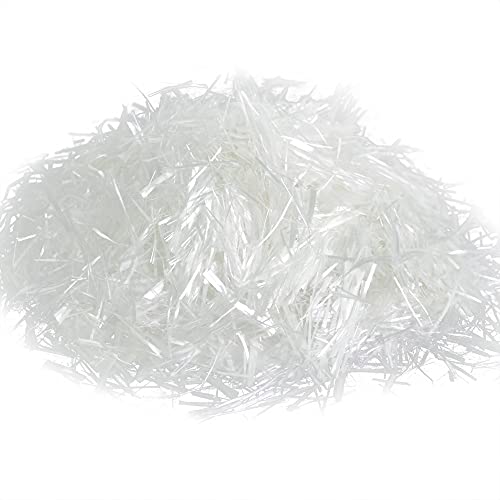
UPTTHOW Fiberglass, 19 mm, 1 lb pairs a 19 mm fiber length with a 1 lb package, making it the smallest quantity among these options. The maker says the fibers disperse irregularly through mortar to improve toughness and inhibit fine cracks, and that they can help limit penetration in damp settings such as basements, ponds, and exterior walls. The specifications describe mixing the fibers with sand and cement before adding water. This compact package suits patching or a limited run; buyers handling a larger slab or multiple rooms may prefer a bulk pack. Confirm the recommended dosage before batching.
Bottom line: Choose this for a smaller mortar or concrete batch where a 1 lb package is sufficient.
BOHUIZ Concrete Fiberglass, 3/4 in, 5 lb

BOHUIZ Concrete Fiberglass, 3/4 in, 5 lb provides a 5 lb package of 3/4-inch fibers, giving it a middle quantity between the 1 lb pack and the two 40 lb options. The maker says the additive is intended to help reduce cracking and improve impact resistance, impermeability, and frost resistance in concrete. Its uses include walls, floors, and other structures. This size can suit a project that needs more fiber than a small repair but does not call for a bulk pack. The fields do not give a dosage or a specific yield, so estimate batch coverage only after confirming the maker’s mixing recommendation.
Bottom line: Choose this when a 5 lb quantity better fits the planned batch than a small pack.
Chopped Strand Fiberglass, 3/4 in, 40 lb

Chopped Strand Fiberglass, 3/4 in, 40 lb is a bulk option: its package states 40 lb of 3/4-inch chopped strand fiberglass for concrete and mortar. The maker says evenly dispersed fibers improve toughness and reduce cracking, and describes use on basements, ponds, patios, driveways, garden paths, and general concrete work. Mixing directions call for combining the fibers with sand and cement, then adding water and stirring evenly. This quantity suits a larger project or repeated batches, but can be excessive for a small repair. Plan storage and batch sizes before opening a bulk supply, and confirm dosage to avoid guessing at coverage.
Bottom line: Choose this for repeated or larger concrete and mortar batches that can use bulk quantity.
Marsui Fiberglass, 3/4 in, 40 lb

Marsui Fiberglass, 3/4 in, 40 lb differs from the bulk pack by splitting its 40 lb total into four 10 lb pieces, all with 3/4-inch fibers. The maker says the fibers increase cement density, inhibit small cracks, and improve impact resistance. That divided packaging can help when work is staged across several batches or locations, rather than drawing repeatedly from one large portion. Its uses include concrete building walls and garden floors. As with any fiber additive, the fibers do not determine structural reinforcement needs; use the project’s specified reinforcement and joints separately. Confirm the maker’s dosage before dividing material among batches.
Bottom line: Choose this when four 10 lb portions are more practical than one bulk package.
How fiberglass fibers work in a concrete mix
Chopped fiberglass is distributed through fresh cement-based mix to help limit small cracks as the material sets and shrinks. Fibers are dispersed throughout the batch, unlike reinforcing bars or welded wire mesh, which are placed in planned positions to carry structural loads. Fiber length is one selection factor: these choices use 19 mm or 3/4-inch fibers, lengths that are effectively equivalent. Mix dispersion matters; clumps leave some areas with less fiber. Use the product’s mixing directions and dosage rather than treating fiber as a substitute for structural design, steel reinforcement, or control joints.
For slabs, joints still manage where shrinkage cracks form. A common rule of thumb is to space control joints at roughly 24 to 36 times the slab thickness; a 4-inch slab therefore often uses joints about 8 to 12 feet apart. Layout, mix, and site conditions can change the plan.
Choosing fiber length and package size
Choose package quantity by the total mix you expect to prepare, not by fiber length alone. The options here range from a 1 lb pack to 40 lb totals, while each uses fibers around 3/4 inch long. A small patch can make a bulk pack awkward to portion and store; a large job may require repeated batches and a supply that will not run short. Check the maker’s recommended dosage before estimating coverage, because package weight alone does not show how much concrete it will reinforce.
Fiberglass is an additive, not a repair for inadequate concrete thickness or poor base preparation. For slabs, compact the base and plan joints before the pour; fibers cannot correct settlement or replace reinforcement specified for structural loads. For damp locations, drainage and sound waterproofing remain important even when a fiber product is marketed for reduced penetration.
Mixing fiberglass into concrete safely
Dry fibers can irritate skin, eyes, and airways, so avoid creating dust and wear gloves, eye protection, and a dust mask while handling loose material. Add fibers in a controlled manner and mix long enough to disperse them without visible clumps; follow the product’s own mixing sequence and dosage. These products describe combining fibers with sand and cement before adding water, but exact batch proportions must come from the project mix design.
Do not add extra water to make a stiff mix easier to work: excess water can weaken hardened concrete and increase shrinkage. Keep fiber packages away from active mixing areas until needed, and clean spilled fibers without sweeping them into the air. If fibers become airborne or contact eyes, stop work and use the appropriate safety guidance for the product.
Fiberglass fibers versus conventional reinforcement
Fibers and conventional reinforcement serve different roles. Chopped fibers are dispersed through the mix and are commonly used to reduce early fine cracking; steel bars or mesh are positioned to provide reinforcement where a design requires it. Neither product names nor fiber length establishes that a mix is suitable for a load-bearing slab, foundation, or other structural use.
Use this quick distinction when planning a job: fiber additive can supplement a suitable mix, while engineered reinforcement and joint layout address design and crack-control needs. A driveway, floor, or wall with significant loads may need specified reinforcement based on dimensions, soil support, and intended use. Do not remove rebar or mesh from a plan because fibers are being added, and do not assume advertised impact resistance means the material is structural reinforcement.
Frequently Asked Questions
Can fiberglass fibers replace rebar in a concrete slab?
No; chopped fibers are dispersed through the mix and do not replace reinforcing steel specified for structural loads. Keep the designed rebar or mesh and use fibers only as an additive where appropriate.
Are 19 mm and 3/4-inch concrete fibers the same length?
They are effectively the same length: 19 mm is about 0.75 inch. These units describe the same nominal fiber size.
Do concrete fibers eliminate the need for control joints?
No; fibers do not eliminate control joints in slabs. A common joint-spacing rule is about 24 to 36 times slab thickness, so a 4-inch slab often has joints around 8 to 12 feet apart.
What protective gear should I wear when mixing fiberglass?
Wear gloves, eye protection, and a dust mask when handling loose fibers because dust can irritate skin, eyes, and airways. Add fibers carefully to limit airborne material.
How much fiberglass should I add to a concrete batch?
Use the maker’s recommended dosage rather than estimating from package weight. Fiber dosage depends on the product and batch design, and these package weights alone do not establish coverage.