
Finger Protector for Cutting: 3 Types Compared

For a finger protector for cutting, start with SLXDEX Adjustable Steel Finger Guard if you want an adjustable stainless steel ring guard; its open-ring fit is the deciding feature.
Finger guards are aids, not a substitute for careful knife handling: keep fingertips curled away from the blade and cut on a stable board.
We earn a commission if you buy through links on this page. As an Amazon Associate I earn from qualifying purchases. Products are compared on manufacturer specifications, not hands-on testing.
- Best overall: SLXDEX Adjustable Steel Finger Guard – Its adjustable open-ring stainless steel design is made to fit different fingers.
- Best for fingertip coverage: JADE KIT Reusable Finger Cots – The reusable fabric cots are intended to be worn at the fingertips.
| Product | Best for | Type | Material | Pack size | Shop |
|---|---|---|---|---|---|
| SLXDEX Adjustable Steel Finger Guard | Adjustable ring fit | Open-ring guard | Stainless steel | 2 pieces | Check Price on Amazon |
| JADE KIT Reusable Finger Cots | Fingertip coverage | Finger cots | HPPE fabric | 12 pieces | Check Price on Amazon |
| 304 Stainless Steel Finger Guards | Rigid steel guard | Adjustable finger guard | 304 stainless steel | 2 pieces | Check Price on Amazon |
Finger Protectors for Cutting
Compare coverage and material first, then choose the style that suits how much of your hand you want covered.
SLXDEX Adjustable Steel Finger Guard

SLXDEX Adjustable Steel Finger Guard is the adjustable ring-style option among these finger protectors, with stainless steel construction and a 6.5 cm size. The open ring can be adjusted for a more comfortable fit, so it suits someone who prefers a rigid guard over a fabric cover. The package includes two guards. Its narrow, single-finger design offers less coverage than a glove, and the maker’s safety claims should not be taken as a guarantee against cuts; use careful technique around sharp blades.
Bottom line: Choose this if an adjustable rigid ring is the coverage style you want.
JADE KIT Reusable Finger Cots

JADE KIT Reusable Finger Cots differs from rigid guards by covering the fingertips with reusable fabric cots made from HPPE. The maker describes the material as five-stage anti-cutting and breathable, and the pack contains 12 cots. This style suits cooks or craft workers who want a flexible fingertip cover rather than a metal ring. The maker recommends measuring for fit; the dimensions are 2.36 inches long and 1 inch wide and high. These cots cover fingertips, not the whole hand, so they are not a substitute for a full glove when broader coverage is needed.
Bottom line: Pick these for reusable, flexible fingertip coverage.
304 Stainless Steel Finger Guards
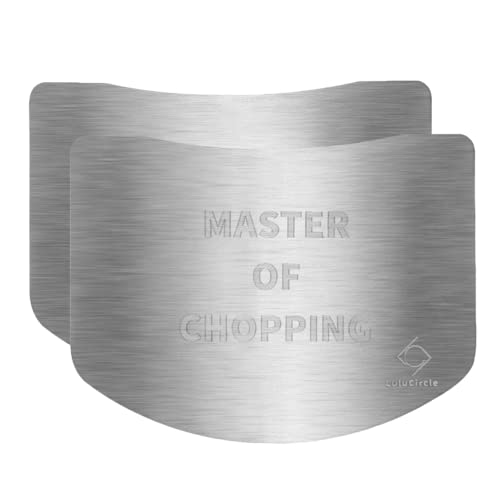
304 Stainless Steel Finger Guards is another two-piece metal option, distinguished by its 304 stainless steel material. Unlike fabric finger cots, a rigid guard keeps a metal barrier between a finger and the blade area; its adjustable sleeve design is intended to suit a range of finger sizes. It is a fit for someone who prefers steel and wants a pair of guards for slicing or dicing. The maker gives no ring dimensions, so confirm the fit before ordering if your fingers are unusually small or large.
Bottom line: Choose this if 304 stainless steel is your priority.
How to Choose a Finger Protector for Cutting
Choose by coverage first: a ring guard shields one finger, a cot covers a fingertip, and a glove covers more of the hand. Rigid metal guards and flexible fabric covers also feel and fit differently, so match the style to the task rather than assuming all finger protectors work alike. For repeated slicing, choose a guard that stays securely in place without making your grip awkward; if it shifts, stop and refit it before cutting. A sharp knife needs less force than a dull one, but either can cause a serious cut. Keep the guiding hand curled with fingertips tucked, use a stable cutting board, and move the blade away from the protected hand.
Finger Guard Coverage and Fit
Finger guards work only when they fit the finger and task: an open ring can be adjusted, while a fingertip cot depends on its fabric size. Measure the finger where a cot will sit before choosing a size, since a loose cover can shift and a tight one can restrict movement. A rigid guard should rest securely without pinching or sliding as the knife moves. The steel guards here are sold in two-piece packs, while the fabric cots come in a 12-count pack; pack count does not indicate how many fingers a design can cover at once. If your fingers fall outside the fit guidance, verify fit before ordering rather than relying on a universal-size assumption.
Finger Guards, Cots, and Gloves Compared
Coverage is the clearest difference between a guard, cot, and glove. Use this guide to choose the construction that matches the area you want covered.
| Style | Coverage | Best suited to |
|---|---|---|
| Open-ring steel guard | One finger | Rigid barrier and adjustable fit |
| Fabric finger cot | Fingertip | Flexible, reusable cover |
| Cut-resistant glove | More of the hand | Broader coverage for kitchen tasks |
A glove may cover more area, but it can feel different from a single-finger protector during delicate work. Use a finger-only design when that coverage is enough and a broader glove when the task calls for more hand coverage; in either case, never push food toward a blade with exposed fingertips.
Safe Use and Care for Cutting Guards
Cut-resistant gear can lower exposure to blade contact, but no finger protector makes knife work cut-proof. The maker describes JADE KIT Reusable Finger Cots as reusable and washable, but the given facts do not establish a particular washing temperature or dishwasher suitability; check care directions before cleaning. Stainless steel is corrosion-resistant, yet dry a metal guard after washing and inspect its edges and fit before use. Replace a fabric cover if it tears, loosens, or no longer stays in position. Keep guards clean between raw meat and ready-to-eat foods, and use separate boards or wash boards and utensils after raw meat to prevent cross-contamination.
Frequently Asked Questions
Can a finger guard stop every knife cut?
No finger guard can guarantee protection from every cut. A guard reduces exposure only where it covers, so keep fingertips curled and the blade path away from your hand.
How should a finger cot fit for cutting?
A finger cot should sit snugly at the fingertip without restricting movement or slipping. Measure the finger where the cot will sit, especially since this 12-count set advises measuring for fit.
Are stainless steel finger guards dishwasher safe?
The steel composition alone does not establish dishwasher suitability. Check the manufacturer’s care directions before putting a guard in a dishwasher, and dry metal guards after washing.
Should I use a glove or a finger protector?
Choose by coverage: a finger protector covers one finger or fingertip, while a glove covers more of the hand. For either style, keep the guiding hand curled and use a stable cutting board.