
Flush Valves With High Durability: 4 Models Compared

For a manual toilet flush valve with durability-focused features, choose American Standard Ultima Manual Piston Valve for its self-cleaning piston, wiper spring and chemical-resistant EPDM seals. Choose Zurn AquaFlush Plus PL ZER Sensor Valve or Zurn AquaFlush Manual Urinal Valve instead for a commercial diaphragm valve, or Sloan Regal 110 Manual Flushometer for a 3.5 GPF water-closet flushometer; each requires matching the fixture and connection.
A flush valve releases water directly from the supply to flush a toilet or urinal, unlike a tank fill valve, which refills a toilet tank.
We earn a commission if you buy through links on this page. As an Amazon Associate I earn from qualifying purchases. Products are compared on manufacturer specifications, not hands-on testing.
- Best overall: American Standard Ultima Manual Piston Valve – Its self-cleaning brass piston, integral wiper spring and chemical-resistant EPDM seals emphasize service life.
- Best for sensor operation: Zurn AquaFlush Plus PL ZER Sensor Valve – Its dual-seal diaphragm, clog-resistant bypass and chloramine-resistant seals are paired with a 1.28 GPF sensor valve.
- Best for low-flow urinals: Zurn AquaFlush Manual Urinal Valve – Its 0.5 GPF flush volume and clog-resistant triple-filter diaphragm suit a compatible urinal.
| Product | Best for | Valve type | Flush volume | Connection / fit | Shop |
|---|---|---|---|---|---|
| American Standard Ultima Manual Piston Valve | Manual toilet flushes | Manual piston | 1.1 GPF | — | Check Price on Amazon |
| Zurn AquaFlush Plus PL ZER Sensor Valve | Sensor toilet flushes | Sensor diaphragm | 1.28 GPF | 11.5-in rough-in; 1.5-in top spud | Check Price on Amazon |
| Sloan Regal 110 Manual Flushometer | High-volume flushes | Manual flushometer | 3.5 GPF | Top-spud fixture connection | Check Price on Amazon |
| Zurn AquaFlush Manual Urinal Valve | Low-flow urinals | Manual diaphragm | 0.5 GPF | 11.5-in rough-in; 0.75-in top spud | Check Price on Amazon |
Flush Valves With High Durability
Match the fixture, connection and flush volume first, then compare the valve features that may reduce clogging or seal wear.
American Standard Ultima Manual Piston Valve

For a manual toilet flush valve, the piston design sets this model apart: its brass piston has an integral wiper spring and self-cleaning orifice. American Standard says the piston operation provides accurate, repeatable flushing, and the chemical-resistant EPDM seals are intended for long life. The valve remains closed after a loss of water pressure without needing a reset. Its 1.1 GPF volume suits a compatible high-efficiency fixture. The main limitation is fit: this is a specific flush volume and valve type, so confirm that the toilet and existing connection are compatible before choosing it.
Bottom line: Choose this for a compatible toilet when a self-cleaning piston and chemical-resistant seals are priorities.
Zurn AquaFlush Plus PL ZER Sensor Valve

The sensor-operated design distinguishes this commercial diaphragm valve from the manual options. Its chrome-plated metal cover, dual-seal diaphragm, clog-resistant bypass and chloramine-resistant seals are durability-oriented features; the maker also specifies a manual override for power failure. The valve flushes at 1.28 GPF and uses an 11.5-inch rough-in with a 1.5-inch top spud. It may suit a compatible commercial toilet installation where sensor operation is wanted. The limitation is connection and power dependence: verify the fixture connection and electrical setup before selecting a sensor valve.
Bottom line: Choose this for a compatible commercial toilet where sensor operation and a manual override are useful.
Sloan Regal 110 Manual Flushometer

The 3.5 GPF flush volume makes this manual flushometer distinct from the lower-volume options. Sloan says Para-Flo Technology controls flush volume, while its non-hold-open handle and lack of external volume adjustment are designed to deliver a consistent amount per flush. This model is intended for a water closet with a top-spud fixture connection and includes an XL sweat-solder adapter kit. It fits applications requiring that higher flush volume, rather than a low-flow setup. Check that the fixture calls for 3.5 GPF and that its connection matches; the model is not a universal fit.
Bottom line: Choose this only for a water closet designed for a 3.5 GPF manual flushometer.
Zurn AquaFlush Manual Urinal Valve
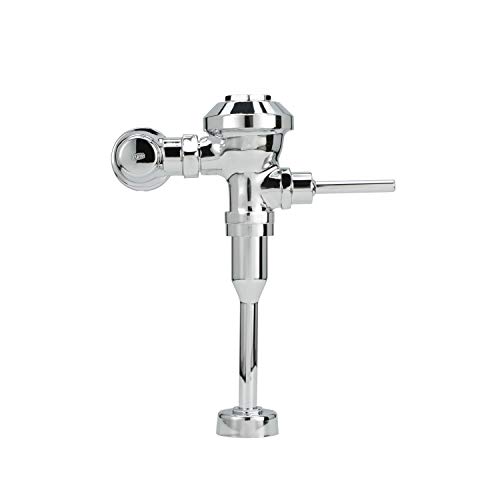
The 0.5 GPF output and urinal connection make this manual diaphragm valve the specialized choice here. Its clog-resistant triple-filter diaphragm, chemical-resistant gaskets and seals, and no-leak manual handle are intended to support service life with lower maintenance. The valve uses an 11.5-inch rough-in and a 0.75-inch top spud, plus an exposed sweat-solder kit and cast wall flange. Those dimensions make it a fit for a compatible urinal, not a water closet. Confirm the fixture’s required flush volume and spud size before selecting it.
Bottom line: Choose this for a compatible urinal requiring a 0.5 GPF manual flush.
How to choose a durable flush valve
Start with the fixture and its required flush volume; durability cannot compensate for a mismatched valve. Toilet and urinal flush valves use different flush volumes and connection sizes, so identify the fixture before comparing seal or diaphragm designs. A piston valve uses a moving piston to meter the flush, while diaphragm valves use a flexible diaphragm; a clog-resistant bypass or filter can help limit debris-related service issues. Materials also matter: chemical-resistant seals are useful where water treatment chemicals can affect elastomers. For the options here, compare the valve volume and connection against the fixture requirements, then weigh manual versus sensor operation. Do not choose a valve solely by its advertised durability features if its spud or rough-in does not match.
Flush volume and connection sizing
Flush volume and fixture connection determine fit: the models here range from 0.5 GPF for a urinal to 3.5 GPF for a water closet. GPF means gallons per flush, and a valve must match the fixture’s designed flush volume as well as its connection. Top-spud size refers to the diameter of the fixture inlet connection; 0.75-inch and 1.5-inch top spuds are not interchangeable. Rough-in is the distance from the finished wall to the center of the fixture connection; these Zurn models specify an 11.5-inch rough-in. Use the table as a screening guide, not a substitute for confirming the fixture connection before installation.
Use these fit requirements to narrow the valve type before choosing a model.
| Need | Relevant specification | Match |
|---|---|---|
| Low-flow urinal | 0.5 GPF, 0.75-in top spud | Compatible urinal |
| High-efficiency toilet | 1.1 GPF piston | Compatible toilet and valve connection |
| Sensor commercial toilet | 1.28 GPF; 1.5-in top spud | 11.5-in rough-in and compatible fixture |
| 3.5 GPF water closet | Manual flushometer, top-spud connection | Fixture designed for 3.5 GPF |
Piston, diaphragm and sensor valve differences
Piston and diaphragm describe valve mechanisms, while sensor describes how a flush is triggered; these are not identical categories. The manual piston option has a brass piston with an integral wiper spring and self-cleaning orifice. Diaphragm models use filtration or bypass features to resist clogging, and they may be manual or sensor-operated. A sensor valve adds electronic operation, which brings a power-failure consideration; the Zurn sensor model includes a manual override. A manual valve avoids sensor power needs but still depends on correct fixture connection and suitable flush volume. Choose a mechanism based on the installed fixture and maintenance priorities, not on the mechanism name alone.
Installation checks and routine upkeep
Confirm the flush volume, top-spud diameter, rough-in and connection type before replacing a flush valve; mismatches can prevent a proper fit or flush. Sweat-solder kits require plumbing work involving heat, so shut off the water supply and use appropriate fire precautions, or have a qualified plumber perform the work. Mineral debris can interfere with valve movement or small passages; clean or replace serviceable filter or diaphragm components according to the valve’s maintenance instructions. Sensor valves also need a functioning power source, though the model provides a manual override. Inspect seals for wear during service, especially where water chemistry is a concern, and replace damaged components rather than forcing a leaking valve to operate.
Frequently Asked Questions
What does GPF mean on a flush valve?
GPF means gallons per flush, the volume released for one flush. The options here range from 0.5 GPF for a urinal to 3.5 GPF for a water closet, so match the fixture’s required volume.
Can a urinal flush valve fit a toilet?
Not automatically; urinal and toilet valves can differ in flush volume and spud size. For example, the 0.5 GPF valve here uses a 0.75-inch top spud, while the 1.28 GPF sensor model uses a 1.5-inch top spud.
What is the difference between a piston and diaphragm valve?
A piston valve meters water with a moving piston, while a diaphragm valve uses a flexible diaphragm to control flow. Features such as a wiper spring, filter or clog-resistant bypass address debris differently, but fixture compatibility remains essential.
Do sensor flush valves work during a power outage?
Sensor operation may be unavailable during a power failure, so check whether the particular valve offers an override. The Zurn sensor model described here has a manual override button for that situation.
How do I know which top-spud size I need?
Match the valve’s top-spud diameter to the fixture inlet; the two Zurn options here specify 0.75-inch and 1.5-inch top spuds. Measure or confirm the fixture specification before buying because those sizes are not interchangeable.