
Games for 7 Year Olds: 4 Picks Compared by Play Style

For most 7-year-olds, Sorry! Classic Board Game is the best starting point because its age guidance begins at 6 and its pawn-racing play is easy to explain.
We earn a commission if you buy through links on this page. As an Amazon Associate I earn from qualifying purchases. Products are compared on manufacturer specifications, not hands-on testing.
- Best overall: Sorry! Classic Board Game – Its age guidance starts at 6, and the race-to-home format is straightforward to follow.
- Best for silly card play: Farting Unicorns Go Fish – Go Fish-style turns and 2–6 player capacity work for a small group.
- Best for dexterity play: Operation Electronic Board Game – Tweezers and buzzer gameplay are for ages 6+ and allow 1 or more players.
- Best for guessing games: Hedbanz Picture Guessing Game – Yes-or-no questions and picture cards support 2–6 players ages 6+.
| Product | Best for | Age guidance | Players | Play style | Shop |
|---|---|---|---|---|---|
| Sorry! Classic Board Game | Family board play | 6+ | — | Pawn racing | Check Price on Amazon |
| Farting Unicorns Go Fish | Silly card rounds | 4+ | 2–6 | Go Fish matching | Check Price on Amazon |
| Operation Electronic Board Game | Steady-hand challenge | 6+ | 1+ | Tweezers dexterity | Check Price on Amazon |
| Hedbanz Picture Guessing Game | Question-based guessing | 6+ | 2–6 | Yes/no guessing | Check Price on Amazon |
Games for 7 Year Olds Compared
Compare each game’s age guidance, group size, and main activity to match the game to your child and the people playing.
Sorry! Classic Board Game
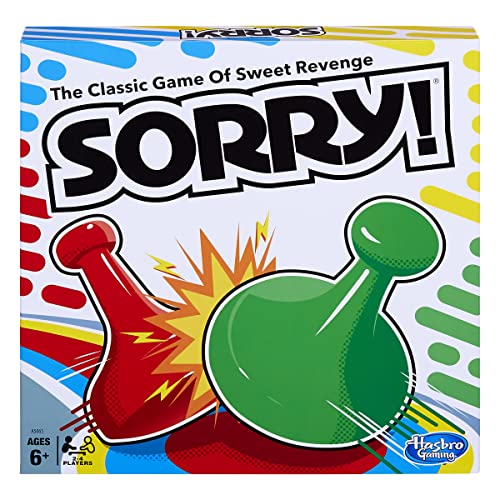
Sorry! Classic Board Game is a race-to-home board game, making it the clearest pick here for children who enjoy turns, movement, and a little competition. Players move pawns using cards, and the game includes the familiar twist of sending an opponent’s pawn back to start. The age guidance begins at 6, so a 7-year-old falls within its range. This option suits a family or group that wants a traditional board game format; the player-count facts do not establish a precise group size, so confirm that it fits your planned players before choosing.
Bottom line: Pick this for a 7-year-old who likes turn-based pawn racing.
Farting Unicorns Go Fish

Farting Unicorns Go Fish stands apart with comic card names and illustrations layered onto familiar Go Fish matching. It supports 2–6 players and is marked for ages 4+, so a 7-year-old can play within the age range. Players ask an opponent for a card type they already hold; the game uses five to seven cards per player depending on group size. Its compact card-game format can work for a small group, but the silly humor may not suit every family. Choose it when funny prompts are part of the appeal.
Bottom line: Choose this for a group that enjoys goofy humor and card matching.
Operation Electronic Board Game

Operation Electronic Board Game is the dexterity-focused choice: players use tweezers to remove pieces without touching the cavity sides, which triggers a buzzer and lights the character’s nose. It is marked for ages 6+ and supports one or more players, so it can suit solo play as well as a shared turn-taking game. The hand-control challenge makes it different from card matching or pawn racing. Its buzzer and small removable pieces are worth considering if a child dislikes sudden sounds or younger children may handle the components.
Bottom line: Pick this when careful hand movements are the main attraction.
Hedbanz Picture Guessing Game

Hedbanz Picture Guessing Game turns picture cards into a guessing round: each player places a card in a headband and asks yes-or-no questions to identify it. It is designed for 2–6 players ages 6+, and players aim to guess three cards correctly to win. That question-driven format makes it a distinct fit for children who like narrowing down clues rather than moving pieces or matching cards. The game depends on players understanding and answering questions, so it may be less suitable for a child who prefers games with little conversation.
Bottom line: Choose this for a child who enjoys asking and answering clues.
Game Types and Play Styles
Board races, card matching, dexterity challenges, and picture guessing ask children to do different things. A race game uses turns and movement; a Go Fish variant relies on remembering and requesting matching cards. A dexterity game focuses on controlled hand movements, while a guessing game rewards asking useful questions. For a group that prefers conversation, choose a question-based format; for a child who wants to act without waiting for several players, look for a game with solo support. This table maps the play style to a likely need, rather than treating one style as best for every 7-year-old.
| Play style | Useful when | Check |
|---|---|---|
| Pawn racing | Players enjoy turns and competition | Group size |
| Card matching | A short, conversational format appeals | Players supported |
| Dexterity | Careful-hand challenge is welcome | Comfort with sudden sounds |
| Question guessing | Players like clues and conversation | Comfort asking questions |
Age Labels, Difficulty, and Fit
Age labels are a useful first screen, not a guarantee that every child will enjoy the same challenge. A game marked 6+ is within its age range for a 7-year-old; a game marked 8–12 is intended for older children. Use the younger child’s patience, reading comfort, and interest in rules as tie-breakers, not as assumptions based only on age. If a child is new to games, demonstrate one turn and keep the first round relaxed. For a child who already enjoys logic puzzles, an older age label may still be worth considering, but select it knowing the intended range begins at 8.
Small Pieces and Game Safety
Keep games with small pieces away from children under 3, who face a choking risk from small objects. At age 7, the more relevant choice is whether pieces can be kept together and whether the play activity suits the child: the dexterity game uses tweezers and removable parts, while the marble puzzle includes marbles and towers. Set up such games on a clear surface and put loose pieces away after play, especially where younger siblings are present. For an electronic buzzer game, consider whether sudden sound will bother the child. Adult supervision is prudent when younger children share the play area.
Frequently Asked Questions
Are games marked ages 6 and up suitable for 7-year-olds?
Yes, age 7 falls within a 6+ age range. The label is a starting point; a child’s comfort with the rules and activity still matters.
How many players should a game for a 7-year-old support?
Match the player range to the people who will play. A 2–6 player game will not cover a solo session, while a 1+ player game can.
What kind of game works for a child who likes puzzles?
A marble logic puzzle offers a build-and-solve activity, but check its age guidance: the puzzle here is marked for ages 8–12, not 7.
Can a 7-year-old play games with marbles and small pieces?
A 7-year-old is older than the under-3 age group at greatest choking risk from small objects, but keep marbles and loose pieces away from younger siblings. Store them after play.
What is a good game for a child who likes asking questions?
A yes-or-no picture guessing game is a natural match because players use questions to identify a card. A 2–6 player format works best when at least two people are available.