
Gorilla Waterproof Fabric Glue: 4 Options Compared

Gorilla Fabric Glue, 2.5 fl oz is the closest fit for washable fabric repairs because its maker says the flexible, clear adhesive is waterproof and safe for washer and dryer use once fully cured.
Fabric glue bonds material without stitching, but a glued seam can feel stiffer than the surrounding fabric. For a load-bearing or frequently flexed seam, stitching may be a better choice.
We earn a commission if you buy through links on this page. As an Amazon Associate I earn from qualifying purchases. Products are compared on manufacturer specifications, not hands-on testing.
- Best overall: Gorilla Fabric Glue, 2.5 fl oz – Its maker says the clear, flexible bond is waterproof and washer- and dryer-safe after curing.
- Best for a glue-and-clip kit: FITTDYHE Permanent Fabric Glue, 60 mL – The 60 mL adhesive comes with spreaders and clips, and its maker gives a 24–48-hour wait.
- Best for air-dry woven repairs: Aleene’s Fabric Fusion, 4 oz – It is designed for cotton, denim and flannel, with an air-dry method and no heat setting.
| Product | Best for | Container size | Water exposure | Fabric range | Shop |
|---|---|---|---|---|---|
| Gorilla Fabric Glue, 2.5 fl oz | Washable fabric repairs | 2.5 fl oz | Waterproof; washer and dryer safe after cure | Cotton, denim, polyester, leather, nylon | Check Price on Amazon |
| FITTDYHE Permanent Fabric Glue, 60 mL | Clipped seam repairs | 2.0 fl oz | Washable; wait 24–48 hours | Cotton, denim, leather, polyester, nylon | Check Price on Amazon |
| Aleene’s Fabric Fusion, 4 oz | Woven fabric crafts | 4 fl oz | Washable; air dry | Cotton, denim, flannel, silk, nylon | Check Price on Amazon |
| Cerca de Fabric Glue, 2 oz | Flexible patch repairs | 2 fl oz | Waterproof; washable | Cotton, denim, leather, polyester, nylon | Check Price on Amazon |
Gorilla Waterproof Fabric Glue and Alternatives
Compare the fabric adhesives by washable claims, stated material compatibility and application constraints.
Gorilla Fabric Glue, 2.5 fl oz
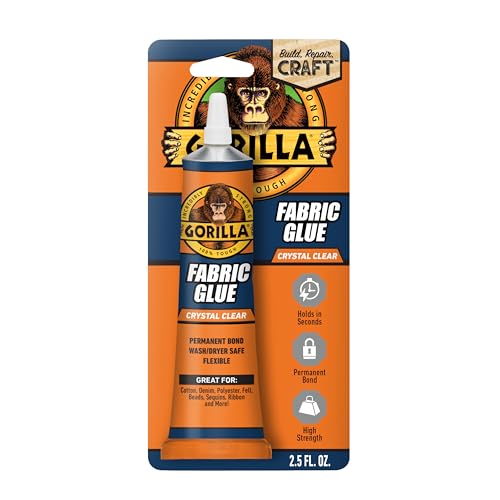
Gorilla Fabric Glue, 2.5 fl oz is the named Gorilla fabric adhesive, with a clear finish and flexible bond intended for repairs, patches, hems and embellishments. Its maker says the bond is waterproof and remains flexible after washing; washer and dryer use is intended only once the glue is fully cured. The material range includes cotton, denim, polyester, felt, leather, nylon and flannel, plus ribbon and decorative add-ons.
Choose it when laundering is part of the repair’s intended use. The fields give no specific cure duration, so confirm the cure time before washing; a stitched repair may suit a seam that must flex heavily.
Bottom line: Pick this for clear fabric repairs intended to withstand washing after full cure.
FITTDYHE Permanent Fabric Glue, 60 mL

FITTDYHE Permanent Fabric Glue, 60 mL stands out for its included glue spreaders and clips, making it a fit for someone who wants to secure a seam while the adhesive sets. Its maker says to wait 24–48 hours and warns not to open the clips during that interval. The material range includes cotton, flannel, denim, leather, polyester and nylon.
Choose it for a small repair where the clip-based method is practical. Unlike Gorilla Fabric Glue, 2.5 fl oz, the claims do not describe the bond as waterproof or give a dryer-safe claim, so do not assume it matches that laundering use; check the garment’s care label before treating a glued repair as washable.
Bottom line: Choose this when included spreaders and clips suit your repair method.
Aleene’s Fabric Fusion, 4 oz

Aleene’s Fabric Fusion, 4 oz is the larger container and specifically targets woven materials such as cotton, denim and flannel. The maker says it dries flexible, is permanent and washable, and requires air drying without heat setting. It is not recommended for stretchy fabrics, patches, heavy synthetics or felt, which makes material choice especially important.
Choose it for compatible woven repairs or embellishments when an air-dry process works. Its instructions caution against clamping, pressing or weighting the item while it dries, unlike the clip-based approach offered with FITTDYHE Permanent Fabric Glue, 60 mL. For knits or stretchy garments, consider stitching instead because the adhesive’s limits exclude those materials.
Bottom line: Pick this for compatible woven projects that can air-dry without pressure.
Cerca de Fabric Glue, 2 oz

Cerca de Fabric Glue, 2 oz is described as a clear, flexible fabric adhesive for clothing, bags, belts, furniture and car-seat repairs. Its maker claims waterproof performance and says the bond can be washed repeatedly; the fabrics include cotton, denim, leather, polyester and nylon. The 2-ounce tube is smaller than Aleene’s Fabric Fusion, 4 oz, while the uses extend beyond garments to upholstery-type projects.
Choose it when those broader repair uses and flexible-bond claims match your task. The claims do not give a cure time or a washer-and-dryer condition, so verify the waiting period before laundering; for a repair where exact wash timing matters, that missing step is important.
Bottom line: Choose this for flexible repairs across garments and upholstery-type items.
How to choose waterproof fabric glue
Choose by fabric compatibility first, then by how the finished item will be cleaned. Fabric adhesives are formulated for different substrates: a glue suitable for cotton may not hold stretchy knits, coated fabric or heavy synthetic material. Check the garment care label as well; a hand-wash-only fabric should not be treated as machine washable just because the adhesive claims water resistance.
Waterproof and washable are related but not interchangeable claims. A waterproof bond resists water exposure, while a washer- or dryer-safe claim applies only under the maker’s curing conditions. For a repair that will be laundered, choose a product with an explicit washable claim and follow its cure requirement. If the seam will carry tension or flex repeatedly, choose stitching over glue; a glued edge can stiffen the fabric and concentrate stress at the boundary.
Fabric compatibility and fit
Match the adhesive’s material list to the exact fabric before applying it. Cotton, denim and flannel are woven fabrics; jersey and spandex stretch, and the flexibility of the garment can pull at a bond. A glue maker’s fabric list does not establish suitability for every finish, coating or blend, so test a hidden area when appearance or hand-feel matters.
Keep the application narrow: excess adhesive can spread beyond a hem or patch and leave a visible or stiff area. For seams, align the fabric edges before bonding and avoid stretching the fabric while it sets. With under 1 inch of seam allowance available, avoid adding a wide glue band that could encroach on the garment’s finished edge; use a narrow application and inspect the result before relying on the repair.
Fabric glue types and project choices
Fabric glue replaces sewing for some repairs, but it does not create the same mechanical interlock as thread passing through fabric. Use glue for flat hems, patches or embellishments when the adhesive names the material and intended cleaning method. Use sewing for load-bearing seams, bag straps or areas repeatedly pulled in opposite directions; stitching distributes force through multiple thread passes.
The comparison below separates a washable fabric adhesive, a clip-assisted adhesive, an air-dry adhesive and a flexible-repair adhesive. A buyer should choose by the work method as well as the word “waterproof”: cure time, whether pressure is allowed during drying, and material exclusions can decide whether a product fits the project.
| Project need | What to prioritize |
|---|---|
| Clothing that will be laundered | Explicit washable claim and cure condition |
| Stretchy or load-bearing seam | Stitching rather than adhesive |
| Woven patch or embellishment | Named fabric compatibility and controlled application |
| Repair needing temporary restraint | Application method that permits clips or pressure |
Preparing and caring for a glued repair
Clean, dry fabric gives adhesive a better chance to contact the fibers; lint, dust, oil or fabric softener residue can interfere with bonding. Before applying glue to a visible garment, test a hidden patch of the same material for color change, stiffness and show-through. Use a thin, even application rather than saturating fabric, especially on lightweight cloth where adhesive may soak through.
Allow the full cure period before wearing or washing the repaired item. Drying to the touch is not necessarily the same as a complete cure, and heat or clamping can conflict with a particular product’s method. Keep glue away from skin and eyes, and follow the container’s handling directions; adhesive on an unintended surface can be difficult to remove once set.
Frequently Asked Questions
Can fabric glue go in a washing machine?
Some fabric glues are made for washable repairs, but only after their required cure period. Follow the specific product’s wash and dryer conditions, and use the garment care label to determine the gentlest suitable cycle.
How long should fabric glue cure before washing?
Cure time depends on the adhesive; one product here gives a 24–48-hour wait, while another gives no duration in its claims. Do not wash until the selected glue’s full cure requirement has passed.
Does waterproof fabric glue work on stretchy clothes?
Not every fabric adhesive suits stretch fabric; one compared adhesive specifically excludes spandex, jersey and knits. For a garment that stretches substantially in wear, stitching is generally a more dependable choice than a glue not expressly intended for stretch.
How can I keep fabric glue from showing through?
Apply a small, even amount and test first on a hidden area of the same fabric. Lightweight or loosely woven cloth is more prone to showing adhesive through, so avoid saturating it.
Can fabric glue replace sewing on a torn seam?
Fabric glue can join some seams, but thread mechanically passes through the material and is better suited to repeated tension. Use adhesive for low-stress repairs and consider stitching for a seam that carries weight or flexes often.