
Low Sodium Fish Sauce: 5 Options Compared by Fit

For a low sodium fish sauce, Làng Chài Xưa Less Sodium 250 ml is the closest match because its maker says it contains more fish and less salt than regular fish sauce. Choose another option if you need a vegetarian sauce or a traditional anchovy sauce instead; those products do not make the same reduced-sodium claim.
Fish sauce is a fermented seasoning, usually made from fish and salt, that adds concentrated savory flavor to small amounts of food.
We earn a commission if you buy through links on this page. As an Amazon Associate I earn from qualifying purchases. Products are compared on manufacturer specifications, not hands-on testing.
- Best overall: Làng Chài Xưa Less Sodium 250 ml – Its maker says it has higher fish protein and less sodium than regular fish sauce.
- Best vegetarian option: Best Of Thailand Vegetarian Fish Sauce – It is a vegetarian fish sauce, rather than an anchovy-based sauce.
- Best aged option: Wangshin Korean Fish Sauce 10 fl oz – It is anchovy sauce fermented for two years in traditional clay pots.
| Product | Best for | Style | Bottle volume | Main ingredients | Shop |
|---|---|---|---|---|---|
| Làng Chài Xưa Less Sodium 250 ml | Reduced-sodium claim | Vietnamese anchovy | 8.45 fl oz | Anchovies; — | Check Price on Amazon |
| Best Of Thailand Vegetarian Fish Sauce | Vegetarian cooking | Vegetarian | 47.3 fl oz total | — | Check Price on Amazon |
| Thai Kitchen Premium Fish Sauce 6.76 fl oz | Thai-style seasoning | Anchovy fish sauce | 6.76 fl oz | Salted anchovies; sea salt | Check Price on Amazon |
| Red Boat Fish Sauce 40°N 17 fl oz | Two-ingredient sauce | Vietnamese anchovy | 17 fl oz | Black anchovies; sea salt | Check Price on Amazon |
| Wangshin Korean Fish Sauce 10 fl oz | Korean fermentation | Korean anchovy | 10 fl oz | Anchovy; salt | Check Price on Amazon |
Low sodium fish sauce options
Only one option here makes an explicit reduced-sodium claim, while the alternatives serve different ingredient and flavor preferences.
Làng Chài Xưa Less Sodium 250 ml

Làng Chài Xưa Less Sodium 250 ml is the only sauce in this group whose maker explicitly says it has less sodium than regular fish sauce. It is a 42N Vietnamese anchovy sauce made through traditional fermentation, packaged in a 250 ml glass bottle. The maker also presents it for baby meals from 6 months and family cooking, including porridge, rice, vegetables, soups, and noodle broth.
Bottom line: Choose this if the reduced-sodium claim is your priority and verify the sodium per serving for a strict limit.
Best Of Thailand Vegetarian Fish Sauce

Best Of Thailand Vegetarian Fish Sauce stands apart as the vegetarian option: its maker describes an Asian brewed vegan sauce for dressings and cooking, not an anchovy fermentation. The two-pack contains two 23.65 fl oz bottles, for 47.3 fl oz total, and the maker says it is kosher-certified and fat-free. This may fit cooks who want an umami-style seasoning without fish. It is not an explicit low-sodium choice, however, so anyone reducing sodium should check the package nutrition panel before using it as a substitute for fish sauce.
Bottom line: Pick this for vegetarian cooking, not as a confirmed low-sodium substitute.
Thai Kitchen Premium Fish Sauce 6.76 fl oz
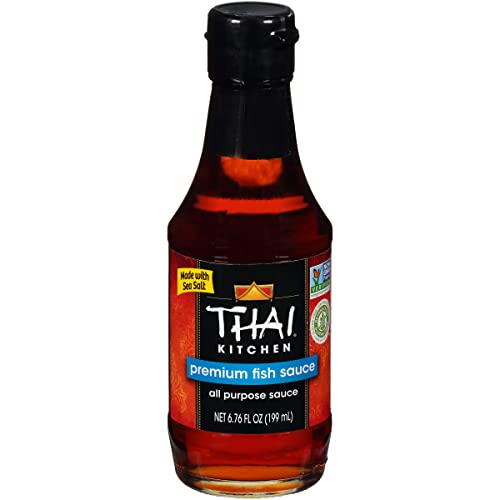
Thai Kitchen Premium Fish Sauce 6.76 fl oz offers a straightforward anchovy-and-sea-salt profile in a 6.76 fl oz bottle, with gluten-free labeling. Its maker suggests using it as a seasoning or in place of soy sauce or salt, and notes its fit with sweet and spicy Thai flavors. That versatility makes it a distinct pantry option for cooks building Thai-style dishes. The package facts provided do not make a reduced-sodium claim, so it should not be treated as equivalent to the one product here marketed as less sodium.
Bottom line: Choose it for a compact Thai-style anchovy seasoning when sodium reduction is not the deciding requirement.
Red Boat Fish Sauce 40°N 17 fl oz

Red Boat Fish Sauce 40°N 17 fl oz is defined by its two-ingredient recipe: black anchovies and sea salt from Vietnam’s Phú Quốc archipelago. The maker says the first-press sauce is 40N and fermented for a year in wooden barrels; it also carries gluten-free and sugar-free claims. Its 17 fl oz bottle suits cooks who want a larger bottle of a simple, traditionally fermented anchovy sauce. Despite its higher-fish flavor positioning, the claims do not say it has less sodium, so it is not a confirmed low-sodium pick.
Bottom line: Pick it for a two-ingredient, year-fermented sauce rather than for a reduced-sodium claim.
Wangshin Korean Fish Sauce 10 fl oz
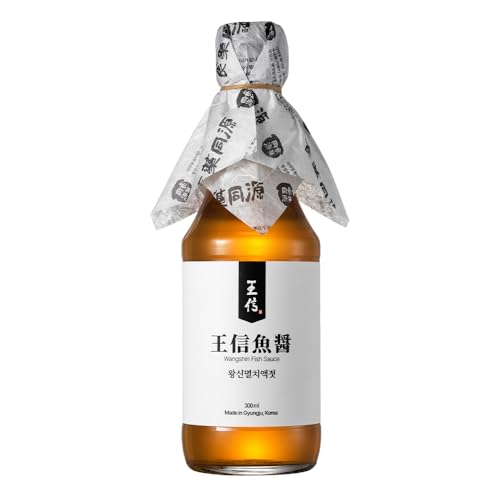
Wangshin Korean Fish Sauce 10 fl oz differs through its Korean fermentation method: the maker says anchovy and salt age for two years in traditional clay pots, with gravity rather than external pressure. The 10 fl oz sauce is also described as having no preservatives and Non-GMO Project Verified status. The maker compares its sodium with salt, not with regular fish sauce, so that claim does not establish that the sauce itself is low in sodium. Its flavor profile may appeal to cooks seasoning Korean dishes such as kimchi and soups.
Bottom line: Choose it for Korean-style, two-year anchovy fermentation, not as a verified lower-sodium sauce.
How to choose low sodium fish sauce
Start by comparing milligrams of sodium per serving, not claims about more fish or a rich flavor. Fish sauce is concentrated, and a teaspoon is a common seasoning amount; serving sizes on nutrition panels can differ, so compare equal quantities. Sodium reduction is meaningful only against a defined baseline, such as the same brand’s regular version or a comparison. When a label gives no sodium figure, do not infer one from protein strength, fermentation time, or ingredient count. If a medical sodium limit applies, calculate the amount in the portion you will actually use and account for the rest of the meal.
Fish sauce ingredients and fermentation
Traditional fish sauce generally ferments fish with salt, while the products here include both anchovy sauces and one vegetarian alternative. Fermentation can take months or longer; time and fish-to-salt ratios contribute to a sauce’s aroma, color, and savory intensity, but do not independently prove a lower sodium level. A short ingredient list can help identify a simple recipe, yet salt remains a common part of the process. For flavor balance, add fish sauce gradually near the end of cooking, taste, then adjust acidity or sweetness before adding more salt. Do not substitute equal volumes for table salt without tasting because fish sauce contributes liquid and fermented flavor as well as sodium.
Matching sauce type to your cooking
Match the sauce’s base and style to the dish: anchovy fish sauce is the direct choice for recipes that call for traditional fish sauce, while a vegetarian formulation serves cooks avoiding fish. Korean and Thai sauces can differ in aroma and fermentation character, so a recipe’s regional style is a useful starting point. Use this guide to separate the available types before comparing nutrition labels.
| Need | Type to consider | Check before use |
|---|---|---|
| Lower-sodium claim | Reduced-sodium anchovy sauce | Sodium per serving |
| Avoid fish | Vegetarian fish-style sauce | Nutrition facts and recipe fit |
| Traditional fish flavor | Anchovy-and-salt sauce | Sodium and ingredient list |
Choose based on both the recipe and the actual sodium number; the style name alone cannot establish the sodium content.
Using fish sauce while limiting sodium
Measure fish sauce rather than pouring freely: starting with 1 teaspoon in a multi-serving dish makes it easier to control total sodium, then add more only after tasting. Balance savory intensity with lime juice, vinegar, aromatics, or unsalted broth instead of immediately adding salt. Fish sauce is a liquid condiment, so account for it in soups, marinades, and dipping sauces along with other salty ingredients such as soy sauce, bouillon, and cured foods. For baby meals, use only products and amounts appropriate to the child’s age and dietary needs; the presence of a baby-oriented claim does not replace checking the nutrition panel or seeking pediatric guidance on sodium.
Frequently Asked Questions
How do I compare sodium in fish sauces?
Compare sodium in milligrams per equal amount, such as per teaspoon, because serving sizes can differ. A claim of less sodium is useful only when the label identifies the amount or comparison.
Does more fish protein mean less sodium?
No, protein strength does not establish sodium content. Check the nutrition panel for milligrams per serving and compare the same serving size across sauces.
Can I use fish sauce instead of salt?
Yes, but start with a small measured amount and taste before adding more. Fish sauce adds fermented flavor and liquid as well as sodium, so it will not behave exactly like dry salt.
How much fish sauce should I add to soup?
Start with about 1 teaspoon for a multi-serving pot, then taste before adding more. Reduce other salty ingredients at the same time so the total sodium does not climb unnoticed.
Is vegetarian fish sauce the same as anchovy sauce?
No, vegetarian fish sauce is a fish-free seasoning intended to provide an umami-style flavor, while traditional versions use fish and salt. Check its sodium per serving separately rather than assuming it is lower.