
MAPEI Ultracolor Plus FA Grout: 5 Colors Compared

For a light grout color in a 10-pound bag, choose MAPEI Ultracolor Plus FA Avalanche; the deciding difference among these MAPEI Ultracolor Plus FA options is color, since each shares the same fine-aggregate, stain-resistance, and no-sealer-required features.
Choose another shade to suit your tile and grout-line contrast; grout is the material packed between tiles, and the joint width and tile layout still need to suit the installation.
We earn a commission if you buy through links on this page. As an Amazon Associate I earn from qualifying purchases. Products are compared on manufacturer specifications, not hands-on testing.
- Best overall: MAPEI Ultracolor Plus FA Avalanche – Avalanche is the white option for a light grout line, and the bag is 10 pounds.
- Best for pale gray: MAPEI Ultracolor Plus FA Frost – Frost provides a different shade while keeping the same 10-pound format.
- Best for dark contrast: MAPEI Ultracolor Plus FA Charcoal – Charcoal is the darkest named shade among these choices.
| Product | Best for | Color | Shop |
|---|---|---|---|
| MAPEI Ultracolor Plus FA Avalanche | Light grout lines | 38 Avalanche (white) | Check Price on Amazon |
| MAPEI Ultracolor Plus FA Frost | Pale gray lines | 77 Frost | Check Price on Amazon |
| MAPEI Ultracolor Plus FA Charcoal | Dark grout lines | 47 Charcoal | Check Price on Amazon |
| MAPEI Ultracolor Plus FA Moonbeam | Soft neutral lines | 5221 Moonbeam | Check Price on Amazon |
| MAPEI Ultracolor Plus FA Eggshell | Warm light lines | 5220 Eggshell | Check Price on Amazon |
MAPEI Ultracolor Plus FA grout colors
All five choices are 10-pound powder grout bags; use the color name to match the grout line to your tile plan.
MAPEI Ultracolor Plus FA Avalanche
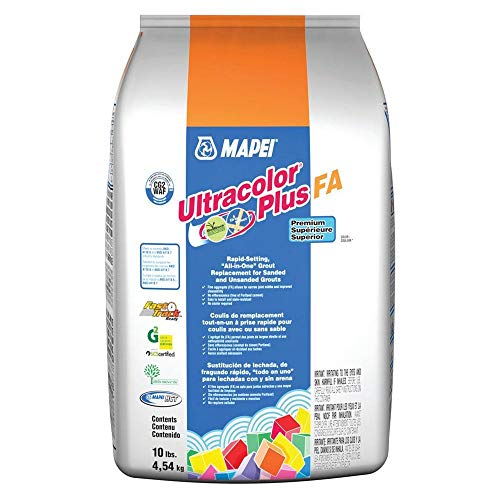
For a white grout line, MAPEI Ultracolor Plus FA Avalanche is the Avalanche color option in this group. The 10-pound powder is made with fine aggregate, which the maker says allows narrow joint widths and improves cleanability. The maker also says it is stain-resistant, needs no sealer, and is formulated to avoid efflorescence without Portland cement.
The bag’s water range is 32 to 35.2 ounces. Pick this shade when a light line suits the tile; white grout can show contrast against darker tile more strongly than a darker shade. Color suitability is the main limitation, not a difference in the grout features.
Bottom line: Choose the white shade when a light grout line suits your tile.
MAPEI Ultracolor Plus FA Frost
MAPEI Ultracolor Plus FA Frost gives the selection a named Frost shade, while retaining the same 10-pound format and stated product features as the other colors. Its fine aggregate is intended to support narrow joints and easier cleaning, and the maker says the grout is stain-resistant, requires no sealer, and avoids efflorescence without Portland cement.
Mix the bag with 32 to 35.2 ounces of water, keeping the amount consistent across a batch because excess water can affect grout color and performance. Frost suits a palette that calls for a different tone from white or charcoal; the color name alone does not establish how it will look beside a particular tile.
Bottom line: Choose Frost when its shade best coordinates with your tile.
MAPEI Ultracolor Plus FA Charcoal
MAPEI Ultracolor Plus FA Charcoal is the charcoal choice for a darker grout line, making color contrast its clear distinction in this set. The 10-pound fine-aggregate powder shares the same functions: the maker says it accommodates narrow joints, cleans more easily, resists stains, needs no sealer, and avoids efflorescence without Portland cement.
The mixing range is 32 to 35.2 ounces of water per bag. A dark line can create a stronger grid against pale tile, so compare the shade with the tile and room design before settling on it. This option is less suited to buyers specifically seeking a light or near-white joint.
Bottom line: Choose the dark shade when you want grout lines to stand out against light tile.
MAPEI Ultracolor Plus FA Moonbeam

MAPEI Ultracolor Plus FA Moonbeam adds Moonbeam, a named color alternative to Avalanche, Frost, Charcoal, and Eggshell. Its bag contains 10 pounds of powder, and the maker gives the same features as for the other options: fine aggregate for narrow joints and improved cleanability, stain resistance, no sealer requirement, and no Portland cement to cause efflorescence.
Use 32 to 35.2 ounces of water for the bag according to the mixing range. Moonbeam is a useful choice when its particular shade fits the tile scheme better than the other named colors. A color label cannot predict the final appearance across every tile, lighting condition, or grout joint.
Bottom line: Pick Moonbeam if its color is the closest fit for your tile palette.
MAPEI Ultracolor Plus FA Eggshell
MAPEI Ultracolor Plus FA Eggshell is the Eggshell option, formerly identified as White 00, for a light grout color distinct from the Avalanche and Frost choices. Like the other 10-pound bags, it is a fine-aggregate powder; the maker says it supports narrow joints, improves cleanability, resists stains, requires no sealer, and avoids efflorescence without Portland cement.
The water range is 32 to 35.2 ounces per bag. Eggshell suits a design that calls for this specific shade rather than a darker grout line. The practical limitation is color matching: check the shade against the actual tile before committing the whole installation to it.
Bottom line: Choose Eggshell when its shade coordinates with the tile better than the alternatives.
How to choose MAPEI Ultracolor Plus FA grout
Choose the grout color by deciding how visible you want the joints to be, then confirm the joint width suits the tile and grout. The five bags here are all 10 pounds and share the same mixing range, so the distinctions are color rather than package size or a separate feature set. Fine-aggregate grout can serve narrow joints; this product family is commonly specified for joints from 1/16 to 3/4 inch, but verify that range against the current manufacturer instructions for the exact product. A practical rule: for joints under 1/8 inch, check the tile and grout maker’s permitted range before selecting a grout. Grout fills tile joints; it does not replace flexible sealant at movement joints or changes of plane.
Light grout makes the lines less visually dominant with light tile, while dark grout can emphasize the tile grid. Test a small area or color sample where possible, since lighting and tile surface affect the perceived shade.
Compare the five grout colors and mixing amounts
Use the color column to narrow the choice; the shared bag size and water range do not distinguish these colors.
| Color | Bag size | Mix water |
|---|---|---|
| Avalanche (38) | 10 lb | 32–35.2 oz |
| Frost (77) | 10 lb | 32–35.2 oz |
| Charcoal (47) | 10 lb | 32–35.2 oz |
| Moonbeam (5221) | 10 lb | 32–35.2 oz |
| Eggshell (5220) | 10 lb | 32–35.2 oz |
Powder grout is mixed with water immediately before placement, unlike premixed grout. For each 10-pound bag, the mix range is 32 to 35.2 ounces; measuring water rather than estimating helps keep batch consistency. Do not add extra water to make grout easier to spread, because excess water can contribute to color inconsistency and weaker grout. Smaller partial batches require accurately scaled water and thorough blending, and leftover mixed grout should not be revived by adding water once it begins to set. Follow the product’s current package instructions for mixing and cleanup, since working time and cure timing are product-specific.
Joint width, tile fit, and movement joints
Joint width is a fit requirement, not just an appearance choice: narrow grout lines still need enough room for installation tolerances and tile-size variation. Fine-aggregate formulas are used for small joints, and Ultracolor Plus FA is commonly specified for 1/16- to 3/4-inch joints; confirm the current manufacturer range and whether it suits your tile material. Rectified tile can often be installed with narrower joints than irregular or handmade tile, but the tile maker’s minimum joint width matters. Use a consistent spacer layout and account for tile warpage before choosing a narrow line.
Grout is generally not the right fill at inside corners, wall-to-floor transitions, or other movement joints. Those locations typically need a flexible sealant so adjacent surfaces can move without cracking a rigid grout line. Never grout over an intentional building expansion joint.
Mixing and grout safety basics
Dry grout powder can irritate eyes and airways, so avoid breathing dust and use eye protection while pouring and mixing. Work with ventilation and consult the product safety data sheet for the correct protective equipment, especially when mixing multiple bags. Keep dry powder away from children and pets, and avoid skin and eye contact with the wet mix.
Measure the water for each 10-pound bag within the 32-to-35.2-ounce range, and keep the same proportion across batches to reduce shade variation. Mix only an amount you can place within the product’s working time; do not add water to grout that has begun to stiffen. Grout joints should be fully packed and cleaned without washing out the joint. Protect the installation from premature water exposure and follow the package instructions for cure and return to service.
Frequently Asked Questions
How wide can Ultracolor Plus FA grout joints be?
Ultracolor Plus FA is commonly specified for joints from 1/16 to 3/4 inch. Check the current manufacturer range and your tile maker’s minimum joint size before installation, especially with narrow joints.
How much water does a 10-pound bag need?
The mix range is 32 to 35.2 ounces of water per 10-pound bag. Measure the water and keep the same proportion between batches to help maintain consistent grout color.
Does MAPEI Ultracolor Plus FA need a sealer?
The maker says Ultracolor Plus FA requires no sealer. Sealant at movement joints is a separate need; grout should not replace flexible sealant at inside corners or changes of plane.
Can grout be used at shower corners and wall transitions?
Movement joints and changes of plane generally need flexible sealant rather than rigid grout. Keep grout within the tile joints and preserve intentional expansion joints.
How can I reduce grout color variation?
Measure mix water consistently and avoid adding excess water, which can contribute to color variation. Keep batches proportional and follow the package directions for mixing and cleanup.