
Sardines No Salt Added: 3 Water-Packed Picks

For a larger can and the protein figure provided, choose Wild Planet Sardines in Water, 4.4 oz; it comes in 4.4-ounce tins and has 17 grams of protein per serving, according to the brand. These water-packed sardines have no salt added, but that does not mean they are sodium-free.
Choose a different option if you want a smaller can, or compare the sodium per serving on the nutrition labels if sodium intake is your main concern.
We earn a commission if you buy through links on this page. As an Amazon Associate I earn from qualifying purchases. Products are compared on manufacturer specifications, not hands-on testing.
- Best overall: Wild Planet Sardines in Water, 4.4 oz – The 4.4-ounce can has a 17 grams of protein per serving.
- Best for larger pack size: Connetable Sardines in Water, 4.38 oz – Each can holds 4.38 ounces, the largest of the three options.
- Best for smaller portions: Beach Cliff Sardines in Water, 3.75 oz – The 3.75-ounce cans are the smallest in this group.
| Product | Best for | Can size | Protein per serving | Shop |
|---|---|---|---|---|
| Wild Planet Sardines in Water, 4.4 oz | Higher protein | 4.4 oz | 17 g | Check Price on Amazon |
| Connetable Sardines in Water, 4.38 oz | Larger cans | 4.38 oz | — | Check Price on Amazon |
| Beach Cliff Sardines in Water, 3.75 oz | Smaller portions | 3.75 oz | 12 g | Check Price on Amazon |
Sardines No Salt Added
Compare can size and the available protein figures to find a water-packed option that suits your meals.
Wild Planet Sardines in Water, 4.4 oz

The 4.4-ounce can and stated protein figure distinguish this option: the brand says each serving provides 17 grams of protein. The wild-caught sardines are packed in water, and the product features describe them as scale-free with a firm texture. A pull tab is included, and the sardines can be eaten from the can or added to crackers, salads, or other meals. This 12-can pack suits shoppers who want the largest protein amount among these choices. The limitation is that the specifications do not give a sodium amount, so compare the nutrition label if sodium is a deciding factor.
Bottom line: Choose this if the 17 grams of protein per serving and 4.4-ounce can fit your needs.
Connetable Sardines in Water, 4.38 oz

The 4.38-ounce can is slightly smaller than the 4.4-ounce option and larger than the 3.75-ounce choice. Connetable describes these sardines as wild caught and responsibly sourced, and the product features identify the cans as BPA NI and recyclable aluminum. The 12-can pack suits buyers who want a larger portion size and value those sourcing and packaging attributes.
Bottom line: Pick this for a larger can and the sourcing and packaging attributes.
Beach Cliff Sardines in Water, 3.75 oz
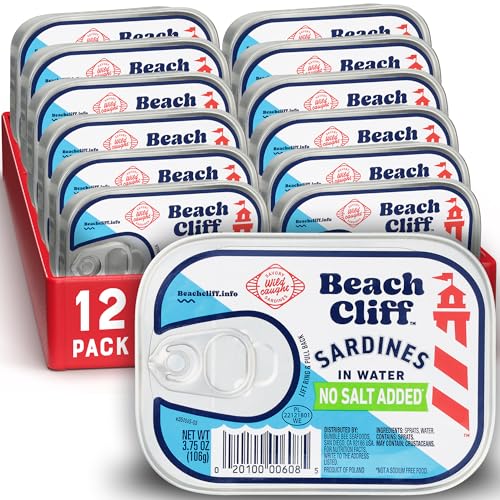
The 3.75-ounce can is the smallest of these options, making this 12-pack a fit for shoppers who prefer a smaller serving size. The brand says each tin contains 12 grams of protein and describes the sardines as wild caught and preserved in water with no added salt, sauce, or oil. The product features also identify it as gluten-free. Its smaller can is the tradeoff: buyers seeking the largest portion among these choices may prefer one of the 4.4-ounce cans. Compare sodium on the nutrition label if you need to track intake.
Bottom line: Choose this if you want the smallest can and a 12 grams of protein per serving.
How to choose sardines with no salt added
Start with can size and the nutrition label, because no salt added does not mean sodium-free. The three options here range from 3.75 to 4.4 ounces per can, while all come in 12-can packs. If you want a smaller portion, select a 3.75-ounce can; if you want more fish per can, choose a 4.38- or 4.4-ounce size. For a sodium limit, compare milligrams per serving on the label and check how many servings are in each can. Serving size can differ from the full can, so calculate the amount you expect to eat rather than comparing only the front label.
What no salt added means on sardines
“No salt added” means salt was not added during processing; sardines can still contain naturally occurring sodium. It is not the same as a sodium-free claim, so shoppers watching sodium should use the nutrition facts panel and compare milligrams per serving. Also check whether the can has one serving or more than one, since eating the whole can may provide more sodium than the serving amount shown. Rinsing canned fish may remove some surface liquid and seasoning, but it does not turn a product into a sodium-free food. For a strict dietary limit, choose based on the sodium amount for the portion you plan to eat.
Water-packed sardines versus oil-packed
Water-packed sardines are preserved in water rather than oil, so the packing liquid is the main difference to consider when choosing a can. Oil-packed fish may feel richer and can add packing oil to a recipe; water-packed fish is useful when you want to drain liquid or mix sardines into a dressing. Both forms are canned fish, so serving size and sodium still come from each product’s nutrition label. These three choices are water-packed, which makes their packing style consistent; focus your comparison on can size, sodium per serving, and any specific attributes that matter to your meals. Drain the liquid if a recipe calls for it, but avoid assuming draining changes the nutrition panel by a fixed amount.
How to store canned sardines safely
Keep unopened cans in a cool, dry pantry and rotate older cans forward so they are used first. Discard a can that is bulging, leaking, badly dented at a seam, or spurts liquid when opened; a damaged seal can make shelf-stable food unsafe. Once opened, transfer leftover sardines to a covered container, refrigerate promptly at 40°F or below, and use within 3 to 4 days. Do not store leftovers in the opened metal can. Check the can’s best-by date and follow its handling directions, especially after opening.
Frequently Asked Questions
Are sardines with no salt added sodium-free?
No, sardines can contain naturally occurring sodium even when no salt is added during processing. Compare the milligrams per serving on the nutrition facts panel, and account for the number of servings you eat.
Should I eat the whole sardine can at once?
Use the serving size on the nutrition label to decide, since a can may contain more than one serving. If you open a can and save part, refrigerate the remainder promptly in a covered container and use it within 3 to 4 days.
How long do canned sardines last after opening?
Refrigerate opened sardines at 40°F or below and use them within 3 to 4 days. Move leftovers to a covered container instead of storing them in the opened can.
How can I tell whether a sardine can is unsafe?
Discard cans that are bulging, leaking, badly dented at a seam, or that spurt liquid when opened. A sound can should be opened without visible leakage or abnormal pressure.
Does draining water-packed sardines reduce their sodium?
Draining removes the packing liquid, but it does not make sardines sodium-free. For a sodium limit, compare the label amount with the portion you plan to eat rather than assuming draining changes it by a set amount.