
Silver Paint for Metal: 5 Types Compared by Finish

For silver paint on metal that also needs a protective coating, choose Rust-Oleum Stops Rust Metallic Aluminum Enamel for its oil-based enamel and rust-prevention focus; choose a craft acrylic or spray when finish and application matter more than that protection.
“Silver paint for metal” covers everything from decorative craft paint to corrosion-resistant enamel. No single brand or model is named, so match the paint type to the surface and project.
We earn a commission if you buy through links on this page. As an Amazon Associate I earn from qualifying purchases. Products are compared on manufacturer specifications, not hands-on testing.
- Best overall: Rust-Oleum Stops Rust Metallic Aluminum Enamel – Oil-based enamel is designed for rust prevention and covers up to 90 square feet per quart.
- Best for spray application: Rust-Oleum Stops Rust Bright Coat Chrome Spray – The 11-ounce spray is made for metal and dries to the touch or handle in 60 minutes.
- Best for craft projects: Nicpro Metallic Silver Acrylic Paint – The 8.45-ounce acrylic paint is intended for metal alongside several craft surfaces.
| Product | Best for | Application | Finish | Container size | Shop |
|---|---|---|---|---|---|
| Rust-Oleum Stops Rust Metallic Aluminum Enamel | Protective metal coating | Brush-on | Glossy metallic aluminum | 32 fl oz | Check Price on Amazon |
| Rust-Oleum Stops Rust Bright Coat Chrome Spray | Chrome-look accents | Spray | Bright chrome metallic | 11 oz | Check Price on Amazon |
| Nicpro Metallic Silver Acrylic Paint | Larger craft projects | Brush-on acrylic | Pearlescent metallic silver | 8.45 fl oz | Check Price on Amazon |
| FolkArt Multi-Surface Metallic Platinum | Small craft details | Water-based paint | Metallic platinum | 2 fl oz | Check Price on Amazon |
| SENVEN Liquid Silver Leaf Paint | Small silver accents | Brush-on acrylic | High-gloss silver | 1.5 fl oz | Check Price on Amazon |
Silver Paint for Metal Compared
Choose among spray, brush-on enamel, and craft paints by considering the metal surface and the finish you want.
Rust-Oleum Stops Rust Metallic Aluminum Enamel

For a brush-applied coating with rust-prevention claims, this oil-based enamel differs from the decorative acrylics and chrome-look spray. It is intended for interior and exterior use on metal, wood, concrete, and masonry, with coverage up to 90 square feet per quart and a 2-to-4-hour touch-dry time. The glossy metallic aluminum shade reads differently from bright silver or chrome. It suits larger surfaces where a protective coating matters; the quart container and brush application are less convenient for small detail work or projects that need an especially bright chrome look.
Bottom line: Choose this for a larger metal surface where a brush-on protective enamel is the priority.
Rust-Oleum Stops Rust Bright Coat Chrome Spray

For a bright chrome-like appearance in a spray format, this option stands apart from brush-on enamel and craft acrylics. The maker says it is suitable for interior metal and also names wood, concrete, and masonry; it dries to the touch or handle in 60 minutes. Its 11-ounce can suits accent pieces and shaped surfaces that are awkward to brush. The color is chrome rather than a straightforward silver, and the product is framed around an attractive finish rather than the rust-prevention focus of the brush-on enamel, so choose it for appearance-led projects.
Bottom line: Pick this when spray application and a bright chrome appearance fit the project.
Nicpro Metallic Silver Acrylic Paint
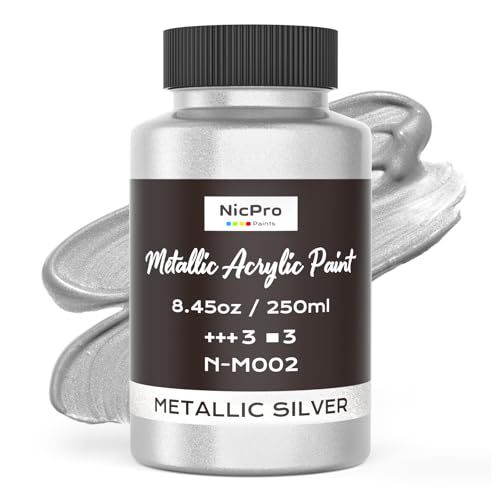
Among the craft paints here, this bottle offers the largest volume and a silver acrylic finish rather than chrome spray or protective enamel. It is intended for canvas, wood, clay, fabric, metal, furniture, and decorative crafts. The creamy texture and metallic sparkle suit accent work, lettering, and craft surfaces where a pearlescent look is welcome. The maker recommends thin layers to build the shine. This is a decorative acrylic option, not the oil-based rust-prevention coating in the comparison, so it is a weaker match when corrosion protection is the main goal.
Bottom line: Choose this for craft or décor work where pearlescent silver matters more than rust protection.
FolkArt Multi-Surface Metallic Platinum

For small craft projects, this 2-ounce water-based paint is a compact alternative to the larger acrylic bottle and protective enamel. The product is labeled for multi-surface use and has a metallic platinum finish, which is not the same shade name as silver or chrome. Its features include indoor/outdoor use and dishwasher safety, making it suited to small decorative pieces where those properties matter. The small container is a limitation for broad coverage or repeated touch-ups, and it is not positioned as a rust-prevention enamel for exposed metal.
Bottom line: Pick this for small craft pieces when metallic platinum is the desired shade.
SENVEN Liquid Silver Leaf Paint
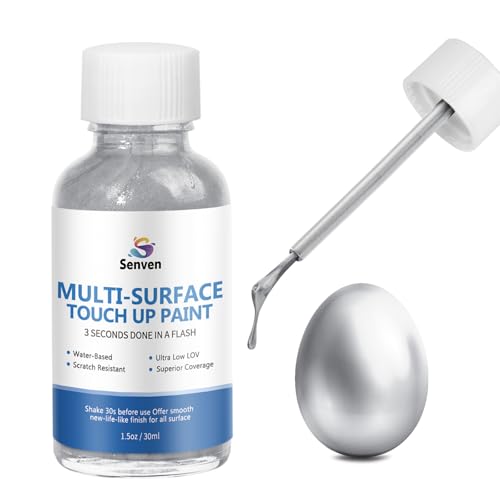
This small-format liquid silver leaf paint emphasizes a high-gloss silver finish, unlike the platinum craft paint or aluminum enamel. It is described for metal and other surfaces including wood, plastic, glass, and fabric, and the maker claims smudge resistance, waterproofing, and heat and weather resistance. Its 1.5-ounce size fits small accents and scratch-repair-style decorative work better than broad surfaces. It is acrylic and does not share the oil-based enamel’s rust-prevention purpose, so it is not the choice when the metal needs a protective coating first.
Bottom line: Choose this for small, glossy silver accents across mixed craft surfaces.
How to Choose Silver Paint for Metal
Choose the paint type by the metal’s condition and the finish you need: decorative acrylic suits crafts, while an enamel formulated for rust prevention is a better starting point for exposed steel. Metallic silver, aluminum, platinum, and chrome are distinct color descriptions; test the shade on a hidden area if color matching matters. Paint adheres poorly to oil, loose rust, and glossy residue, so clean and dry the surface and remove loose corrosion before coating. Bare steel benefits from a compatible metal primer, especially outdoors. A decision rule: if the surface is already rusting or will face weather, favor a coating that explicitly addresses corrosion rather than a craft paint chosen only for its shine.
Preparing Metal Before Painting
Preparation determines whether paint bonds to metal: remove grease, dirt, and loose rust, then let the surface dry fully. Smooth, glossy factory finishes often need light abrasion so a new coating has a mechanical grip; avoid sanding coatings that may contain lead unless you know they are safe to disturb. Bare iron or steel can flash-rust after water cleaning, so dry it promptly and prime it with a metal-compatible primer. Aluminum and galvanized metal need products compatible with their surface rather than a generic assumption that every primer works. Apply thin, even coats instead of trying to hide the substrate in one heavy pass; thick coats can sag or remain soft longer.
Spray Paint Versus Brush-On Enamel
Spray paint is useful for curved shapes and narrow edges, while brush-on enamel gives more direct control on broad, flat areas. Aerosol paint creates airborne mist, so work outdoors or with strong ventilation, protect surrounding surfaces, and keep it away from flames and ignition sources. Use eye protection and a suitable respirator when required by the product label; a dust mask is not a substitute for vapor protection. Brush-on products avoid overspray but still require ventilation and careful cleanup. Do not assume a decorative metallic finish is a durable outdoor coating: compare the surface and corrosion purpose before choosing. Keep children and pets away until the coating is fully dry and the work area is ventilated.
Metal Paint Types and Best Uses
Metal paints differ in purpose as much as color: decorative craft acrylics focus on metallic appearance, while protective enamels are formulated for a tougher coating and rust prevention. Chrome-look spray, aluminum-tone enamel, platinum craft paint, and silver leaf paint will not necessarily match each other under the same lighting. Use the following guide to narrow the choice; substrate condition and indoor or outdoor exposure still matter.
| Project need | Paint type to consider | Key tradeoff |
|---|---|---|
| Rust-prone steel | Protective metal enamel | Brush application may take longer |
| Curved accents | Metallic spray paint | Requires overspray control |
| Small decorative craft | Metallic acrylic paint | Decorative finish, not rust prevention |
Frequently Asked Questions
Does silver acrylic paint prevent rust on metal?
Decorative silver acrylic paint should not be treated as rust-prevention enamel. Remove loose rust and use a metal-compatible primer and coating intended for corrosion protection when rust control matters.
Should I prime bare metal before painting?
Bare steel generally benefits from a compatible metal primer, particularly outdoors or where corrosion is a concern. Some products are designed to adhere without a separate primer, so check that specific paint’s label before applying it.
How long should metal paint dry between coats?
Drying time varies by formula, coat thickness, temperature, and humidity. For example, the spray paint here is described as touch-or-handle dry in 60 minutes, while the enamel gives a 2-to-4-hour touch-dry range; those are not universal recoat times.
Can I spray metallic paint indoors?
Aerosol paint should be used outdoors or with strong ventilation because the mist and vapors can be hazardous. Keep spray work away from flames and ignition sources, and follow the can’s protective-equipment and re-entry directions.
How do I keep metallic paint from looking streaky?
Clean and dry the metal first, then apply thin, even coats rather than one heavy layer. Brush marks are more likely with brush application, while spray work needs controlled passes and adequate ventilation to prevent overspray.