
Wave Max TV Antenna: Models Compared by Range and Setup

The Wave Max TV Antenna with 360-degree reception and a claimed 600+ mile range is the closest match for most buyers comparing these options. The named antenna is available in several variants here; choose another model if you need a more modest claimed range or a specific indoor or outdoor installation setup.
We earn a commission if you buy through links on this page. As an Amazon Associate I earn from qualifying purchases. Products are compared on manufacturer specifications, not hands-on testing.
- Best overall: Wave Max TV Antenna, Black – Its features claim 360-degree reception and a 600+ mile range.
- Best for smart TVs: Wave Max TV Antenna, Smart TV Version – The name specifies compatibility with all smart TVs.
- Best for a shorter range claim: Wave Max Indoor/Outdoor Antenna, 1-Piece – It claims reception from 50+ miles and includes an extra-long coaxial cable.
| Product | Best for | Claimed reception range | Reception direction | Setup or fit | Shop |
|---|---|---|---|---|---|
| Wave Max TV Antenna, Black | 360-degree reception | 600+ miles | 360° | Plug and play | Check Price on Amazon |
| Wave Max TV Antenna, Smart TV Version | Smart TV compatibility | 600+ miles | 360° | All smart TVs | Check Price on Amazon |
| Wave Max Indoor/Outdoor Antenna, 1-Piece | Cable included | 50+ miles | — | Indoor or outdoor | Check Price on Amazon |
Wave Max TV Antennas
Compare the range and setup features, then choose based on your location and mounting options.
Wave Max TV Antenna, Black
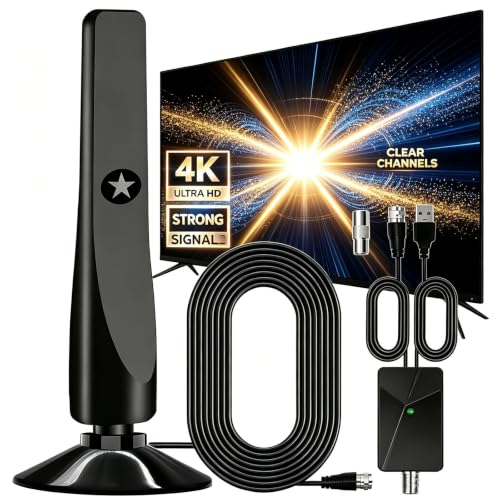
This Wave Max variant pairs a claimed 600+ mile reception range with 360-degree signal reception. The maker says its antenna connects to a TV for local over-the-air channels, with no cable subscription; its features also mention a built-in amplifier and interference filtering. That may suit someone who wants an all-direction reception design rather than aiming the antenna manually. The range claim is not a guarantee of channels at a particular address: distance, terrain, building materials, and tower direction all affect reception.
Bottom line: Choose this if you want the 360-degree version and can position it for a clear signal.
Wave Max TV Antenna, Smart TV Version

This Wave Max version explicitly names compatibility with all smart TVs, while its reception features otherwise closely match the black variant. The maker claims a 600+ mile range and 360-degree reception, and says the antenna can receive local broadcast channels without a monthly cable bill. That makes the compatibility wording its distinguishing point for a buyer checking a smart-TV setup. The large range figure should not determine placement by itself; indoor walls and nearby obstructions can reduce reception, even when a product claims long reach.
Bottom line: Pick this when the all-smart-TV compatibility wording matters to your setup.
Wave Max Indoor/Outdoor Antenna, 1-Piece

This Wave Max option gives a more specific range claim—50+ miles—and describes indoor or outdoor use. The maker says it supports 4K and 1080p signals and includes an extra-long coaxial cable plus a detachable UHF/VHF booster. Those accessories may help when the TV is not close to a window or the selected mounting spot, though the cable still needs a safe route. The range varies by location, so this option suits buyers who prefer the more limited claim over the 600+ mile claims on the other variants.
Bottom line: Choose this if indoor/outdoor flexibility and an included long cable are priorities.
How to choose a Wave Max TV antenna
Choose by local signal conditions and placement, not by the largest range claim. Broadcast reception depends on tower distance, terrain, trees, nearby buildings, and whether the antenna sits indoors or outdoors; a high placement with a clear path usually helps. A TV antenna receives over-the-air broadcasts, and the TV’s tuner scans for available channels after connection. U.S. full-power television broadcasts use VHF and UHF bands, so an antenna’s band coverage matters as well as its marketing range. If you live near strong broadcast towers, an amplifier may be unnecessary and can sometimes overload a tuner. Start with a placement that faces open space, scan, and adjust only if reception is weak.
Where to place an indoor TV antenna
Place an indoor antenna high and near a window facing the broadcast towers when possible; exterior walls, metal screens, and dense materials can weaken signals. A few feet of movement can change reception, so scan channels after each substantial position change rather than assuming one scan applies everywhere. Digital television reception often behaves like a threshold: a channel may appear stable, then break up when the signal falls below what the tuner can decode. Keep coaxial cable runs as short as practical and avoid sharp bends or pinches. If you mount any antenna outdoors, keep it clear of electrical wires and do not work on a roof in unsafe weather.
What claimed antenna range means
A mileage range is not a promise that every station inside that distance will come in. Broadcast towers differ in power and height, while hills, buildings, and foliage block signals; height and line of sight can matter more than a headline distance. A 360-degree design means the antenna is intended to receive from multiple directions without frequent aiming, but it cannot remove physical obstructions. An amplifier can strengthen a weak received signal, but it cannot create a signal blocked by terrain and may worsen reception if strong nearby stations overload the tuner. Compare range claims as product features, then make the real decision from your home’s signal environment.
Scanning and troubleshooting over-the-air channels
Run the TV’s channel scan after connecting the antenna and again after moving it; tuners do not always update the channel map automatically. If a channel is missing or breaks up, first try a higher or window-side position, then rescan before changing equipment. Keep in mind that a scan only finds stations receivable at that moment, and weather or seasonal foliage can shift marginal reception. Inspect coaxial connections for looseness and avoid routing cable alongside sources of electrical interference. Do not climb near power lines to improve height; if outdoor mounting requires roof work, use a qualified installer.
Frequently Asked Questions
Do indoor TV antennas really get channels 600 miles away?
A 600-mile claim does not guarantee reception at that distance. Terrain, tower power, antenna height, and obstructions determine which stations a tuner can decode.
Should I use an antenna amplifier near broadcast towers?
Not always; strong nearby signals can overload an amplifier or TV tuner and make reception worse. Try scanning without added amplification when close to towers, then compare reception if the antenna system provides a booster.
How often should I rescan my TV antenna?
Rescan after moving the antenna or when local broadcast availability changes. A new scan updates the tuner’s channel map, but it cannot improve a weak signal by itself.
Does a 360-degree antenna need to face a tower?
A 360-degree design is intended to receive signals from multiple directions without precise aiming. Height, window placement, and obstructions still affect whether each station is strong enough to decode.
Can an indoor antenna work through a wall?
Signals can pass through some walls, but dense materials, metal siding, and foil-backed insulation can weaken them substantially. A window-side or elevated position is a better starting point when reception is marginal.