
WiFi Booster Compatible With Starlink: Compare 5 Options

For Starlink mesh expansion, Starlink Mini Router Mesh Extender is the clearest match because its features name compatibility with several Starlink router types and recommend placement within two rooms of the main router. Choose a general WiFi extender instead only if you confirm it can connect to your specific Starlink router.
A WiFi booster extends a router’s wireless coverage; a mesh node is designed to join a compatible mesh network. Check the exact Starlink router and wired or wireless setup before choosing a non-Starlink-branded extender.
We earn a commission if you buy through links on this page. As an Amazon Associate I earn from qualifying purchases. Products are compared on manufacturer specifications, not hands-on testing.
- Best overall: Starlink Mini Router Mesh Extender – Names compatibility with Starlink Gen 2, Gen 3, Mini Router and Mini Kit, with wired or wireless setup.
- Best for Gen 4 systems: Mini Mesh Wi-Fi Router, Gen 2–4 and Mini – Its name includes Gen 4 compatibility, and its features support wired or wireless mesh setup.
- Best for dual-band details: TP-Link RE315 AC1200 Extender – Provides separate 5 GHz and 2.4 GHz bandwidth figures plus an Ethernet port.
| Product | Best for | Starlink compatibility | Connection | Size or coverage | Shop |
|---|---|---|---|---|---|
| Starlink Mini Router Mesh Extender | Starlink mesh expansion | Gen 2, Gen 3, Mini Router, Mini Kit | Wired or wireless | 5.4 × 3.3 × 1.0 in | Check Price on Amazon |
| Mini Mesh Wi-Fi Router, Gen 2–4 and Mini | Gen 4 mesh expansion | Gen 2, Gen 3, Gen 4, Mini | Wired or wireless | 5.4 × 3.3 × 1.0 in | Check Price on Amazon |
| TP-Link RE315 AC1200 Extender | Dual-band details | Not stated for Starlink | Wireless; one Ethernet port | Up to 1,500 sq ft | Check Price on Amazon |
| Long-Range WiFi Extender, 10,000 sq ft | Four-antenna design | Not stated for Starlink | Wireless repeater | Up to 10,000 sq ft | Check Price on Amazon |
| 300 Mbps WiFi Extender | Simple repeater setup | Not stated for Starlink | Repeater or access point | Up to 8,470 sq ft | Check Price on Amazon |
WiFi Boosters Compatible With Starlink
Compare Starlink mesh nodes with general-purpose WiFi extenders, and match the connection type to your router before choosing.
Starlink Mini Router Mesh Extender

For adding a Starlink mesh node, this unit names compatibility with the Gen 2 and Gen 3 routers, Starlink Mini Router and Mini Kit. It supports wired and wireless setup, and can sit on a table or mount on a wall; the package includes a power supply and mounting hardware. The maker recommends keeping it within two rooms of the main router and away from concrete walls or metal appliances. It is not compatible with Gen 1, so owners of that system need another option.
Bottom line: Choose this for a named compatible Starlink system when you want a mesh node with wired or wireless setup.
Mini Mesh Wi-Fi Router, Gen 2–4 and Mini

Unlike the other named Starlink mesh option, this unit’s name explicitly includes Gen 4 compatibility alongside Gen 2, Gen 3 and Mini systems. Its features describe wired and wireless setup, tabletop or wall installation, and included mounting hardware. The maker recommends placing it within two rooms of the main router and avoiding concrete walls and metal appliances.
Bottom line: Choose this if you have a named Gen 4-compatible system and have confirmed the wireless mesh fit.
TP-Link RE315 AC1200 Extender
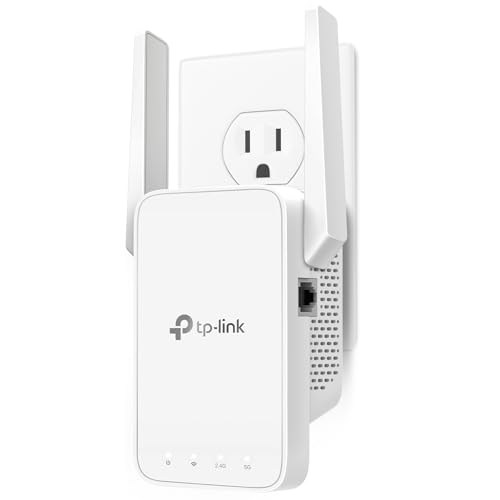
For buyers comparing conventional extenders rather than named Starlink mesh nodes, the RE315 gives separate dual-band figures: 867 Mbps on 5 GHz and 300 Mbps on 2.4 GHz. It has an Ethernet port, two external antennas and a coverage figure of up to 1,500 square feet; actual range depends on distance and obstacles. The features mention EasyMesh, but do not name Starlink compatibility. Confirm that it can extend the specific Starlink router you own before choosing it for this purpose.
Bottom line: Consider it only after confirming compatibility with your Starlink router.
Long-Range WiFi Extender, 10,000 sq ft

For shoppers considering a general-purpose repeater, this model distinguishes itself with four external antennas and a claimed coverage area of up to 10,000 square feet. Its features also describe one-tap setup and support for more than 65 devices. Those coverage and speed claims come from the maker and will depend on the home layout and signal reaching the extender.
Bottom line: Choose it only if the maker confirms it works with your Starlink router and home layout.
300 Mbps WiFi Extender

Unlike the multi-antenna model, this extender identifies a peak speed of 300 Mbps and offers repeater and access point modes. Its features claim coverage up to 8,470 square feet and describe setup using a phone, laptop or desktop. These are maker claims, not a guarantee of usable coverage through walls or outdoors.
Bottom line: Consider it for a basic repeater role only after confirming Starlink fit and connection requirements.
How to choose a Starlink WiFi booster
Choose a named Starlink mesh node when you want to extend a system it explicitly supports; choose a general extender only after confirming it can connect to your router. Mesh nodes join a compatible mesh network, while repeaters retransmit an existing WiFi signal and may create a separate network name. A wired connection can avoid the wireless backhaul hop, but only if your router and the booster both support the needed wired connection. For wireless placement, put the booster where the main router still has a strong signal, not inside the dead zone. A practical rule is to start about halfway between the router and the weak-coverage area, then adjust if the extender’s connection indicator or setup app reports a weak link.
Where to place a WiFi booster
Place a wireless booster in open space between the router and the area that needs coverage; a device placed where the original signal is already weak cannot reliably relay it. The product-specific recommendation for Starlink Mini Router Mesh Extender and Mini Mesh Wi-Fi Router, Gen 2–4 and Mini is within two rooms of the main router, while thick concrete walls and nearby metal appliances can obstruct radio signals. The 2.4 GHz band generally reaches farther and penetrates walls better than 5 GHz, while 5 GHz can deliver higher throughput at shorter range. Keep the extender away from enclosed cabinets and large appliances, and test coverage in the actual room where devices will be used. Repositioning a few feet can make a meaningful difference in the quality of the link.
Mesh nodes and WiFi repeaters compared
Mesh nodes suit users who need one coordinated network, while a conventional repeater suits users willing to extend an existing WiFi signal as a separate device or network. Mesh compatibility is not universal: matching the router generation or named system matters, and a generic EasyMesh feature is not proof of Starlink compatibility. A repeater’s practical speed is also affected by how it receives the router signal; a wireless relay uses airtime for both the router link and client traffic. Use this guide to narrow the type, then verify the exact router connection:
| Need | Type to consider | Check before choosing |
|---|---|---|
| Expand a named Starlink mesh system | Compatible Starlink mesh node | Router generation and wireless mesh fit |
| Extend WiFi with general equipment | WiFi repeater or extender | Compatibility and setup with the router |
| Connect by cable | Wired extender or access point | Router port and cabling requirements |
Frequently Asked Questions
Will a WiFi extender work with every Starlink router?
No universal fit should be assumed: a mesh node may support only named Starlink generations, while a generic extender must be confirmed against the specific router. Check whether the intended setup is wireless repeating or wired access-point operation.
How far should a Starlink mesh node be from its router?
The two Starlink mesh options here recommend a location within two rooms of the main router. Start between the router and the weak-signal room, keeping the node away from concrete walls and metal appliances.
Is 2.4 GHz or 5 GHz better through walls?
The 2.4 GHz band generally reaches farther and passes through walls better, while 5 GHz is typically faster at shorter distances. Try 2.4 GHz for a distant room and 5 GHz when the booster and device are nearby.
Does a WiFi repeater reduce network speed?
A wireless repeater can reduce available throughput because it must relay traffic over WiFi as well as serve connected devices. A wired link avoids that wireless relay hop when both the router and extender support the required connection.
Where should I put a WiFi extender for a dead zone?
Put the extender where the router signal is still strong, roughly halfway to the dead zone as a starting point. Avoid placing it inside the weak-coverage area, behind a concrete wall or next to a large metal appliance.