
3D Brick Wall Stickers: Foam Panels Compared

For a textured foam accent wall, 3D Foam Brick Panels, Rock Color is the closest match because its PE foam panels are 7 mm thick and have a faux-brick surface.
Peel-and-stick brick wall coverings adhere with a backing adhesive, so a clean, dry, smooth wall and careful seam alignment matter for the finished look.
We earn a commission if you buy through links on this page. As an Amazon Associate I earn from qualifying purchases. Products are compared on manufacturer specifications, not hands-on testing.
- Best overall: 3D Foam Brick Panels, Rock Color – Its 7 mm PE foam panels provide the thickest foam construction among the panel options.
- Best for stated coverage: 30-Piece White Foam Brick Panels – The 30-piece set specifies 28.81 square feet of coverage.
| Product | Best for | Material | Thickness | Coverage | Shop |
|---|---|---|---|---|---|
| 3D Foam Brick Panels, Rock Color | Textured foam panels | PE foam | 7 mm | — | Check Price on Amazon |
| 30-Piece White Foam Brick Panels | Known wall coverage | PE foam | 5 mm | 28.81 sq ft | Check Price on Amazon |
| Sodeno White Foam Brick Panels | Smaller wall projects | Foam | 3 mm | 14.5 sq ft | Check Price on Amazon |
3D Brick Wall Stickers Compared
Compare panel and roll formats, then match the dimensions and coverage to your wall.
3D Foam Brick Panels, Rock Color

For buyers who want a more substantial foam panel, 3D Foam Brick Panels, Rock Color has a thickness of 7 mm, compared with thinner foam options in this group. The set contains 20 self-adhesive panels in a rock color, with individual dimensions of about 15.16 by 13.78 inches. The maker says the surface is waterproof and dustproof and can be cleaned easily. This format suits an accent wall where a pronounced panel texture matters.
Bottom line: Choose it when a thicker foam texture and rock color suit the wall.
30-Piece White Foam Brick Panels

For planning by area, 30-Piece White Foam Brick Panels is the only foam panel set here with a total coverage: 28.81 square feet for 30 panels. Each white panel measures about 11.81 inches square and is approximately 5 mm thick. The maker says the PE foam surface is textured and can be repainted, which gives DIY decorators a color-change option. Square panels can be easier to lay out on a measured accent wall than a continuous roll. The limitation is the thinner construction than 3D Foam Brick Panels, Rock Color, which may matter if a deeper raised effect is your priority.
Bottom line: Pick it when you want a coverage figure and repaintable white panels.
Sodeno White Foam Brick Panels
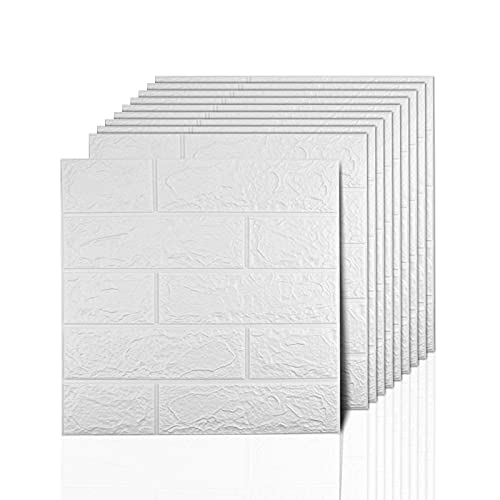
For a smaller project, Sodeno White Foam Brick Panels gives a 14.5 square feet of coverage in white foam panels with a 3 mm thickness. The maker says the adhesive panels can be removed slowly from a smooth wall and that residue-free removal is possible; treat that as a claim to verify on your own paint and wall finish first. The thinner profile may suit a subtle accent where a bulky raised surface is not wanted. Its limitation is less coverage than 30-Piece White Foam Brick Panels, so it is less suited to a larger wall unless you plan multiple sets.
Bottom line: Choose it for a smaller area where a thinner foam profile is preferred.
How to choose 3D brick wall stickers
Start with the wall area and the covering format: foam stickers come as separate panels, while vinyl wallpaper comes in a roll. Measure the wall width and height in inches, multiply them, then divide by 144 for square feet; compare that result with the package coverage and allow extra for trimming and pattern alignment. For example, a 6-by-8-foot wall is 48 square feet before waste. Smooth, clean, dry walls give peel-and-stick adhesive a better surface than dusty, damp or heavily textured walls. A practical decision rule is to choose a product with coverage at least 10% above the measured area when you expect cuts or pattern matching; buy by measured panel dimensions instead when coverage is not supplied.
Foam panels versus vinyl brick wallpaper
Foam panels add a raised surface, while vinyl wallpaper is a thinner sheet that relies on a printed or textured pattern for its brick look. Thickness affects how prominent the seams and shadows appear: compare millimeters rather than relying on labels such as “3D.” Individual square panels create repeated joints, so dry-fit a row and check the brick alignment before removing the backing. A roll has fewer panel joints, but its pattern must still line up where sheets meet. Avoid assuming these finishes provide soundproofing, insulation or a protective wall layer; a decorative covering is not a substitute for building materials. For a wall that needs frequent scrubbing, verify the specific product’s cleaning guidance and test an inconspicuous spot.
A format comparison helps match the wall shape and the look you want.
| Format | Useful for | Check before installing |
|---|---|---|
| Foam panels | Raised, repeated brick texture | Panel size, thickness and total coverage |
| Vinyl roll | Continuous sheet pattern | Roll coverage and repeat alignment |
Preparing the wall and aligning seams
Prepare the wall by removing dust and grease, then let the surface dry fully before applying adhesive-backed décor. Freshly painted walls need time to cure; paint can feel dry well before it is ready for a strong adhesive bond, so check the paint maker’s cure guidance. Test one piece in a hidden area first, especially on delicate paint, wallpaper or textured surfaces, because removal can lift a finish. Mark a level starting line with a pencil and work outward, pressing each panel from its center toward the edges to reduce trapped air. Brick patterns look uneven when rows drift, so check horizontal alignment after every few pieces rather than waiting until the wall is complete.
How to estimate panel or roll coverage
Estimate coverage from the actual wall dimensions, not from a package count alone. For square panels, convert the panel width and height to feet and multiply to find each panel’s area, then multiply by the count; subtract openings only when they are large enough to change your purchase. For a roll, use the roll coverage and account for trimming at the top, bottom and edges. Pattern matching also consumes material, especially when a printed motif needs to repeat at the same height. Keep a few spare pieces from the same batch for repairs, and avoid mixing colors from different batches without checking them side by side in the room’s lighting.
Frequently Asked Questions
Can peel-and-stick brick panels go on textured walls?
Smooth walls generally give adhesive-backed panels more contact than heavily textured walls. Test one piece in an inconspicuous spot first, since bumps and dust can reduce adhesion or make the surface look uneven.
How much extra wall covering should I plan for?
For a simple wall with few cuts, plan roughly 10% extra beyond its measured area. Add more when the brick print needs careful matching or the wall has many corners and openings.
Should I apply these stickers over fresh paint?
Wait until the paint has fully cured, not merely until it feels dry. Cure time differs by paint and conditions, so consult the paint maker’s guidance and test an inconspicuous patch before covering the wall.
How can I keep brick rows level?
Mark a level guide line before placing the first row and check alignment every few panels. Small errors compound across repeated rows, making the brick pattern visibly slope.
Will removing peel-and-stick panels damage paint?
Removal can lift delicate or weak paint, even when a product is intended to peel away. Test a hidden area first and remove slowly; the wall’s paint condition and finish affect the risk.