
Attic Fan Motor Replacement Options Compared by Fit

For an attic fan motor replacement, start with the fan’s model and the motor’s electrical and mounting specifications; F0510B2944 Lomanco Motor Kit is a strong starting point for compatible Lomanco 2000 and 1800 series fans. Choose a different option if your vent is a Master Flow model or belongs to another series, because motor fit is not universal.
We earn a commission if you buy through links on this page. As an Amazon Associate I earn from qualifying purchases. Products are compared on manufacturer specifications, not hands-on testing.
- Best overall: F0510B2944 Lomanco Motor Kit – Compatible with Lomanco 2000 and 1800 series and includes bridge hardware.
- Best for EGV5/ERV4/ERV5: Master Flow PVM105 – Master Flow replacement motor listed for those power vent models and includes a capacitor.
- Best for PR3/PG3: Master Flow PVM115 – Designed for Master Flow PR3 and PG3 series, with a 2.45 A rating and 1,120 RPM.
| Product | Best for | Compatible fan models | Voltage / current | Speed / horsepower | Shop |
|---|---|---|---|---|---|
| F0510B2944 Lomanco Motor Kit | Lomanco 2000/1800 | Lomanco 2000, 1800 series | 120 V / 3.4 A | 1,100 RPM / 1/10 HP | Check Price on Amazon |
| Master Flow PVM105 | EGV5/ERV vents | Master Flow EGV5, ERV4, ERV5 | — | — | Check Price on Amazon |
| Master Flow PVM115 | PR3/PG3 vents | Master Flow PR3, PG3 series | — / 2.45 A | 1,120 RPM / — | Check Price on Amazon |
Attic Fan Motor Replacement Options
Match the vent series and motor specifications before choosing a replacement.
F0510B2944 Lomanco Motor Kit
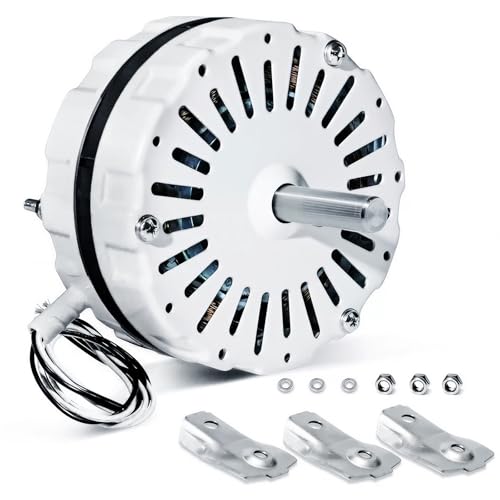
For Lomanco 2000 and 1800 series owners, this motor stands out for its compatibility with several replacement numbers: F0510B2497, A0416B2059 and A0510B2389. The 120 V, 60 Hz motor is rated at 3.4 A, 1,100 RPM and 1/10 HP. The package includes three bridges and three nylon locking nuts, so it supplies mounting hardware as well as the motor. The manufacturer says the motor is tested before shipment. Confirm the fan model and mounting arrangement match before starting work; this option is not identified for Master Flow vents.
Bottom line: Choose it for a compatible Lomanco 2000 or 1800 series vent when the electrical rating matches.
Master Flow PVM105
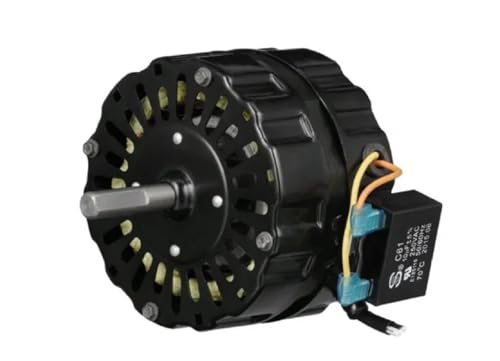
Unlike the Lomanco-specific motors, the PVM105 is the choice for Master Flow EGV5, ERV4 and ERV5 power vents. It is a PSC motor and includes a capacitor; the manufacturer says replacement can be done with the vent left in place and minimal tools. That installation approach matters when removing the complete vent is impractical, but electrical work still requires shutting off and verifying power before handling wiring. The motor casing color may vary.
Bottom line: Choose it for a matching EGV5, ERV4 or ERV5 vent when the existing electrical setup aligns.
Master Flow PVM115

For Master Flow PR3 and PG3 series vents, the PVM115 is the model-specific option here; the PVM105 instead covers EGV5, ERV4 and ERV5. The PVM115 is rated at 2.45 A and 1,120 RPM, and includes a capacitor. The manufacturer identifies it as a PSC motor and says the old motor can be replaced with minimal tools. Its voltage and horsepower are not established by the specifications, so use the motor label and vent model to verify compatibility before installation. A matching series name alone is not a substitute for checking wiring and mount alignment.
Bottom line: Choose it for a compatible PR3 or PG3 vent after verifying voltage and fit.
How to Choose an Attic Fan Replacement Motor
Choose by matching the vent model first, then compare the motor label and physical fit. A replacement must align with the existing voltage, frequency, amperage, horsepower, RPM and rotation; differences can affect operation or prevent installation. Compare shaft diameter and length, mounting holes, bracket position and any capacitor or thermostat connections as well. The most useful decision rule is to proceed only when the fan model and the key electrical and mounting specifications agree; if any differ or are unreadable, pause and identify the motor before buying. A motor that shares a brand or series name is not automatically interchangeable.
| What to match | What to check |
|---|---|
| Fan identity | Manufacturer and exact vent model or series |
| Electrical rating | Voltage, frequency, amperage, horsepower and RPM |
| Physical assembly | Shaft, rotation, mount, capacitor and thermostat wiring |
How to Match Motor Ratings and Mounting
Motor labels and mounting dimensions determine whether a replacement is a real fit, not just a similar-looking part. Record the old motor’s voltage, frequency, amperage, horsepower and RPM, then compare every rating; in this group, some options publish a 120 V, 60 Hz rating while others have no electrical values supplied. Measure shaft diameter and length, note shaft rotation, and compare bracket holes and orientation. A rating mismatch or a different shaft direction can keep the fan from operating correctly. When a capacitor or thermostat is part of the old assembly, identify its wiring and connection arrangement before disconnecting anything.
Safe Attic Fan Motor Replacement Basics
Turn off the circuit breaker and verify the circuit is de-energized before touching motor wiring. Attic fan motors use household line voltage, and an attic can also have cramped access, hot surfaces and exposed insulation; avoid working on energized wiring and call a qualified electrician if the circuit or connections are unclear. Photograph or label wire positions before removal, and support the motor and fan parts so they cannot drop. After installation, check that the blade turns freely by hand with power off and that no wiring contacts moving parts. Restore power only after the housing and guards are secure.
When a Thermostat or Capacitor Changes the Choice
A thermostat-controlled attic fan needs compatible control wiring as well as a mechanically fitting motor. A capacitor is also part of some replacement assemblies, including the Master Flow options here; compare the old capacitor and wiring arrangement rather than assuming all PSC motors use the same connection. Keep motor selection and temperature control separate: a matching horsepower or RPM does not prove the thermostat, capacitor or wiring will match. Verify every connection before returning the fan to service.
Frequently Asked Questions
Can I use any attic fan motor replacement?
No; match the exact vent model and motor ratings before installing a replacement. Voltage, frequency, horsepower, RPM, rotation, shaft dimensions and mount pattern all affect fit.
Which motor specifications should I read first?
Start with voltage, frequency, amperage, horsepower and RPM on the old motor label. Then compare shaft measurements, rotation and mounting holes, because electrical agreement alone does not establish physical fit.
Is it safe to replace an attic fan motor with power on?
No; shut off the circuit breaker and verify the circuit is de-energized before touching wiring. Household attic fans use line voltage, so call an electrician if you cannot confirm the circuit or connections.
Do attic fan replacement motors include a capacitor?
Some do, including the Master Flow PVM105 and PVM115 in these options. Check whether the old motor uses a capacitor and compare the wiring and component arrangement before reconnecting.