
Dr Comfort Shoes: 4 Models Compared by Fit and Use

For a versatile athletic option, the Dr. Comfort Performance is the leading choice because its toggle closure adjusts without tying and its leather-and-mesh upper is breathable. Choose a different model if you need a high-top boot for trail or work use, hands-free entry, or extra depth for orthotics.
Dr. Comfort footwear includes shoes designed with features such as adjustable closures, removable insoles and protective toe boxes; the right choice depends on fit and intended use.
We earn a commission if you buy through links on this page. As an Amazon Associate I earn from qualifying purchases. Products are compared on manufacturer specifications, not hands-on testing.
- Best overall: Dr. Comfort Performance Men’s Shoe – Its toggle closure adjusts without tying, and the upper combines leather and mesh.
- Best for trails and work: Dr. Comfort Yukon Men’s High-Top Boot – A high-top boot with a rugged rubber outsole, padded lining and adjustable strap.
- Best for hands-free entry: Dr. Comfort Don Men’s Slip-On Shoe – The heel counter is designed to let the foot slide in without bending to use a shoehorn.
- Best for extra depth: Dr. Comfort Winner-X Men’s Shoe – The shoe is built ¼ inch deeper and has removable insoles and dual hook-and-loop closures.
| Product | Best for | Closure | Upper | Fit features | Shop |
|---|---|---|---|---|---|
| Dr. Comfort Performance Men’s Shoe | Adjustable daily wear | Toggle closure | Leather and mesh | Removable insole | Check Price on Amazon |
| Dr. Comfort Yukon Men’s High-Top Boot | Trail and work use | Elastic laces and hook-and-loop strap | — | High-top; 10.5 Wide | Check Price on Amazon |
| Dr. Comfort Don Men’s Slip-On Shoe | Hands-free entry | Hands-free slip-on | Breathable mesh | 13 X-Wide | Check Price on Amazon |
| Dr. Comfort Winner-X Men’s Shoe | Extra-depth fit | Dual hook-and-loop closures | Full-grain leather | ¼ in deeper; 14 X-Wide | Check Price on Amazon |
Dr. Comfort Shoes Compared
Compare the closure and construction features that make each model suited to a different kind of wear.
Dr. Comfort Performance Men’s Shoe

The Performance stands apart with a toggle closure, so wearers can adjust the fit without tying laces. Its leather-and-mesh upper is intended to support airflow, and the removable insole lets buyers accommodate their own orthotic. Dr. Comfort says the shoe has an arch stabilizer with deep cushioning. This men’s athletic shoe suits someone who wants an adjustable closure for everyday wear or activity. Its wide size is 10; buyers seeking hands-free entry or a high-top boot should choose a different style.
Bottom line: Choose this for an adjustable athletic shoe with a removable insole.
Dr. Comfort Yukon Men’s High-Top Boot

The Yukon is the only high-top boot among these options, with a rugged rubber outsole for trail, daily or work wear. It combines elastic laces with a hook-and-loop strap, allowing fit adjustment without a conventional lace-up closure. The padded lining and flared outsole are intended to add comfort and stability, while the reinforced toe box protects against impact and stubbing. This chestnut boot suits buyers who want ankle coverage and a more rugged outsole. It is a boot rather than a low-top athletic shoe, so it is not the match for someone prioritizing hands-free entry.
Bottom line: Pick this when a high-top boot and rugged outsole matter most.
Dr. Comfort Don Men’s Slip-On Shoe

The Don is the hands-free option, using a Quick-Fit heel counter designed to let the foot glide in without bending to use a shoehorn. Its breathable mesh upper and cushioned, lightweight construction distinguish it from the leather-and-mesh and leather styles here. Dr. Comfort says the rubber outsole is certified slip-resistant. This black athletic walking shoe suits someone who values easy entry and wants an extra-wide size. Its slip-on design is less adjustable than the toggle or double hook-and-loop closures, so buyers who need a more adjustable fit may prefer another model.
Bottom line: Choose this for easy slip-on entry in an extra-wide size.
Dr. Comfort Winner-X Men’s Shoe
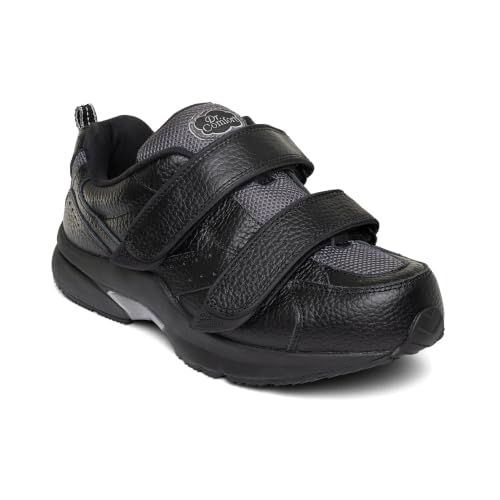
The Winner-X is built ¼ inch deeper than a standard shoe, setting it apart for buyers who need extra interior room. Its full-grain leather upper, removable insoles and dual hook-and-loop fasteners offer a different combination from the mesh and toggle options. The protective toe box adds coverage at the front, and the footbeds can be removed to accommodate personal orthotics. This black men’s athletic shoe suits someone looking for extra depth and an extra-wide size. It is a lace-free shoe with a double-contact closure, not a hands-free slip-on.
Bottom line: Pick this for extra depth, removable footbeds and dual adjustable closures.
How to Choose Dr. Comfort Shoes
Start with the activity and closure you need, then compare width and interior depth. A walking or athletic shoe is not interchangeable with a high-top boot: the Yukon is the boot option here, while the Don is designed for hands-free entry. For shoes worn with orthotics, removable footbeds or extra depth can matter; the Winner-X is built ¼ inch deeper and the Performance has a removable insole. Use a measurable fit check: leave about ⅜ to ½ inch between the longest toe and the shoe end, while keeping the heel secure. A roomy toe box should not mean the foot slides forward. If you have reduced foot sensation, inspect your feet after wearing a new pair and stop wearing footwear that causes rubbing or pressure marks.
Fit and Width for Comfort Shoes
Measure both feet while standing, preferably later in the day when feet may be larger, and fit the longer foot. Shoe size alone does not determine fit: width, toe-box shape, instep height and any orthotic all change the usable space. A practical rule is to try shoes with the socks and inserts you expect to wear, and check that toes can move without the heel slipping. Allow roughly ⅜ to ½ inch of toe room; more room is not helpful if the foot shifts. Because these models have distinct size and width options, confirm that the selected size matches your foot and orthotic needs before ordering.
Closures and Construction Compared
Closure type changes how easily a shoe can be put on and adjusted. Toggle and hook-and-loop closures offer adjustment without conventional laces, while a hands-free heel counter is intended to ease entry rather than fine-tune fit. A deeper shoe can provide more vertical space, but extra depth alone does not guarantee the right width or secure heel fit. Use this comparison to narrow the style before trying it with your usual socks or orthotic.
| Need | Feature to prioritize |
|---|---|
| Easy entry without bending | Hands-free heel counter |
| Adjustability without tying | Toggle or hook-and-loop closure |
| More interior depth | ¼-inch-deeper construction |
| Trail or work use | High-top boot and rugged outsole |
Breaking In and Caring for New Shoes
Introduce new footwear in short periods, such as 1 to 2 hours at a time, and check for redness or rubbing before extending wear. This is especially important when foot sensation is reduced: look at the tops, soles and between the toes, since discomfort may not be a reliable warning. Keep footwear dry between wears; damp shoes can increase friction and moisture against the skin. Replace a worn or damaged shoe rather than relying on its original support or outsole grip. For persistent pressure, swelling or a wound, consult a qualified clinician rather than trying to solve the problem by changing shoe size alone.
Frequently Asked Questions
How much room should shoes have at the toes?
Leave about ⅜ to ½ inch between the longest toe and the shoe end. Check this while standing in the socks and inserts you plan to wear, and make sure the heel does not slip.
When is the best time to measure feet for shoes?
Measure while standing later in the day, when feet may be larger than in the morning. Fit the longer foot and reassess width and toe room with your usual socks.
How should someone break in new comfort shoes?
Start with 1 to 2 hours of wear, then inspect the feet for redness or rubbing before increasing wear time. People with reduced sensation should check their feet visually after every new-shoe session.
Can removable insoles make room for orthotics?
A removable footbed can create space for a personal orthotic, but the replacement still needs to fit without lifting the heel or crowding the toes. Test the shoe with the orthotic in place and check for secure heel fit.
How often should walking shoes be replaced?
Many walking shoes are replaced after roughly 300 to 500 miles, but outsole wear, damage and changes in support can shorten that span. Replace shoes sooner if the tread is uneven or the shoe no longer feels stable.