
Cosmo Mucho Macho Tires: Sizes and Fit Compared

Cosmo MuchoMacho 225/45ZR18 is the Cosmo MuchoMacho option to consider first if your vehicle calls for 225/45ZR18 tires; the deciding factor is matching the full tire size and ratings on your vehicle.
MuchoMacho is presented here as a high-performance all-season passenger-car tire. Confirm that the selected size and load and speed ratings meet your vehicle’s requirements before fitting tires.
We earn a commission if you buy through links on this page. As an Amazon Associate I earn from qualifying purchases. Products are compared on manufacturer specifications, not hands-on testing.
- Best overall: Cosmo MuchoMacho 225/45ZR18 – The set of two matches the 225/45ZR18 fitment.
- Best for 17-inch fit: Cosmo MuchoMacho 225/45ZR17 XL – The 225/45ZR17 XL size is the choice when that is the vehicle’s specified fitment.
- Best for 16-inch fit: Cosmo MuchoMacho 205/45ZR16 XL – The 205/45ZR16 XL size serves a distinct 16-inch fitment.
| Product | Best for | Size | Load/speed marking | Treadwear grade | Shop |
|---|---|---|---|---|---|
| Cosmo MuchoMacho 225/45ZR18 | 18-inch fitment | 225/45ZR18 | 95Y XL | — | Check Price on Amazon |
| Cosmo MuchoMacho 225/45ZR17 XL | 17-inch fitment | 225/45ZR17 XL | W94 | 300 | Check Price on Amazon |
| Cosmo MuchoMacho 205/45ZR16 XL | 16-inch fitment | 205/45ZR16 XL | W87 | 300 | Check Price on Amazon |
Cosmo Mucho Macho Tires Compared
Compare the available MuchoMacho sizes and markings, then match them to your vehicle’s required fitment.
Cosmo MuchoMacho 225/45ZR18
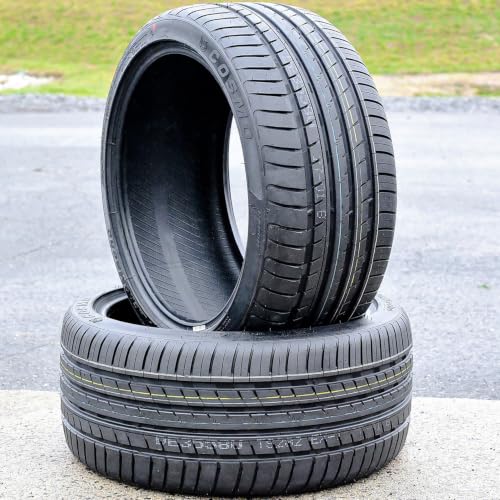
The 225/45ZR18 set of two is the only MuchoMacho option in this 18-inch size. Its name gives a 95Y XL marking, which combines a load index and speed symbol with an extra-load designation. This choice suits a vehicle whose required tire size and ratings match those markings. The product name identifies two tires, so it is not a complete four-tire set; buyers replacing all four should account for that distinction. Match the full size and ratings on the vehicle placard or owner’s manual before choosing.
Bottom line: Choose this if your vehicle calls for 225/45ZR18 and you need two tires.
Cosmo MuchoMacho 225/45ZR17 XL

The 225/45ZR17 XL size distinguishes this option from the 16- and 18-inch choices, and the product name gives a W94 load-range marking. The maker says the maker claims up to 30,000 miles of tread life when inflation, rotation, and alignment are maintained; that is a conditional claim, not a guaranteed service life. A 300 UTQG treadwear grade is also provided. This tire suits a car requiring this exact 17-inch size and compatible ratings. It is the wrong pick if the vehicle requires either of the other diameters.
Bottom line: Pick this for a vehicle specified for 225/45ZR17 XL.
Cosmo MuchoMacho 205/45ZR16 XL
The 205/45ZR16 XL size is narrower and fits a different wheel diameter than the other MuchoMacho options here. Its product name gives a W87 load-range marking, and the maker gives a 300 UTQG treadwear grade. The maker claims up to 30,000 miles of tread life with correct inflation, regular rotation, and wheel alignment, so maintenance and driving conditions matter to that figure. This option suits a passenger car whose specified size and ratings match. It cannot substitute for a 17- or 18-inch tire just because the model name is the same.
Bottom line: Choose this when the required fitment is 205/45ZR16 XL.
How to choose the right MuchoMacho size
Choose by the full size printed on the vehicle placard or in the owner’s manual, not by wheel diameter alone. In a marking such as 225/45ZR17, 225 is the nominal section width in millimeters, 45 is the aspect ratio, and 17 is the wheel diameter in inches; the 205/45ZR16 option is both narrower and intended for a smaller wheel. Load index and speed symbol also matter: replacement tires should meet the vehicle maker’s minimums. A practical rule is to reject any option whose complete size differs from the placard unless a qualified tire professional confirms an approved alternate fitment. Do not mix sizes on one axle.
What load and speed markings mean
Load index is a code for maximum load per tire under specified conditions, while a speed symbol identifies a standardized speed capability; neither is a recommendation to drive at that speed. The MuchoMacho product names include 95Y XL, W94, and W87 markings, so they are not interchangeable based on size alone. XL means extra load, but the tire still needs the correct pressure and must meet the vehicle’s required capacity. Check the placard and manual for the required load and speed ratings, then choose a tire that meets or exceeds the minimums. Never inflate to the sidewall maximum as a default; use the vehicle’s placard pressure.
How all-season tires differ from seasonal tires
All-season tires are designed for use across a range of ordinary weather conditions, but the category does not mean every tire performs equally in snow or ice. A winter tire uses a compound and tread design intended for cold-weather traction; changing to winter tires can be appropriate where sustained freezing conditions and snow are common. A high-performance all-season label signals a different design focus from a dedicated winter tire, not permission to ignore road conditions. For winter driving, consider local temperatures and whether roads are routinely snow-covered; if they are, prioritize a tire specifically marked for severe snow service. Maintain safe following distance and reduce speed when traction is poor.
How to maintain tire life and safety
Check tire pressure at least monthly and when tires are cold, using the vehicle placard’s pressure rather than the maximum molded into the sidewall. Tire rotation intervals commonly fall around 5,000 to 8,000 miles, though the vehicle manual and tire configuration can change the schedule. Uneven wear, vibration, a pull to one side, or visible damage calls for prompt inspection; alignment problems can accelerate wear even when tread remains. Tread depth and weather also affect safe replacement timing, so inspect the tread rather than relying on a mileage claim alone.
Frequently Asked Questions
Can I replace only two tires at a time?
Two-tire replacement can be suitable when the remaining pair has adequate tread and the vehicle maker permits the arrangement. On many vehicles, fitting the tires with more tread on the rear axle helps reduce oversteer risk on wet roads; confirm the vehicle’s guidance, especially for all-wheel drive.
What does the 45 in a tire size mean?
The 45 is the aspect ratio: the sidewall height is nominally 45% of the tire’s section width. It is a proportion, not a 45-millimeter measurement, and changing it can affect overall diameter and speedometer readings.
How often should I rotate all-season tires?
Many vehicles call for rotation about every 5,000 to 8,000 miles, but the owner’s manual sets the correct interval and pattern. Directional tread, staggered wheel sizes, and all-wheel-drive requirements can restrict how tires are rotated.
What pressure should I use for replacement tires?
Use the cold tire pressure shown on the vehicle placard, commonly on the driver’s door jamb, rather than the sidewall maximum. Check pressure monthly because temperature changes and small leaks can alter inflation.
When should I replace a tire for worn tread?
Replace a tire when tread reaches 2/32 inch, the U.S. legal minimum in many states, and consider replacement earlier for wet-weather safety. Uneven wear, bulges, exposed cords, or cuts warrant prompt professional inspection regardless of tread depth.