
Electric Tool to Remove Weeds Between Pavers: Options

For an electric tool to remove weeds between pavers, the WeedSpinner is the only drill-powered option here, and its shaft fits a 3/8-inch cordless drill chuck. Choose another tool if you want a stand-up or hand-operated weeder instead of using a drill.
A drill-powered weed remover spins a pointed tip into a weed, while crack weeders use blades to scrape or pull growth from joints.
We earn a commission if you buy through links on this page. As an Amazon Associate I earn from qualifying purchases. Products are compared on manufacturer specifications, not hands-on testing.
- Best overall: WeedSpinner Drill-Powered Weed Removal Tool – The 26.5-inch shaft fits a 3/8-inch cordless drill and its tip is designed to spin weeds out by the root.
- Best for standing reach: Haliaeetus 62-Inch Crack Weeder – The 62-inch handle lets you clear narrow cracks without bending.
- Best for adjustable reach: Garden Guru Patio Crack Weeder – The handle has three adjustable lengths for matching the tool to your reach.
| Product | Best for | Power / operation | Length | Head or tip | Shop |
|---|---|---|---|---|---|
| WeedSpinner Drill-Powered Weed Removal Tool | Drill-powered removal | 3/8-inch drill chuck | 26.5 in | Spade-drill tip | Check Price on Amazon |
| Haliaeetus 62-Inch Crack Weeder | Standing crack weeding | Manual | 62 in | L-shaped dual blades | Check Price on Amazon |
| Garden Guru Patio Crack Weeder | Handheld joint control | Manual | 13.27 in | L-shaped head | Check Price on Amazon |
| KLDOLLAR Adjustable Crack Weeder | Adjustable reach | Manual | 53.5 in | Serrated tine | Check Price on Amazon |
Electric Tool to Remove Weeds Between Pavers
The drill-powered option is distinct from the manual crack tools, which use blades or scrapers instead of a motor.
WeedSpinner Drill-Powered Weed Removal Tool

Unlike the other options, this weed remover uses a cordless drill to spin weeds out. Its single-piece steel shaft is 26.5 inches long and fits a 3/8-inch drill chuck; the pointed spade-drill tip is designed to enter the weed’s center and work through sod, hardscape, and clay soil. It is suited to someone who already has a compatible drill and prefers powered removal over scraping a joint by hand. The limitation is compatibility: this is not a standalone electric weeder, so it is the wrong choice without a 3/8-inch cordless drill.
Bottom line: Choose this if you have a compatible drill and want a powered root-removal approach.
Haliaeetus 62-Inch Crack Weeder

The 62-inch handle sets this manual crack weeder apart for people who want to clear paver joints while standing. Its L-shaped head has two blades intended to reach into cracks from different directions, including a sickle blade and a scraper blade. That makes it a useful alternative when the main job is cutting or scraping weeds and moss from narrow joints rather than spinning them out with a drill. Its tradeoff is the fixed long reach, which can be awkward for close, detailed work or tight storage.
Bottom line: Pick this for stand-up cleaning of paver joints without a drill.
Garden Guru Patio Crack Weeder

For close control at a particular crack, this compact handheld tool is a manual alternative to the drill-powered option. It has a stainless-steel L-shaped head intended to fit tight gaps and grip roots, plus a contoured soft-grip handle for control. The shorter 13.27-inch length suits detailed work along a patio, sidewalk, or driveway without managing a long pole. Its limitation is reach: anyone who wants to weed while standing or cover a long stretch without bending should choose a long-handled design instead.
Bottom line: Choose this for precise, close-up work in patio and sidewalk cracks.
KLDOLLAR Adjustable Crack Weeder
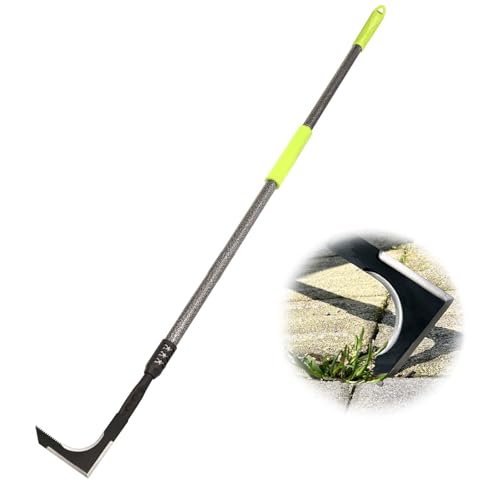
The adjustable handle distinguishes this manual crack weeder from fixed-length pole tools. It is described with three length settings and a serrated tine for working through weeds and moss in paving-stone gaps, sidewalks, and other narrow spaces. The overall length is 53.5 inches, and the stainless-steel head pairs with an alloy-steel handle. Its limitation is that it is still a hand tool, not an electric or drill-powered remover; choose it for adaptable reach rather than powered spinning.
Bottom line: Pick this if adjustable manual reach matters more than powered removal.
How to choose a weed remover for paver joints
Choose a powered spinner for drill-driven removal and a crack weeder when you want to scrape or pull growth manually. The key measurable fit for the powered tool here is a 3/8-inch drill chuck; without that size, the WeedSpinner will not fit the drill connection. For a manual tool, handle length changes posture: a 62-inch tool can support standing reach, while a 13.27-inch handheld weeder gives more direct control but requires bending or kneeling. Paver joints are narrow, so a blade or tine needs to fit the gap without levering against the paver edges. Clear loose debris first and work along the joint, rather than forcing a blade sideways against a stone.
Electric and manual paver weeders compared
Drill-powered and manual tools remove growth differently, so match the mechanism to the task and your available equipment. A drill-driven tip rotates into the weed, while a hooked or serrated blade scrapes or pulls from a joint. The options here span handheld control, fixed long reach, and adjustable handle length.
| Need | Tool type | Tradeoff |
|---|---|---|
| Powered root removal | Drill-powered spinner | Requires compatible 3/8-inch drill chuck |
| Stand-up joint clearing | Long-handle crack weeder | Less compact for close detail work |
| Precise handheld scraping | Short crack weeder | Requires bending or kneeling |
Joint width and the tool head shape are also important: narrow blades suit tight gaps, while wider or irregular joints may need several passes. Avoid using a spinning tool where loose gravel or debris could be thrown toward people, pets, glass, or vehicles; keep others clear and wear eye protection.
Using a drill-powered weed remover safely
A drill-powered weed remover needs a secure chuck connection and controlled pressure, not a hard downward shove. Fit the 3/8-inch shaft fully in the drill chuck, point the tip at the weed center, and use low, steady pressure as the tool spins. Keep hands, clothing, and cables clear of the rotating shaft, and wear eye protection because soil and small stones can become projectiles. Check that the paver is stable before working near its edge; a rotating tip should not be used to pry or loosen the paving stone. Stop if the drill binds rather than twisting the shaft or forcing the trigger.
How to clear weeds from paver joints
Remove loose debris before weeding so the blade or drill tip can reach the growth instead of skidding across surface grit. For hand tools, draw a hooked blade through the joint in short controlled passes; for a long handle, keep the head aligned with the crack and avoid pushing sideways against paver edges. Work on small sections, then sweep or collect cut material before it settles back into the gap. Avoid disturbing the joint bedding: sand-filled paver joints help lock units together, so deep scraping can remove more than vegetation. After clearing, check whether the joint needs replenishment with compatible jointing material.
Frequently Asked Questions
Will the WeedSpinner work without a cordless drill?
No, the WeedSpinner is a drill-powered shaft rather than a standalone electric tool. It is specified to fit a 3/8-inch cordless drill chuck, so confirm your drill’s chuck size before choosing it.
How do I keep pavers from shifting while weeding?
Avoid levering the blade sideways against paver edges or scraping deeply into the joint. Paver bedding and joint sand help stabilize the stones, so remove vegetation in shallow, controlled passes.
Should I wear eye protection when using a drill weeder?
Yes, wear eye protection around a rotating weed-removal tool because grit and small stones can be thrown from the work area. Keep people and pets clear of the spinning tip.
Can a crack weeder remove moss between pavers?
A manual crack weeder with a scraper or tine can be used to clear moss from joints. Work along the gap in short strokes and avoid digging deeply enough to displace jointing material.
How long should a paver weeding tool be?
A long-handled tool around 48 to 62 inches can reduce bending for standing work, while a handheld tool around 13 inches favors close control. Choose based on whether reach or precision matters more for your joints.