
Lab Notebook With Carbon Copy: 5 Formats Compared

For most people, Yeplan 100-Set Hardcover Notebook is the practical pick because it has 100 carbon-copy sets and measures 11 x 9.25 inches. Choose a different format if you need a familiar 8.5 x 11-inch page, a specific grid, or a smaller set count.
A carbonless lab notebook transfers writing onto a duplicate sheet without loose carbon paper; the right choice depends on how many copies you need and how you file them.
We earn a commission if you buy through links on this page. As an Amazon Associate I earn from qualifying purchases. Products are compared on manufacturer specifications, not hands-on testing.
- Best overall: Yeplan 100-Set Hardcover Notebook – Its 100 sets provide more duplicate records than the 25- and 50-set options.
- Best for 25 records: Affrolling 25-Set Carbonless Notebook – It has 25 writing-and-copy sets and includes a transparent writing board.
- Best for organizing pages: IWIZPRINT 50-Set Wire-O Notebook – It pairs 50 sets with a back pocket, ruler, and 1/4-inch grid.
| Product | Best for | Copy sets or pages | Page size | Binding or layout | Shop |
|---|---|---|---|---|---|
| Yeplan 100-Set Hardcover Notebook | Higher copy volume | 100 sets | 11 x 9.25 in | Quadrille ruled | Check Price on Amazon |
| IWIZPRINT 50-Set Wire-O Notebook | Grid and storage | 50 sets | 8.5 x 11 in | 1/4-in grid; Wire-O | Check Price on Amazon |
| Carbonless 50-Set Wire-O Science Notebook | Basic 50-set grid | 50 sets | 8.5 x 11 in | Scientific grid; Wire-O | Check Price on Amazon |
| Affrolling 25-Set Carbonless Notebook | Smaller record runs | 25 sets | 8.5 x 11 in | Science grid; coil | Check Price on Amazon |
| BARBAKAM 100-Page Spiral Notebook | Perforated copies | 100 pages | 8.5 x 11 in | Spiral; perforated copy page | Check Price on Amazon |
Lab notebooks with carbon copy
Compare the duplicate capacity, dimensions, and layout before choosing a notebook for lab records.
Yeplan 100-Set Hardcover Notebook
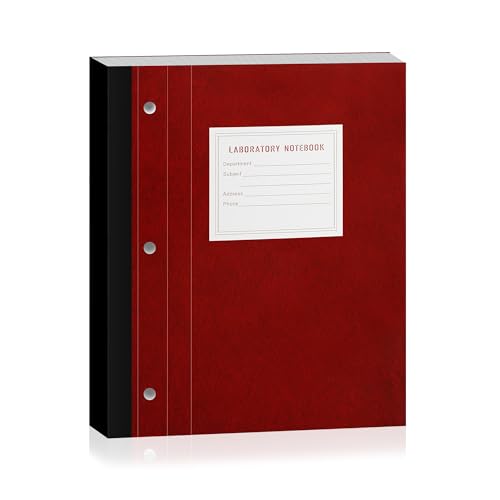
Yeplan stands out for its 100 copy sets and larger 11 x 9.25-inch format, making it suited to labs that produce a duplicate record for many experiments. Its quadrille ruling can help keep tables and plotted observations orderly, and perforated pages are intended to tear out cleanly. The maker says its hardcover is designed for frequent handling and spills. The larger footprint is a drawback if your storage folders or bench space are sized for standard 8.5 x 11-inch pages; check folder fit before choosing it.
Bottom line: Pick this if you need the highest copy capacity and can accommodate the larger page.
IWIZPRINT 50-Set Wire-O Notebook
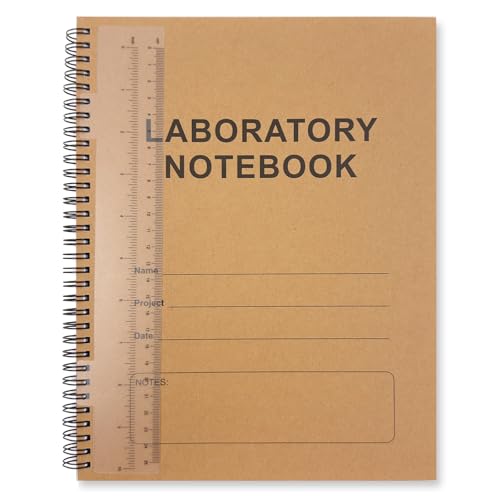
IWIZPRINT combines a 1/4-inch scientific grid with a back pocket and a clear ruler, a useful mix for recording measurements and keeping loose sheets together. It has 50 carbonless sets on 8.5 x 11-inch pages, plus Wire-O binding. The maker says the binding allows the notebook to lay flat and describes the paper as archival quality. Its capacity is half the 100-set option, so choose another notebook if you expect to need more than 50 duplicate records.
Bottom line: Choose this for a grid-focused notebook with a pocket and ruler.
Carbonless 50-Set Wire-O Science Notebook

This notebook offers 50 carbonless sets in an 8.5 x 11-inch format with Wire-O binding, giving it a straightforward profile for users who want duplicate records without the extra accessories in some alternatives. Its name identifies scientific grid pages, which are useful for charting measurements and drawing diagrams. The specifications give little basis to distinguish its grid spacing or included extras, so it suits buyers who mainly need the size and set count. If a particular grid interval matters, verify it before ordering.
Bottom line: Pick this if a 50-set, letter-size grid notebook is the main requirement.
Affrolling 25-Set Carbonless Notebook
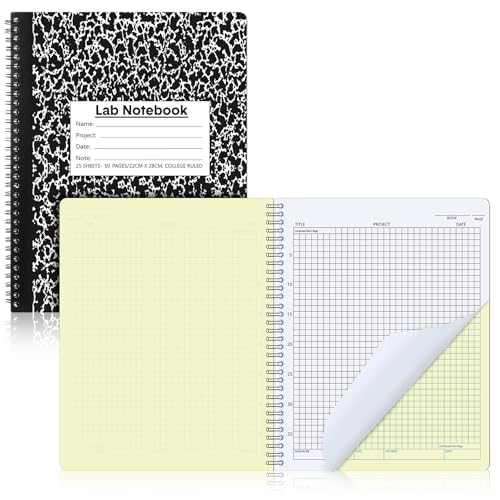
Affrolling is the lower-capacity option, with 25 writing-and-copy sets in an 8.5 x 11-inch coil-bound notebook. It also includes a transparent writing board sized 8.5 x 11 inches, which provides a firm surface for writing when a bench is not convenient. White writing sheets and yellow copy sheets make the duplicates visually distinct. The 25-set capacity can run short for a high-volume lab, so it makes more sense for a class, project, or limited record run than for ongoing daily documentation.
Bottom line: Choose this for a smaller record run and an included writing surface.
BARBAKAM 100-Page Spiral Notebook

BARBAKAM is identified by its 100 carbonless pages and perforated copy page, a useful distinction if you expect to remove duplicates for filing or sharing. The notebook measures 8.5 x 11 inches and has spiral binding. Its count is pages, not copy sets, so do not assume it supplies 100 complete writing-and-copy pairs. That makes it less straightforward to compare by record capacity than the notebooks whose counts are given in sets; confirm the number of usable duplicate records if that count is critical.
Bottom line: Pick this when perforated copy pages matter more than a clearly stated set count.
How to choose a lab notebook with carbon copy
Start with the number of duplicate records you need, then compare dimensions and ruling. A set generally means a writing sheet paired with a copy sheet, while a page count may include both kinds of sheets; check the manufacturer’s counting convention before treating pages as sets. For quick selection, use this capacity guide.
| Need | Useful stated capacity |
|---|---|
| Short project | 25 sets |
| Regular record run | 50 sets |
| More duplicate records | 100 sets |
Choose 8.5 x 11 inches if your forms, binders, or work area use letter-size paper. An 11 x 9.25-inch notebook needs more shelf and folder width. Grid ruling helps keep data tables and plots aligned; choose based on the diagrams and measurements you actually record.
How carbonless notebook copies work
Carbonless paper uses pressure from writing to transfer marks to a paired copy sheet, so loose carbon paper is unnecessary. A firm surface and a pen with enough pressure help create a readable duplicate; very light writing can transfer poorly. Keep the copy sheet paired with its original record until you confirm both are legible.
Duplicate sheets are useful for retaining one record while sharing another, but they do not replace good recordkeeping. Write dates, sample identifiers, units, and procedure changes as you work. For corrections, draw a single line through an error so the original remains readable, then add the correction and identify who made it according to your lab’s record policy.
Page size, ruling, and binding fit
Letter-size 8.5 x 11-inch pages fit many common office folders, while the 11 x 9.25-inch option is wider and may not fit the same storage system. Measure the inside width of your binder or filing sleeve rather than relying on its label, especially when a perforated edge or binding takes up space.
Quadrille or scientific grids support plotted measurements and hand-drawn tables; grid spacing matters when scale is important, so verify the interval if your work requires a particular increment. Spiral and Wire-O bindings differ from a hardcover format in how the notebook opens and stores. Select the binding that fits your bench and filing habits rather than assuming every notebook lies flat or fits a shelf equally well.
Preserving duplicate lab records
Store duplicate records in a dry, protected place and separate them only after checking that both sheets are readable. Heat, moisture, abrasion, and chemical exposure can damage paper records; keep notebooks away from wet benches and use lab-approved storage for records that may contact hazardous materials.
Use a consistent entry routine: record the date, experiment identifier, units, and relevant observations on each entry, and keep pages in sequence. Do not remove a page simply because an entry contains an error; preserve the original and follow your institution’s correction and retention rules. Before relying on a notebook for official documentation, check whether your course or lab requires a particular format, signature practice, or bound-page policy.
Frequently Asked Questions
How many carbon copy sets do I need?
Choose a count based on how many separate records you expect to duplicate before replacing the notebook. A 25-set notebook suits a short run, while 50 or 100 sets provide more room for ongoing records; allow extra capacity for repeat experiments.
Are carbonless pages the same as carbon paper?
No. Carbonless sheets transfer writing pressure directly between paired pages, while traditional carbon paper is a separate sheet placed between pages. Use a firm writing surface and enough pen pressure to help the copy remain legible.
Will an 8.5 x 11 notebook fit a letter-size binder?
The page dimensions match standard US letter paper, but binding and perforated edges can affect usable fit. Measure the binder opening or sleeve width and leave a small clearance rather than assuming the bound notebook fits.
Why are duplicate notebook sheets hard to read?
Light pressure, an unstable writing surface, or a damaged copy sheet can make carbonless transfer difficult to read. Write on a firm surface and check the original and duplicate before separating them.
Should I remove a notebook page after an error?
Keep the original record intact and follow your lab’s correction rules instead of removing an erroneous page. A common recordkeeping practice is to strike through an error once so it remains readable, then add a dated correction and initials.