
Viconor Red Light Therapy: 4 Devices Compared

For a face-and-body lamp, Viconor Face and Body Lamp combines 660 nm red light and 850 nm near-infrared light across 120 LEDs; choose based on the treatment area and setup that suit your routine. Choose Viconor 8.2-Inch Panel if you want a measured panel size and an irradiance figure, or Viconor Neck and Chest Device if you want a neck-and-chest-focused device.
We earn a commission if you buy through links on this page. As an Amazon Associate I earn from qualifying purchases. Products are compared on manufacturer specifications, not hands-on testing.
- Best overall: Viconor Face and Body Lamp – Its 120 LEDs combine 660 nm red and 850 nm near-infrared light in a face-and-body lamp.
- Best for panel specifications: Viconor 8.2-Inch Panel – It gives an 8.2-by-8.2-inch size and an irradiance figure at 6 inches.
- Best for neck and chest: Viconor Neck and Chest Device – Its 56 LEDs and flexible hands-free form target the neck and chest area.
| Product | Best for | LEDs | Wavelengths | Size or form | Shop |
|---|---|---|---|---|---|
| Viconor Face and Body Lamp | Face and body | 120 | 660 nm red + 850 nm infrared | Stand; one size | Check Price on Amazon |
| Viconor 8.2-Inch Panel | Measured panel output | 60 dual-chip LEDs | 660 nm + 850 nm | 8.2 × 8.2 in; 300 W | Check Price on Amazon |
| Viconor Apricot Adjustable-Stand Lamp | Adjustable-stand | 60 3-in-1 chips | 660 nm red + 850 nm infrared | Apricot; adjustable stand | Check Price on Amazon |
| Viconor Neck and Chest Device | Neck and chest | 56 | 660 nm red + 850 nm infrared | Flexible, hands-free | Check Price on Amazon |
Viconor Red Light Therapy Options
Compare each device by its LED arrangement, wavelength combination and intended treatment area.
Viconor Face and Body Lamp

With 120 LEDs, this face-and-body lamp has the largest LED count among the curved lamps here. Each light combines one 660 nm red LED with two 850 nm infrared LEDs, and the maker says its curved surface focuses the light. The lamp suits someone seeking one device for face and body rather than a neck-specific shape or a compact square panel. The dimensions are each about 0.4 inch, so they do not clarify the lamp’s overall footprint; check the stand and usable treatment area before choosing if placement space is limited.
Bottom line: Choose this if a 120-LED curved face-and-body lamp fits your setup.
Viconor 8.2-Inch Panel
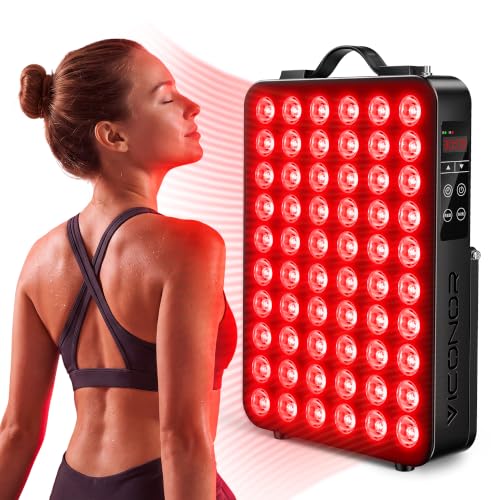
This square panel is the option with a footprint and irradiance: 8.2 by 8.2 inches, 300 W of power, and 140 mW/cm² at 6 inches. Its 60 dual-chip LEDs each contain 660 nm and 850 nm chips, for 120 chips in total. The maker describes it for body and face use and includes a hanging kit and handle. It suits buyers comparing panel placement or wanting a measurement at a set distance. The compact face-area footprint may require repositioning to cover larger body areas.
Bottom line: Pick this if the 8.2-inch panel size and 6-inch irradiance figure help you plan placement.
Viconor Apricot Adjustable-Stand Lamp

The adjustable-stand distinguishes this apricot-colored curved lamp from the other face-and-body option. It has 60 3-in-1 chips, each with two 660 nm red LEDs and one 850 nm infrared LED. The maker says the curved structure focuses red light across the face and describes body use as well. This shape and stand suit someone who wants a freestanding arrangement for personal use. The maker does not give an overall lamp size or an irradiance measurement, so buyers who need a defined footprint or output figure should favor a panel with those measurements.
Bottom line: Choose this if an adjustable-stand and curved face-oriented design matter most.
Viconor Neck and Chest Device
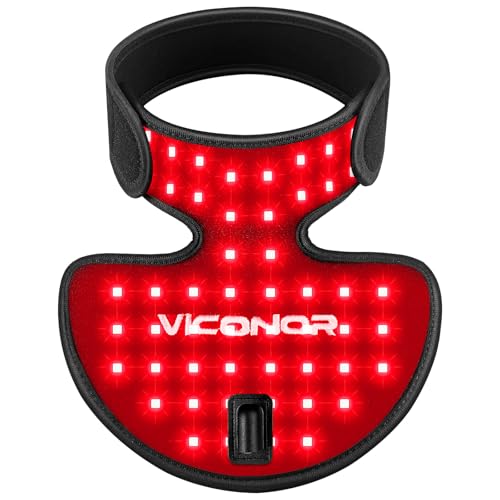
Unlike the face-and-body lamps and square panel, this flexible device is specifically shaped for neck and chest use. It has 56 LEDs, each combining one 660 nm red LED with two 850 nm infrared LEDs. The maker describes it as hands-free while sitting, lying down or walking when connected to a mobile power source. That targeted fit suits buyers focused on those areas rather than broad coverage.
Bottom line: Pick this for a flexible, hands-free device focused on neck and chest coverage.
How to Choose Viconor Red Light Therapy
Choose by treatment area, device geometry and the measurements you need to compare. Red-light devices use visible red wavelengths; near-infrared light is not visible, even though a device may combine both. These options use 660 nm red light with 850 nm near-infrared light, but their shapes and LED arrangements differ. LED count alone does not establish how much light reaches skin: distance, beam spread and measured irradiance also matter. The panel gives an irradiance figure at 6 inches, while the other options are distinguished by their form and stated LED counts. If you want to cover a large area, favor a shape you can position over that area; with a specific output threshold, use a device that reports irradiance at a distance.
Red Light Device Shapes and Coverage
Device shape determines how a light source sits relative to the area being treated. A panel is a flat, directional surface that can be placed or hung; a curved lamp is shaped around face-oriented use; a flexible wearable-style device follows the neck and chest. One LED count cannot be compared as a direct coverage measure across different geometries. The 8.2-inch panel has a defined face area, while the neck-and-chest device is described as flexible and hands-free. For broad areas such as the back or legs, expect to reposition a smaller device rather than assume one placement covers the whole area. Keep the device stable and use the manufacturer’s distance guidance for the specific model.
Comparing Red and Near-Infrared Wavelengths
Wavelength labels identify the light emitted, not a guaranteed result. Visible red light at 660 nm appears red; 850 nm near-infrared is outside human vision, so a lack of visible glow does not mean that wavelength is inactive. These devices combine the two wavelengths, but their LED ratios differ: some use one red LED to two infrared LEDs, while another uses two red LEDs to one infrared LED. Irradiance and exposure distance also affect the amount of light reaching a surface, so wavelength and LED count alone do not establish dose. The table distinguishes intended form from the wavelength pairing; it is not a ranking of therapeutic outcomes.
| Need | Form to consider | Why |
|---|---|---|
| Neck and chest focus | Flexible device | Shaped for those areas |
| Defined panel footprint | Square panel | 8.2 × 8.2 inches |
| Stand-based face use | Curved lamp | Stand or adjustable-stand |
Using Red Light Devices Safely
Protect your eyes from direct exposure to bright LEDs, especially when using a face-oriented device. Near-infrared light is invisible, so do not use brightness as a guide to whether the source is active; avoid staring into the LEDs and follow the device’s eye-safety directions. Keep the device away from water and do not use it if the cord or power supply is damaged. Light-sensitive medicines and conditions can change whether light exposure is appropriate; ask a clinician or pharmacist before use if you have either concern. Start with the manufacturer’s recommended distance and session length rather than increasing exposure based on the panel’s wattage alone, since power consumption is not the same measurement as dose at the skin.
Frequently Asked Questions
Can you see 850 nm near-infrared light?
No, 850 nm near-infrared is outside the visible range for human eyes. A device can emit it without a visible glow, so do not look directly at its LEDs to check operation.
Does a higher LED count mean more coverage?
Not by itself; coverage also depends on device shape, beam spread and distance from the surface. Compare the dimensions or intended body area, and reposition a small panel for larger areas.
What does irradiance at 6 inches mean?
Irradiance measures optical power reaching an area at a specified distance, commonly expressed in mW/cm². The distance matters, so an irradiance number at 6 inches should not be treated as the value at another position.
Should you wear eye protection with red light therapy?
Avoid staring into the LEDs and use eye protection when the device instructions call for it. Near-infrared is invisible, and visible brightness alone cannot indicate exposure.
Can light-sensitive medication affect device use?
Yes, some medicines can increase sensitivity to light, though the relevant wavelengths and risks vary by medication. Ask a clinician or pharmacist before use if you take a photosensitizing medicine or have a light-sensitive condition.