
Best Ball for Dogs That Chew: 5 Picks Compared

Chew King Natural Rubber Fetch Balls suits most dogs that chew because its 3-inch natural rubber ball has an air vent and can hold a treat. Dogs that need a squeak or a larger grip shape may suit DISSKNIC Squeaky Dog Ball or Monster K9 5.5-Inch Ring Ball better, but match any ball to your dog’s mouth and chewing style.
We earn a commission if you buy through links on this page. As an Amazon Associate I earn from qualifying purchases. Products are compared on manufacturer specifications, not hands-on testing.
- Best overall: Chew King Natural Rubber Fetch Balls – Three 3-inch natural rubber balls include a treat cavity and safety air vent.
- Best for squeaky play: DISSKNIC Squeaky Dog Ball – A 3.15-inch ball combines a squeaker with a 10 mm-thick construction.
- Best for tug: Monster K9 5.5-Inch Ring Ball – The 5.5-inch open ring shape has multiple grip points for tug, carrying, and fetch.
| Product | Best for | Diameter | Pack size | Material | Shop |
|---|---|---|---|---|---|
| Chew King Natural Rubber Fetch Balls | Fetch and treats | 3 in | 3 balls | Natural rubber | Check Price on Amazon |
| DISSKNIC Squeaky Dog Ball | Squeaky play | 3.15 in | 1 ball | — | Check Price on Amazon |
| ZRIFAQESW Large Squeaky Dog Ball | Bouncy squeak | 3.2 in | 1 ball | Rubber | Check Price on Amazon |
| Two-Pack Squeaky Dog Balls | Backup ball | 3.15 in | 2 balls | Rubber | Check Price on Amazon |
| Monster K9 5.5-Inch Ring Ball | Tug and carrying | 5.5 in | 1 ball | Vulcron rubber | Check Price on Amazon |
Dog Balls for Chewers
Compare ball size, shape, and play features to find a better match for your dog’s chewing habits.
Chew King Natural Rubber Fetch Balls
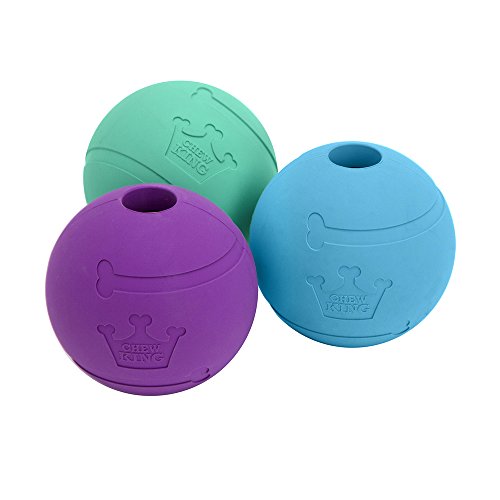
Chew King Natural Rubber Fetch Balls is the only option here that combines a treat cavity with a safety air vent, making it a distinctive choice for dogs that enjoy fetch and food puzzles. The pack contains three 3-inch balls made of natural rubber, and the maker says they bounce well and retain their shape under chewing. Its round profile is easy to roll and carry. The 3-inch size may not suit a dog with a small mouth or one that could fit the whole ball in its mouth, so check the fit before play.
Bottom line: Choose this if your dog enjoys fetch and treat-filled toys.
DISSKNIC Squeaky Dog Ball

DISSKNIC Squeaky Dog Ball stands out for its 10 mm thickness and squeaky play, rather than a treat cavity or tug-focused shape. The blue, large-size ball measures 3.15 inches across. The maker presents it as a high-stretch toy for large-breed dogs and says its sound is intended to invite chewing and play. The specifications do not identify its material, so this is harder to compare with the rubber options. Pick it when sound and a slightly larger round shape matter; supervise chewing and remove it if damaged.
Bottom line: Pick this when a squeaker and large round profile are the priority.
ZRIFAQESW Large Squeaky Dog Ball

ZRIFAQESW Large Squeaky Dog Ball offers a rubber ball with a squeaker and a 3.2-inch diameter, making it the largest round option among the single-ball choices here. The maker says it bounces and that chewing triggers the squeak. The green, large-size ball is aimed at bigger dogs, while its regular ball shape may be more familiar for rolling and carrying than an open ring.
Bottom line: Choose this for a rubber ball with a squeaker and a 3.2-inch diameter.
Two-Pack Squeaky Dog Balls

Two-Pack Squeaky Dog Balls differs from the other squeaky choices by including two balls, so there is a spare available during play. The blue-and-red pair measures 3.15 inches per ball and is described as rubber. The maker says the balls squeak and are intended for medium and large breeds.
Bottom line: Pick this if a two-ball set matters more than construction specifics.
Monster K9 5.5-Inch Ring Ball

Monster K9 5.5-Inch Ring Ball is the only open ring-shaped option here, with multiple grip points intended for chewing, carrying, and tug. The black ball measures 5.5 inches and uses Vulcron rubber; the maker offers a one-time replacement or refund under its lifetime replacement guarantee. Its shape and larger size make it a different kind of choice from the round fetch balls. That size may be awkward for smaller dogs or dogs that prefer a compact ball, so measure the dog’s comfortable carrying span before choosing.
Bottom line: Choose this for a larger ring shape with grip points for tug.
How to choose a chew-resistant dog ball
Start with mouth fit and play style, not the word “indestructible.” No dog toy is truly indestructible, as the maker of DISSKNIC Squeaky Dog Ball also acknowledges; a ball that is too small can become a choking hazard, while one too large may be difficult to carry. Choose a ball your dog can pick up without swallowing or trapping the lower jaw around it, and supervise chewing. Round balls suit rolling and fetch; ring shapes offer more grip for tug. For a strong chewer, inspect seams, holes, and surface damage before each session and remove a toy that begins to break apart.
A useful decision rule: if your dog can fit the entire ball behind its front teeth, choose a larger size or a different shape. Dogs who puncture or shred toys quickly need more frequent checks and shorter supervised sessions.
Ball size and shape for dog chewing
Ball diameter is only one part of fit: mouth width, jaw shape, and the way a dog carries a toy all matter. The options here range from 3 inches to 5.5 inches, and the larger ring is not automatically safer or easier to use. A round ball rolls predictably, while an open ring gives a dog several places to grip and can be easier to tug. Before play, confirm that the toy cannot slide fully into your dog’s mouth and that the dog can release it comfortably.
This comparison can help narrow the shape to your dog’s play style.
| Play need | Shape to consider | Fit check |
|---|---|---|
| Rolling fetch | Round ball | Cannot fit fully in mouth |
| Treat play | Ball with cavity | Dog can reach treat without wedging jaw |
| Tug and carrying | Open ring ball | Comfortable grip and release |
Rubber, squeakers, and treat cavities
Rubber balls can provide a solid surface for chewing, but products differ in shape, thickness, and stated material. A squeaker adds sound that may encourage attention; it also creates an internal component to check if the outer shell cracks. A treat cavity can turn a fetch ball into a short food puzzle, but use treats that fit without wedging and supervise the dog while it works. The specifications do not establish a common durability test across these choices, so claims such as “indestructible” should not replace regular inspection.
Choose the feature your dog actually uses: sound-sensitive or easily overstimulated dogs may prefer a quiet ball, while dogs motivated by food may engage longer with a treat cavity.
Safe play and when to replace a dog ball
Supervise chewing sessions and check a ball before and after play; cracks, torn rubber, loose parts, or a missing squeaker mean the toy should be removed. Do not leave a dog alone with a toy it can break apart, since swallowed pieces can obstruct the digestive tract. Use a separate toy for fetch if chewing has already damaged a ball, and keep balls clean of dirt and debris that can scratch the mouth. Avoid throwing a ball into traffic, near water, or where a dog may collide with another animal.
Dogs with powerful jaws can damage even heavy-duty toys, so replacement depends on visible wear rather than a set calendar interval. Size also matters: choose a ball large enough not to be swallowed, yet small enough for a relaxed grip and release.
Frequently Asked Questions
Can any dog ball be truly indestructible?
No dog ball can be guaranteed indestructible, and even heavy-duty toys can be damaged by determined chewing. Inspect the ball before each session and remove it as soon as cracks, chunks, or loose parts appear.
How large should a chew ball be for my dog?
Choose a ball that cannot fit entirely behind your dog’s front teeth but can still be carried and released comfortably. If your dog can take the whole ball into its mouth, move up in size or choose a different shape.
Should dogs chew on squeaky balls unsupervised?
No; supervise squeaky-ball chewing because a punctured shell can expose the squeaker or create loose pieces. End the session if the ball cracks or the squeaker comes loose.
Are treat balls suitable for every dog?
Treat cavities suit dogs that engage with food puzzles, but use a treat that cannot wedge tightly inside the opening. Supervise the first sessions and remove the ball if your dog bites off pieces.