
Best Knot Tying Fishing Tool: 4 Options Compared

HOOK-EZE 2X Standard suits most anglers because its covered-hook design handles hooks from 4/0 to #28 and includes a line cutter. Choose HOOK-EZE Nail Knot Combo instead if you mainly tie nail knots for fly fishing; Hook Eze Standard 2-Pack offers the same hook range in a two-tool pack, while FREGITO Copper Hook Tying Tool, 2-Pack is a compact copper hook tying option.
A fishing knot tying tool helps grip or guide line and tackle during knot work, but the right format depends on whether you tie terminal tackle or join a leader to a fly line.
We earn a commission if you buy through links on this page. As an Amazon Associate I earn from qualifying purchases. Products are compared on manufacturer specifications, not hands-on testing.
- Best overall: HOOK-EZE 2X Standard – Its hook cover supports hook sizes from 4/0 to #28, and it includes a stainless steel line trimmer.
- Best for nail knots: HOOK-EZE Nail Knot Combo – The combo is built around a stainless steel nail knot tool and includes a pocket guide.
- Best for a two-tool pack: Hook Eze Standard 2-Pack – The pack includes two tools, each with the same 4/0-to-#28 hook range.
| Product | Best for | Tool format | Hook range | Included extras | Shop |
|---|---|---|---|---|---|
| HOOK-EZE 2X Standard | Covered hook tying | Covered-hook tool | 4/0 to #28 | Stainless trimmer | Check Price on Amazon |
| Hook Eze Standard 2-Pack | Two-tool setup | Covered-hook tool, 2-pack | 4/0 to #28 | Stainless trimmers | Check Price on Amazon |
| HOOK-EZE Nail Knot Combo | Fly line joining | Nail-knot combo | — | Guide, cleaner, zinger | Check Price on Amazon |
| FREGITO Copper Hook Tying Tool, 2-Pack | Copper two-pack | Copper hook-tying tool, 2-pack | — | None specified | Check Price on Amazon |
Fishing Knot Tying Tools
Match the tool’s job to the knots you tie most often, then compare hook coverage and included accessories.
HOOK-EZE 2X Standard

HOOK-EZE 2X Standard combines a hook cover with a line trimmer, making it the broadest general hook tying option in this group. The maker says the cover suits hooks from standard 4/0 down to #28 and helps with jig heads, swivels, speed clips and selected flies; the included stainless steel trimmer is intended for line up to 50 pounds. At 3 inches long, it stays compact for a tackle kit. It suits anglers who want help handling small or barbed hooks, but it is not the dedicated nail knot setup for joining fly line and leader.
Bottom line: Choose it for general hook work when covered-barb handling and a cutter matter.
Hook Eze Standard 2-Pack

Hook Eze Standard 2-Pack stands out by supplying two covered-hook tools rather than one, while keeping the same hook range as the single-tool option. The maker says each tool accommodates hooks from standard 4/0 down to #28 and includes a stainless steel trimmer for line up to 50 pounds. That makes the pack useful when a spare tool is handy or two anglers want their own. Each tool measures 3 inches long. The tradeoff is that this remains a hook-focused format, so anglers who chiefly tie nail knots should consider a purpose-built tool instead.
Bottom line: Pick it when you want two covered-hook tools with the broad hook range.
HOOK-EZE Nail Knot Combo
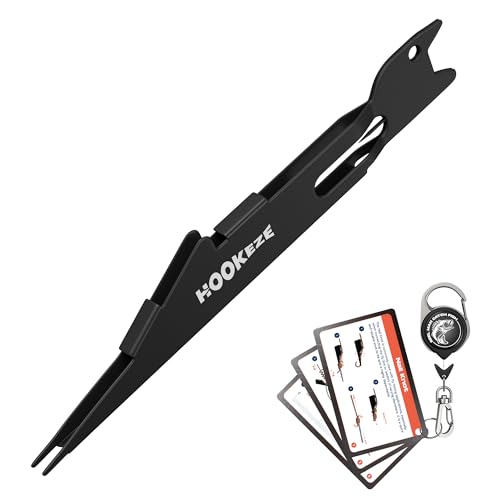
HOOK-EZE Nail Knot Combo is the specialized choice here: its stainless steel tool is designed for nail knots, unlike the covered-hook designs. The combo also includes a built-in hook-eye cleaner, waterproof step-by-step knot guide cards and a retractable zinger. It suits fly anglers who want a compact set centered on joining a leader to fly line or tying other nail knots. The features do not give a hook-size range or cutter rating, so this is not the clear choice for someone who needs those specific capabilities; prioritize the nail knot function and guide instead.
Bottom line: Choose it if nail knots and a pocket guide are your main needs.
FREGITO Copper Hook Tying Tool, 2-Pack

FREGITO Copper Hook Tying Tool, 2-Pack differs from the covered-hook tools with a copper line-tie design and a two-piece pack. Each tool is 3.94 inches long and weighs 20 grams, according to the specifications; the maker describes the copper as wear- and corrosion-resistant. Its compact form suits anglers looking for a simple hook tying aid to add to fishing or fly-fishing gear. The features do not establish a hook-size range, cutter, or guide, so anglers who need a particular hook coverage or integrated accessory should prioritize a tool that explicitly provides it.
Bottom line: Pick it for a copper two-pack when a simple hook tying format fits your needs.
How to Choose a Fishing Knot Tying Tool
Start with the knot, because a hook-gripping tool and a nail knot tool solve different problems. Hook tools help hold or shield terminal tackle while line is tied; nail knot tools help form a compact connection between fly line and leader. Match the tool to your routine: if most of your work is tying hooks, swivels or clips, favor hook coverage; if you regularly join fly line and leader, favor a nail knot design. For standard hook work, an option with a range from 4/0 to #28 covers a wide spread of hook sizes. Check the actual hook size and knot you use before choosing, since a range does not establish compatibility with every hook shape or line.
Hook Size and Safe Handling
Hook sizes run in opposite directions across common numbering: a #28 hook is much smaller than a 4/0 hook. Match the size range to the tackle you actually tie rather than assuming that a tool sized for large hooks will grip the smallest ones equally well. A hook cover can reduce direct contact with the point while working, but it does not make a barbed hook harmless; keep the point directed away from fingers and eyes, and secure tackle before pulling line tight. Use good light and avoid forcing a hook into a holder that does not fit. If you need to confirm compatibility with a particular hook style, verify its fit before ordering.
Hook Knots and Nail Knots Compared
Hook knots attach line to terminal tackle; nail knots typically join a leader to a fly line, so these tools are not interchangeable by default. A compact comparison helps identify the right task before purchase.
| Task | Tool type | Useful deciding feature |
|---|---|---|
| Attach line to hooks or swivels | Covered-hook tool | Fits the hook sizes you use |
| Join fly line and leader | Nail knot tool | Designed for nail knot formation |
| Carry a basic aid for hook tying | Compact line-tie tool | Material and pack count |
Wet monofilament or fluorocarbon before drawing a knot tight; lubrication reduces friction and heat during cinching. Pull steadily rather than snapping the line, then trim the tag end close without cutting the standing line.
Line Cutters and On-Water Care
An integrated cutter is useful only when its capacity matches the line you cut. A cutter rated by its maker for line up to 50 pounds gives a clear limit, but line material and construction can affect cutting effort, so do not assume every braid or wire is covered by that figure. Keep blades away from fingers and store the tool so the cutting edge cannot snag line or clothing. Rinse saltwater-exposed metal tools in fresh water and dry them before storage; salt residue can encourage corrosion, including on stainless components. Check that the hook cover, moving parts and cutting edge are secure before using the tool near a sharp hook.
Frequently Asked Questions
What is a fishing knot tying tool used for?
A fishing knot tying tool helps hold tackle or guide line while you form a knot. Hook-focused tools aid terminal-tackle knots, while nail knot tools are designed for joining fly line and leader.
Does a hook tying tool fit every hook size?
No; use the maker’s size range as a boundary, not a guarantee for every hook shape. For example, a range from 4/0 to #28 spans large and very small hooks, but unusual shapes still need a fit check.
Should I wet fishing line before tightening a knot?
Yes, wet monofilament or fluorocarbon before cinching to reduce friction and heat. Tighten steadily, then trim the tag end without nicking the standing line.
What is the difference between a nail knot and a hook knot?
A nail knot commonly connects a leader to fly line, while a hook knot attaches line to terminal tackle. Choose a nail knot-specific tool for the first task and a hook-gripping format for routine hook tying.
How should I maintain a fishing knot tying tool?
Rinse saltwater residue off metal tools with fresh water and dry them before storage. Keep any cutter edge protected and check moving parts before working near a sharp hook.