
YUNSCM Bike Tires: 5 Sizes and Treads Compared

For most riders seeking YUNSCM bike tires, YUNSCM 27.5 × 1.95 Hybrid Tires is the commuting-oriented pick because its 27.5 × 1.95 hybrid tread is aimed at paved roads and light gravel. Choose another option if your wheel needs a different size or you ride a fat bike, since tire diameter and width must match the rim and frame.
These are replacement tires for different wheel sizes, not interchangeable models; compare the size printed on your current tire before choosing.
We earn a commission if you buy through links on this page. As an Amazon Associate I earn from qualifying purchases. Products are compared on manufacturer specifications, not hands-on testing.
- Best overall: YUNSCM 27.5 × 1.95 Hybrid Tires – Its 27.5 × 1.95 hybrid tread is designed for paved roads, bike paths, and light gravel.
- Best for fat e-bikes: YUNSCM 26 × 4.0 Fat E-Bike Set – The 26 × 4.0 set includes two tires and two Schrader tubes.
- Best for 20-inch all-terrain: YUNSCM 20 × 1.95 All-Terrain Set – The 20 × 1.95 kit pairs directional block tread with two tubes and levers.
| Product | Best for | Tire size | Inflation pressure | Included | Shop |
|---|---|---|---|---|---|
| YUNSCM 27.5 × 1.95 Hybrid Tires | commuting and paths | 27.5 × 1.95 in | 40–65 PSI | 2 tires | Check Price on Amazon |
| YUNSCM 26 × 4.0 Fat E-Bike Set | fat-bike replacement | 26 × 4.0 in | 20 PSI | 2 tires, 2 tubes | Check Price on Amazon |
| YUNSCM 20 × 1.95 All-Terrain Set | 20-inch mixed paths | 20 × 1.95 in | 35 PSI | 2 tires, 2 tubes, 2 levers | Check Price on Amazon |
| YUNSCM 26 × 1.95 Arrow-Tread Tires | 26-inch road riding | 26 × 1.95 in | 50 PSI | 2 tires | Check Price on Amazon |
| YUNSCM 26 × 1.95 Slick Tires | flat city streets | 26 × 1.95 in | 40–65 PSI | 2 tires | Check Price on Amazon |
YUNSCM Bike Tires by Size and Tread
Match the tire’s printed diameter and width to your wheel first, then choose tread and pressure for your riding surface.
YUNSCM 27.5 × 1.95 Hybrid Tires

The 27.5-inch hybrid set is the commuting-focused choice here, with a continuous center-block tread intended to roll on pavement and shoulder lugs for cornering on light gravel. The package includes two 27.5 × 1.95 tires, and the inflation range is 40–65 PSI. Its fit is specific: choose it only if your wheel accepts 27.5 × 1.95 tires. Riders needing tubes in the same package or a tread intended for rougher all-terrain use should compare other sizes and kits instead.
Bottom line: Choose this set for a compatible 27.5-inch wheel used mainly on pavement and light gravel.
YUNSCM 26 × 4.0 Fat E-Bike Set

The 26 × 4.0 width makes this the fat-tire option, rather than a substitute for the narrower 26 × 1.95 road tires. The set contains two tires and two AV32mm Schrader-valve tubes; the tire pressure is 20 PSI. Its broad footprint suits a compatible fat-bike rim, but size alone does not confirm clearance: check frame and fork space before fitting a four-inch tire, especially on an e-bike. Riders whose rims take standard-width tires should select a narrower matching size.
Bottom line: Pick it only for a 26 × 4.0-compatible fat bike with enough frame and fork clearance.
YUNSCM 20 × 1.95 All-Terrain Set
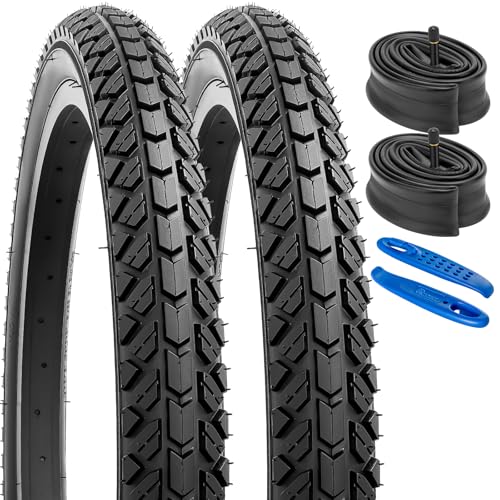
The 20 × 1.95 kit is the only compact-wheel option here that bundles tubes and tire levers along with the pair of tires. Its large center blocks and diamond-pattern shoulders are intended for urban and wet-road riding, and the pressure is 35 PSI. The 54-406 designation helps identify the size, but the wheel still must match that bead-seat diameter and width. This set is not a fit for 26- or 27.5-inch wheels, and its use excludes extreme off-road riding and overloading.
Bottom line: Choose this bundle for a matching 20-inch wheel used on urban or mixed wet paths.
YUNSCM 26 × 1.95 Arrow-Tread Tires

The arrow-patterned 26 × 1.95 tire pair differs from the smoother 26-inch option by adding tread blocks for gravel and cornering rather than focusing on flat city roads. The pressure is 50 PSI, and the product specifies a maximum load of 198 pounds. The tire size is compatible with some beach cruiser wheels, but confirm the exact size designation on your current tire before buying; two 26-inch tires can have different widths and bead-seat measurements. This option does not include tubes.
Bottom line: Select it for a compatible 26 × 1.95 wheel and a tread suited to roads and some gravel.
YUNSCM 26 × 1.95 Slick Tires

The slick 26 × 1.95 pair is the city-road alternative to the arrow-tread: its smooth surface is intended for flat pavement, and the pressure range is 40–65 PSI. The product specifies a 198-pound maximum load. Because it shares the 26 × 1.95 nominal size with another option, use the printed size and bead-seat designation on the existing tire to confirm fit rather than choosing by wheel diameter alone. The package is a tire pair, so riders replacing tubes will need to match those separately.
Bottom line: Choose these for flat city roads if the 26 × 1.95 size matches your current tire.
How to choose YUNSCM bike tire size
Start with the complete size printed on the tire sidewall, not just the wheel diameter. A marking such as 26 × 1.95 gives nominal diameter and width, while a code such as 50-559 gives bead-seat diameter in millimeters; both parts must be compatible with the rim. The 20 × 1.95 option uses 54-406, while the 27.5-inch option uses 53-584, so those are distinct wheel standards. Width also needs frame and fork clearance. As a practical rule, if a replacement tire is wider than the one currently fitted, check clearance at the chainstays, fork crown, and fenders before ordering. A four-inch fat tire needs a purpose-built rim and frame, not merely a 26-inch wheel.
Which YUNSCM tread suits your riding surface
For mostly flat pavement, a slick or continuous-center tread is generally the more efficient pattern; pronounced blocks add grip on loose ground but can increase rolling drag and noise on hard surfaces. The 26-inch slick option targets flat city roads, while the 27.5 × 1.95 hybrid pattern is described for pavement, paths, and light gravel. The arrow and large-block patterns are better aligned with mixed surfaces than a smooth tread. Tire pressure also affects ride feel: lower pressure can increase tire deformation and traction, while excessive pressure can reduce comfort and grip. Stay within the pressure range marked for the tire and check that the rim and tire are rated for the chosen pressure.
Pressure, load, and safe installation
Inflate to the pressure printed for the exact tire, using a gauge rather than judging by hand; the products here range from 20 PSI for the 26 × 4.0 fat tire to 40–65 PSI for one 26-inch slick option. The 26 × 1.95 road options specify a 198-pound maximum load, so account for rider, carried gear, and any load limits on the bike. Before riding, inspect both tire beads around the rim to ensure they sit evenly, then spin the wheel to check for wobble or rubbing. Keep hands clear of pinch points while mounting, and do not exceed the lower pressure limit of the tire or rim. A tube must also match both tire size and valve type.
26-inch YUNSCM tire tread comparison
The two 26 × 1.95 choices differ mainly in tread and stated pressure, not nominal width. Use the sidewall marking on your current tire to confirm the fit, then choose by surface: smooth pavement favors slick tread, while mixed road and gravel favor patterned blocks. Check wheel clearance whenever the replacement is wider than the tire currently installed.
| Option | Tread intent | Pressure |
|---|---|---|
| 26 × 1.95 slick | Flat city roads | 40–65 PSI |
| 26 × 1.95 arrow | Road and gravel | 50 PSI |
| 26 × 4.0 fat | Fat-bike use | 20 PSI |
Frequently Asked Questions
How do I know whether a 26-inch tire will fit?
Match the full size, including width and bead-seat code, printed on your current tire. A 26-inch label alone is not enough because 26 × 1.95 tires and 26 × 4.0 fat tires need different rims and frame clearance.
What does 50-559 mean on a bike tire?
The 50-559 designation gives nominal tire width and bead-seat diameter in millimeters. The 559 mm bead-seat measurement is the key rim-fit dimension, so compare that code as well as the tire width.
How often should I check bike tire pressure?
Check pressure before each ride, since bicycle tires lose air over time and small-volume tires can change noticeably between rides. Use a gauge and stay within the range marked for the particular tire.
Can I use a mountain bike tire on pavement?
Yes, a block-tread tire can be ridden on pavement, but it may roll less quietly and efficiently than a smoother tread. For mostly flat city roads, a slick or continuous-center pattern is usually the more suitable choice.
How much clearance should a bike tire have?
Leave visible space between the inflated tire and the frame, fork, brake parts, and fenders; there is no single clearance figure that fits every bike. Check the bicycle maker’s tire-width limit, especially before fitting a 4-inch fat tire or a replacement wider than the current tire.