
Best Chew Proof Dog House: 3 Outdoor Picks Compared

For most buyers, GUTINNEEN Insulated Metal-Frame Dog House is the best chew proof dog house because its metal-framed panels combine with insulation in a compact 33.5-inch-long shelter. Choose GUTINNEEN Extra Large Heated Dog House instead for a large dog that needs more room and a heating pad; its 60-inch length and 36-inch width set it apart.
These are outdoor kennels or shelters, not guaranteed chew-proof products: a metal-frame can limit access to panel edges, but persistent chewing can still damage materials. Measure your dog and the intended spot before choosing.
We earn a commission if you buy through links on this page. As an Amazon Associate I earn from qualifying purchases. Products are compared on manufacturer specifications, not hands-on testing.
- Best overall: GUTINNEEN Insulated Metal-Frame Dog House – Its insulated structure and metal-framed panels suit buyers looking for a compact outdoor shelter.
- Best for large dogs: GUTINNEEN Extra Large Heated Dog House – The 60 × 36-inch footprint and 180-pound capacity accommodate larger dogs.
- Best for simple shelter: GUTINNEEN 33.5-Inch Metal-Frame Dog House – The 33.5-inch-long metal-framed kennel includes a wind-and-rain curtain.
| Product | Best for | Dimensions (L × W × H) | Weight capacity | Notable feature | Shop |
|---|---|---|---|---|---|
| GUTINNEEN Insulated Metal-Frame Dog House | Insulated compact shelter | 33.5 × 22 × 25.2 in | — | Insulation; openable roof | Check Price on Amazon |
| GUTINNEEN Extra Large Heated Dog House | Large heated shelter | 60 × 36 × 35.4 in | 180 lb | Heating pad; insulated liner | Check Price on Amazon |
| GUTINNEEN 33.5-Inch Metal-Frame Dog House | Basic outdoor shelter | 33.5 × 22 × 25.2 in | 100 lb | PVC curtain; raised legs | Check Price on Amazon |
Chew Proof Dog Houses Compared
Compare each shelter’s dimensions and features with your dog’s measurements and outdoor setup.
GUTINNEEN Insulated Metal-Frame Dog House
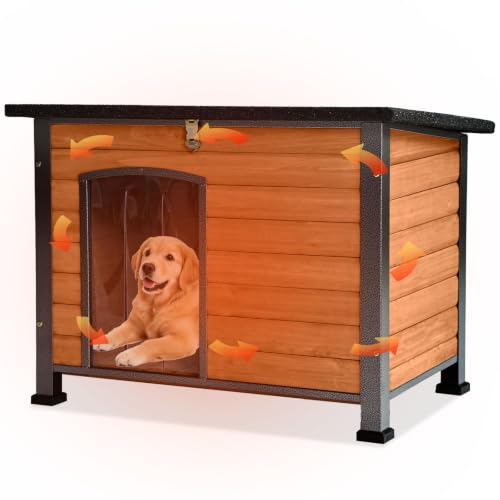
Insulation distinguishes this 33.5-inch shelter from the other compact option. The maker says its insulated structure, fir-wood panels and wind-blocking door curtain help retain warmth, including in temperatures below 0°C (32°F). Metal framing around the panels limits access to edges for chewing, but it does not make any shelter indestructible. The openable roof can make interior access easier for cleaning or inspection. This model suits buyers seeking a compact outdoor house with insulation; its 22-inch width may be a limiting fit for a broad or long-bodied dog, so compare the usable interior space with your dog’s measurements.
Bottom line: Choose this for a compact outdoor shelter with insulation and a metal-framed structure.
GUTINNEEN Extra Large Heated Dog House

The 60-inch length makes this the roomiest option here, while the other shelters measure 33.5 inches long. The maker says a heating pad and six-sided insulated liner help retain warmth in cold conditions; the house also has a door curtain and an openable roof. Its weight capacity is 180 pounds. This is the clearest fit for a large dog that needs more floor space, provided the outdoor location can accommodate its 60 × 36-inch footprint. Because it includes electrical heating, use an outdoor-rated pad and keep its cord out of reach; the heating feature is not a substitute for checking safe power setup.
Bottom line: Choose this when a large dog needs a spacious shelter and you can safely set up the heating pad.
GUTINNEEN 33.5-Inch Metal-Frame Dog House

This model offers a more basic setup than the insulated compact shelter: it has a metal-framed panel structure, raised legs and a PVC curtain intended to block wind and rain. Its dimensions are 33.5 × 22 × 25.2 inches, and its weight capacity is 100 pounds. The maker describes the frame as helping remove access points for chewing, but no dog house can be assumed immune to damage from persistent chewing. Choose it when you want a compact outdoor kennel without the added heating and insulation features of the larger or insulated options. Its 22-inch width can be restrictive for dogs that need more turning room.
Bottom line: Choose this for a compact outdoor kennel with a curtain and raised legs, without a heating pad.
How to choose a chew proof dog house
Start with your dog’s size and chewing habits, then compare the shelter’s construction and use features. Metal framing around panels can reduce access to edges, but chew resistance is not the same as indestructibility; inspect door edges, seams and any exposed wood or plastic. Measure your dog while standing and lying down, then make sure the interior allows standing, turning and resting without contact with the walls. An oversized house can be harder for a dog to warm with body heat in cold weather, while a tight fit restricts movement. For outdoor use, also account for the shelter’s footprint, drainage and exposure to wind and rain. Choose a heated model only if you can manage its electrical setup safely.
How to size an outdoor dog house
Measure body length from nose to tail base, shoulder height while standing, and width while your dog is lying down. The interior should give the dog room to stand, turn around and lie comfortably; the entrance should be large enough for an easy, unforced entry. Compare those measurements with the usable interior, not just exterior dimensions, because framing and wall thickness reduce space. The compact models here are 33.5 × 22 × 25.2 inches externally, while the extra-large shelter is 60 × 36 × 35.4 inches. Those outside measurements do not establish a fit for every dog. If the dog cannot turn around or stretch out inside, move up to a larger shelter.
Insulation and heating for outdoor shelters
Insulation slows heat transfer, while a door curtain can help limit drafts; neither replaces dry bedding, shade or access to a suitable indoor space in severe weather. A heated shelter adds electrical risk: use only equipment rated for outdoor conditions, protect cords from chewing and moisture, and position the pad so the dog can move away from it. Do not use a damaged cord or pad. A heating feature is not proof that a kennel is safe in every temperature or weather condition. Check the forecast and your dog’s condition, and bring the dog indoors if the shelter cannot provide safe, dry protection. The maker’s temperature claim is not a universal operating limit for every dog or climate.
What chew-resistant construction can and cannot do
A metal-frame can shield panel edges and reduce easy bite points, but the term “chew proof” is not a guarantee against damage. Dogs can target doors, corners, curtains and exposed surfaces, and a damaged panel can create sharp or loose parts. Inspect the kennel regularly, especially around latches, seams and the entrance. Remove access to damaged areas until repaired or replaced. A raised floor can help keep a shelter off the ground, but it does not by itself ensure a dry interior; location and drainage still matter. Supervise a dog that is new to an outdoor kennel and do not use confinement as a substitute for addressing destructive chewing or escape behavior.
Frequently Asked Questions
How do I measure my dog for a dog house?
Measure standing shoulder height, body length from nose to tail base, and width while lying down. The usable interior should let the dog stand, turn and lie comfortably, so allow room beyond the body measurements.
Can a chew proof dog house stop every dog from chewing?
No construction can guarantee that a determined dog will never damage a shelter. Metal framing may limit access to panel edges, but check doors, corners, curtains and seams for damage regularly.
Is a heated outdoor dog house safe to use?
It can be used more safely with an outdoor-rated heating pad, a dry setup and a cord protected from chewing. Stop using any pad or cord that is damaged, and make sure the dog can move away from the heated area.
Does an insulated dog house keep a dog warm below freezing?
Insulation and a door curtain can help retain warmth, but they do not guarantee safe shelter in freezing weather. Wind, moisture, the dog’s size and coat, and the actual interior fit all affect comfort; bring the dog indoors if conditions are unsafe.
Should a dog house be bigger than my dog?
Yes, it needs enough usable room for standing, turning and lying down, but excessive space can make it harder to retain body warmth in cold weather. Compare interior dimensions with your dog’s measurements rather than relying on exterior size alone.