
Best Plumbers Tape for Leaks: 4 Types Compared

For most leaks at threaded pipe connections, choose VOTMELL PTFE Tape, 4 Rolls: its PTFE tape comes in four 1/2-inch by 520-inch rolls. Choose a different type if the leak is on a hose, crack, or broad surface, since thread tape seals threaded joints rather than patching damage.
We earn a commission if you buy through links on this page. As an Amazon Associate I earn from qualifying purchases. Products are compared on manufacturer specifications, not hands-on testing.
- Best overall: VOTMELL PTFE Tape, 4 Rolls – Four PTFE rolls provide more tape for repeated threaded-joint repairs.
- Best for one roll: D-NYX PTFE Tape, 1 Roll – The PTFE roll has the same 1/2-inch width and 520-inch length in a single roll.
- Best for hose repairs: AnykNow Self-Fusing Silicone Tape – Self-fusing silicone tape stretches and bonds to itself for wrapping hose damage.
| Product | Best for | Tape type | Width | Length | Shop |
|---|---|---|---|---|---|
| VOTMELL PTFE Tape, 4 Rolls | Repeated joint repairs | PTFE thread tape | 1/2 in | 520 in per roll | Check Price on Amazon |
| D-NYX PTFE Tape, 1 Roll | Single joint repairs | PTFE thread tape | 1/2 in | 520 in | Check Price on Amazon |
| AnykNow Self-Fusing Silicone Tape | Hose leak wrapping | Self-fusing silicone | 1 in | 10 ft per roll | Check Price on Amazon |
| Gorilla Waterproofing Tape, 4 in x 10 ft | Broad surface patches | Adhesive waterproofing tape | 4 in | 10 ft | Check Price on Amazon |
Plumbers Tape for Leaks
Match the tape to the leak location: threaded joints need thread seal tape, while damaged hoses and surfaces call for repair tape.
VOTMELL PTFE Tape, 4 Rolls
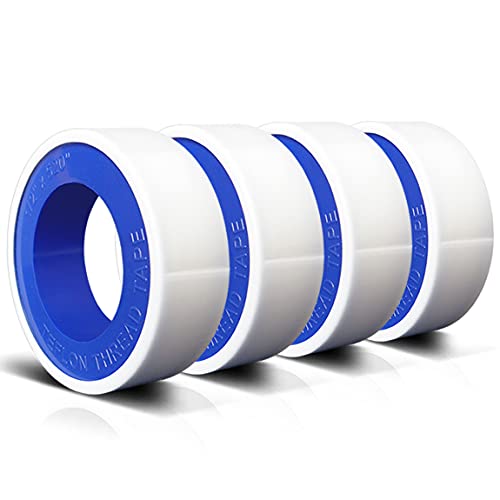
The four-roll pack separates this option from the single-roll thread tape: each white PTFE roll measures 1/2 inch by 520 inches. The maker says the tape seals threaded pipes against water or gas leaks. It suits households or offices with multiple threaded connections to seal, but the pack is more tape than a one-off repair may need. PTFE thread tape is applied to pipe threads before the connection is assembled; it is not a patch for a crack or a leaking hose wall.
Bottom line: Choose this pack for multiple threaded-joint jobs; use a repair tape for damage away from the threads.
D-NYX PTFE Tape, 1 Roll

A single blue roll makes this a smaller-quantity choice than the four-roll pack, while keeping the same 1/2-inch width and 520-inch length. The maker says its PTFE tape is intended to seal pipe threads against water or air leaks and for assorted plumbing work. It suits a small repair kit or one threaded connection. The limitation is the same as with other thread tape: it will not bridge a split hose, seal a surface crack, or replace a worn washer. The maker’s gas-related claim is not a substitute for verifying tape and fitting suitability for gas service.
Bottom line: Choose this single roll for a threaded connection when you do not need several rolls.
AnykNow Self-Fusing Silicone Tape

Unlike PTFE thread tape, this black silicone tape is designed to stretch and bond to itself around a repair; the two rolls total 20 feet. The maker says it is weather-, heat-, and chemical-resistant and works from -100°F to 500°F. It suits wrapping a hose or similar damaged section where a flexible outer seal is needed. The tape has no adhesive of its own, so it must be stretched and overlapped with consistent pressure; it is not the right product for sealing the threads inside a pipe fitting.
Bottom line: Choose this for a wrap-around hose repair, not for threaded plumbing connections.
Gorilla Waterproofing Tape, 4 in x 10 ft

The broad 4-inch adhesive strip distinguishes this from narrow thread tape and stretch-to-fuse silicone tape. The maker says it bonds to metal, plastic, wood, rubber, and vinyl, and is designed to resist moisture and UV exposure for indoor or outdoor patching. It may suit a hole, gap, or tear on a compatible surface. Its width and adhesive backing make it unsuitable for wrapping pipe threads, and a surface patch is not a replacement for repairing a pressurized plumbing connection correctly.
Bottom line: Choose this for a broad compatible-surface patch rather than a threaded joint.
How to choose plumbers tape for leaks
Start with where water escapes: thread tape is for threaded connections, while a split hose or surface hole needs a repair method that covers the damaged area. PTFE thread seal tape fills the small spiral gaps between mating pipe threads; it is wrapped on the male threads before assembly. A practical rule is to use thread tape only when the leak is at a threaded joint and the fitting is designed to seal at its threads. Compression fittings, flare fittings, and joints sealed by a washer or O-ring rely on their own sealing surfaces, so tape on their threads usually does not fix the leak. For gas lines, use only tape specifically suitable for the fuel and connection, then leak-check with an approved method—never a flame.
How to wrap PTFE tape on pipe threads
Wrap PTFE tape in the direction the fitting tightens: viewed from the open end of the male pipe, that is usually clockwise. This keeps the tape from unwrapping as the connection is screwed together. Two or three snug wraps are a common starting point for ordinary household pipe threads; thread size, tape thickness, and the fitting maker’s guidance can change the amount. Keep tape off the first thread and avoid loose tails that can enter the waterway. A useful check is that the tape lies flat in the thread valleys rather than bunching into a ridge. Do not force a connection that binds; excess tape can make assembly difficult or stress a fitting.
Thread tape versus leak-repair tape
Thread tape and repair tape solve different problems, so identify the failure before choosing. PTFE tape belongs on threaded joints; self-fusing silicone wraps around an object and bonds to itself, while adhesive waterproofing tape covers a surface. Use this guide to match the tape family to the leak location.
| Leak location | Tape type | Key limitation |
|---|---|---|
| Threaded pipe connection | PTFE thread tape | Does not patch hose splits |
| Hose or flexible section | Self-fusing silicone tape | Requires stretch and overlap |
| Hole or tear on compatible surface | Adhesive waterproofing tape | Not a threaded-joint seal |
When tape will not fix a plumbing leak
Tape is not a cure for every leak: a cracked fitting, corroded pipe, failed washer, or damaged hose may need replacement or a proper repair instead. Shut off the water before opening a joint, and drain pressure where practical; water escaping under pressure can cause damage quickly. For a leak on a threaded joint, disassemble it and inspect the threads and sealing surfaces rather than adding layers over an assembled connection. If the connection serves gas, do not rely on general-purpose plumbing tape: confirm the tape is approved for that gas and fitting, and check for leaks with an approved solution after assembly. Call a qualified professional if the damaged section is inaccessible or the connection cannot be safely isolated.
Frequently Asked Questions
How many wraps of PTFE tape should I use?
Two or three snug wraps are a common starting point for ordinary household pipe threads. Larger threads, tape thickness, and the fitting manufacturer’s requirements can change the amount.
Which way should plumbers tape be wrapped?
Wrap clockwise when looking at the open end of the male threaded pipe so tightening the fitting does not unwind the tape. Keep it flat and out of the pipe opening.
Can plumbers tape stop a leak in a hose?
PTFE thread tape seals threaded joints, not a split along a hose. For a hose wrap, self-fusing silicone tape is a different type that bonds to itself when stretched and overlapped.
Should plumbers tape go on compression fittings?
Usually no: compression fittings seal at the ferrule and mating surfaces, not at the threads. Tape cannot correct a damaged ferrule, misaligned tube, or worn sealing surface.
Can regular plumbing tape seal a gas connection?
Only use tape specifically suitable for the gas and fitting; a general water-plumbing label is not enough to establish gas suitability. After assembly, check the connection with an approved leak-detection method and never use a flame.