
Pettit Prop Coat Barnacle Barrier: Formats Compared

Pettit Marine 1792 Prop Coat Quart is the clearest match for Pettit Prop Coat Barnacle Barrier because its name identifies the product and a quart package. Choose Pettit Zinc Coat Barrier Aerosol, 16 oz if you prefer the identified 16-ounce aerosol; the other options have less package-format information.
A zinc-based barrier coating is intended for marine metal protection, but it does not replace a correctly selected sacrificial anode. Confirm the label’s substrate compatibility and application directions before buying.
We earn a commission if you buy through links on this page. As an Amazon Associate I earn from qualifying purchases. Products are compared on manufacturer specifications, not hands-on testing.
- Best overall: Pettit Marine 1792 Prop Coat Quart – The name directly identifies Prop Coat Barnacle Barrier and a quart package.
- Best for aerosol format: Pettit Zinc Coat Barrier Aerosol, 16 oz – The package is identified as a 16-ounce aerosol.
- Best for zinc-coat name match: Pettit Paint 1792 Zinc Coat Barrier – The product name includes Pettit Paint 1792 Zinc Coat Barnacle Barrier.
| Product | Best for | Package format | Weight | Shop |
|---|---|---|---|---|
| Pettit Marine 1792 Prop Coat Quart | Quart package | Quart | 7 lb | Check Price on Amazon |
| Pettit Zinc Coat Barrier Aerosol, 16 oz | Aerosol format | 16 oz aerosol | 3.3 lb | Check Price on Amazon |
| Pettit Paint 1792 Zinc Coat Barrier | 1792 name match | — | 1 lb | Check Price on Amazon |
Pettit Prop Coat Barnacle Barrier Products
Compare the named quart product with the aerosol and other 1792-named options by the package facts available for each.
Pettit Marine 1792 Prop Coat Quart
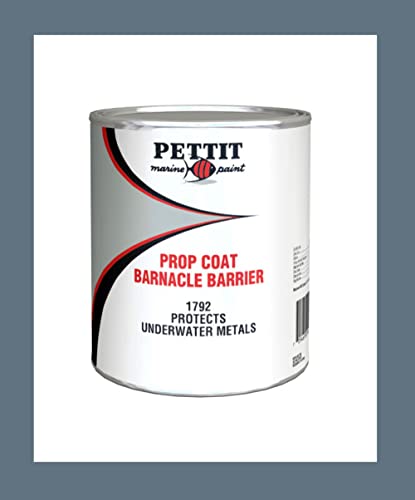
The quart package is the clearest match for shoppers searching for Pettit Prop Coat Barnacle Barrier. Its name identifies the Prop Coat product, and its weight is 7 pounds. That makes it straightforward to distinguish from the aerosol option, which is identified by an ounce size. A quart may suit someone who wants the named product in that package format, but the package size alone does not establish how much area it covers. Check the label for surface preparation, compatible metals, and application conditions before starting.
Bottom line: Choose this if you want the named Prop Coat product in a quart package.
Pettit Zinc Coat Barrier Aerosol, 16 oz
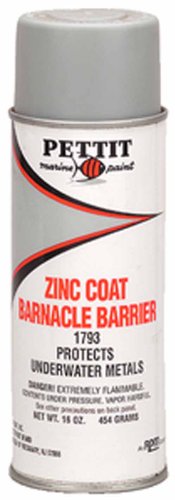
The 16-ounce aerosol is the distinct format choice among these options. The product name identifies Pettit Zinc Coat Barnacle Barrier, and the package is gray and weighs 3.3 pounds. Aerosol packaging can be convenient for applying a coating to smaller or irregular surfaces, though the package facts do not establish coverage or whether a particular propeller is compatible. Confirm the coating label’s directions and substrate compatibility, and use the safety precautions specified for aerosol coatings. This option suits buyers who specifically want the identified aerosol format rather than a quart container.
Bottom line: Pick this when aerosol packaging is the deciding factor.
Pettit Paint 1792 Zinc Coat Barrier

The Pettit Paint 1792 Zinc Coat name directly connects this option to the search, while its package format is not identified by the product name. Its weight is 1 pound, distinguishing it from the quart and the 16-ounce aerosol. Weight by itself does not tell you the container size, coverage, or application method, so base the choice on the label and package you receive rather than assuming it matches another format. It may suit a buyer prioritizing the 1792 Zinc Coat name, but it is a less clear pick when a specific package type matters.
Bottom line: Choose this if the 1792 Zinc Coat name matters more than package format.
How zinc barrier coatings differ from sacrificial anodes
A zinc coating and a sacrificial zinc anode are different kinds of corrosion protection. An anode is a separate piece of metal that corrodes preferentially when electrically connected to a more noble metal in water; a coating is a surface layer, not a replacement for that electrical protection. Marine systems may use both, with the correct anode material depending on whether the boat operates in salt, brackish, or fresh water. Do not assume a coating product’s name proves its suitability for every propeller alloy. Check the label for approved substrates and pair any coating plan with the vessel’s existing corrosion-protection setup. If a propeller has active pitting or damaged metal, address the underlying corrosion issue rather than relying on a fresh coating alone.
How to choose between a quart and an aerosol
Choose by package format only after confirming the coating is compatible with the surface and the job. A quart and an aerosol are not interchangeable measures: one is a volume unit and the other is a pressurized package size, and neither alone tells you finished coverage. Aerosols can be useful for detailed or irregular surfaces, while a larger container can be more practical when the label directs application over broader areas; actual suitability depends on the product directions. A useful decision rule is to choose the aerosol only when its label explicitly supports your surface and application method; otherwise compare the labeled coverage and instructions for the quart option. Never estimate coverage from package weight.
| Buyer priority | What to compare |
|---|---|
| Known aerosol package | 16-ounce aerosol |
| Known quart package | Quart container |
| Specific package not essential | Confirm format on the label |
Preparing a propeller before coating
Surface preparation is central to coating adhesion: oil, salt residue, loose coating, and corrosion products can prevent a new layer from bonding evenly. Begin with a clean surface and remove loose material using a method appropriate for the propeller metal and the coating label; avoid treating a heavily pitted surface as ready just because it looks dry. Metal compatibility matters because propellers may use different alloys, and an unsuitable coating or preparation method can cause problems. Follow the product’s required cleaning, drying, and application steps, including any limits on temperature or ventilation. For aerosol products, keep ignition sources away and use the ventilation and protective equipment required by the label.
What to check before choosing a marine coating
Confirm the intended metal, the application method, and whether the coating is meant for the submerged surface you plan to protect. A product name mentioning zinc does not make every zinc coating suitable for every alloy or use; rely on the label’s compatibility statement. Also compare package format against the application directions rather than assuming an aerosol and a quart share the same coverage or finish. Marine corrosion protection works as a system: coating condition, electrical bonding, and the correct sacrificial anode all matter. If you are uncertain about the propeller metal or existing anode material, identify those before applying a coating. A new barrier layer cannot correct poor anode selection or damaged metal.
Frequently Asked Questions
Does a zinc coating replace a propeller anode?
No, a zinc coating is not a substitute for a sacrificial anode. Anodes protect connected metal through galvanic action, and the correct anode material depends on the water environment.
Can I apply zinc coating over old paint?
Only if the coating label permits that surface and preparation. Loose paint, oil, salt, or corrosion residue can interfere with adhesion, so remove contamination and follow the label’s surface-prep steps.
How do I choose an aerosol or quart package?
Choose based on the label’s approved application method and coverage, not package weight. An aerosol is a distinct pressurized format, while a quart is a volume measure.
Does every zinc coating work on every propeller?
No; propeller alloys and coating compatibility differ. Confirm the label names the metal or substrate you intend to coat before applying it.
What should I do if a propeller is pitted?
Treat visible pitting as a corrosion issue to investigate rather than simply coating over it. Check the propeller’s condition and corrosion-protection system, including the anode material for the operating water.