
Pump to Drain Water Heater: 4 Transfer Pumps Compared

For a water heater drain, 115V Water Transfer Pump, 330 GPH is the clearest fit because its maker identifies water heaters and give a 6-foot suction lift. Choose another option if its connection or temperature limits better suit your setup; the other pumps are general-purpose water transfer models.
A utility transfer pump moves water through hoses rather than being lowered into a tank. Before buying, confirm the pump’s maximum water temperature is suitable for your heater, since these specifications do not establish a hot-water rating.
We earn a commission if you buy through links on this page. As an Amazon Associate I earn from qualifying purchases. Products are compared on manufacturer specifications, not hands-on testing.
- Best overall: 115V Water Transfer Pump, 330 GPH – It is the only model explicitly described for water heaters and has a 6-foot maximum suction lift.
- Best for lift details: TecHome 115V Transfer Pump – Its maker includes a 6-foot suction lift and 40-foot maximum head.
- Best for metal construction: Trupow 115V Transfer Pump – It has stainless steel construction and carbon steel housing.
| Product | Best for | Max discharge head | Max suction lift | Shop |
|---|---|---|---|---|
| 115V Water Transfer Pump, 330 GPH | Water heater draining | 40 ft | 6 ft | Check Price on Amazon |
| TecHome 115V Transfer Pump | Lift specifications | 40 ft | 6 ft | Check Price on Amazon |
| FIDISP 115V Utility Transfer Pump | Cord reach | 42+ ft | — | Check Price on Amazon |
| Trupow 115V Transfer Pump | Metal housing | — | — | Check Price on Amazon |
Pumps to Drain a Water Heater
Compare these utility transfer pumps by intended use, hose connection and the lift figures provided.
115V Water Transfer Pump, 330 GPH
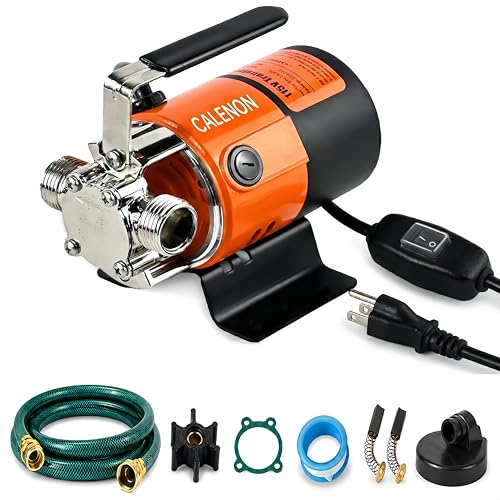
115V Water Transfer Pump, 330 GPH is the only pump here explicitly described for water heaters, making it the most directly matched option. The maker says its 115V, 1/10 HP motor moves clean water at up to 330 GPH, with a 40-foot maximum discharge head and 6-foot maximum suction lift. Its 3/4-inch GHT inlet and outlet fit standard garden hoses, and the built-in switch, carry handle and stable base support supervised use near an outlet. The key limitation is that no maximum water temperature is given; confirm compatibility before pumping recently heated water.
Bottom line: Choose this model when you want a transfer pump specifically identified for water heaters.
TecHome 115V Transfer Pump

TecHome 115V Transfer Pump stands out for specifying both maximum head and suction lift, useful figures when estimating a hose route from a tank. The maker says its 1/10 HP motor transfers up to 330 GPH, lifts water up to 40 feet and has a 6-foot maximum suction lift. Aluminum-alloy construction, a thermal overload protector and 3/4-inch garden-hose-thread connections are also specified. This is a non-submersible pump, so its motor must stay dry; unlike the dedicated heater option, its use is general water transfer rather than water-heater draining.
Bottom line: Pick this if the suction-lift limit is a priority and your use is general water transfer.
FIDISP 115V Utility Transfer Pump

FIDISP 115V Utility Transfer Pump differs with a maximum lift of more than 42 feet, the highest head figure among these options. The maker says its 115V, 1/10 HP pump moves up to 330 GPH, and the product includes two 6-foot water hoses. Its metal construction, zinc-alloy pump volute and waterproof built-in switch are additional features. The product is presented for pools, aquariums and hot tubs rather than specifically for water heaters, and its suction-lift limit is unclear, so confirm that the intended setup is compatible before relying on it.
Bottom line: Consider this for a transfer route where its higher stated head is useful, after verifying heater and suction compatibility.
Trupow 115V Transfer Pump

Trupow 115V Transfer Pump is the construction-focused alternative, with stainless steel construction, carbon steel housing and metal hose connectors. The maker says its 1/10 HP motor transfers up to 330 GPH; the discharge thread connects to a 3/4-inch garden hose. A non-slip carrying handle helps with positioning, and the maker advises clearing air from the hose for maximum suction. The use cases are pools, rain barrels and aquariums, not specifically water heaters.
Bottom line: Choose this when metal construction matters more than having published lift limits.
How to Choose a Pump for Water Heater Draining
Start with water temperature, hose connection and lift rather than the pump’s advertised flow alone. A tank water heater can hold scalding water; water at 120°F can burn skin, so let the tank cool and avoid opening a hot drain. Check the pump’s maximum fluid temperature against the water you plan to move before purchase, and use a pump only within its rating. These four models are 115V electric pumps, so use a grounded outlet protected by a GFCI around water, keep plugs and motor dry, and do not handle electrical connections with wet hands. A higher head rating does not override the pump’s suction-lift limit or temperature rating.
Water Heater Drain Valve and Hose Fit
A 3/4-inch GHT connection is the common garden-hose thread, but the heater’s drain valve may use a different outlet or a fragile plastic fitting. Confirm the valve thread and hose arrangement before connecting a pump; forcing a mismatched fitting can damage the valve. Keep the pump close to the tank and minimize suction-side hose length, because suction lift is the vertical distance from water level to pump inlet. As a practical rule, if the water must rise more than 6 feet to the pump, do not choose a model limited to a 6-foot suction lift. Close the cold-water inlet before draining and open a hot-water faucet to let air enter the tank.
Compare Transfer Pumps by Lift and Fit
Flow rate is a maximum claim, not a guaranteed drain time: hose length, vertical rise, restrictions and air in the line reduce actual flow. Compare the limits with the setup before deciding.
| Setup need | What to match |
|---|---|
| Water heater use is a priority | Explicit water-heater use and a compatible temperature rating |
| Water rises to the pump | Maximum suction lift above the tank’s water level |
| Long upward discharge route | Maximum discharge head above the pump |
| Existing garden hose | 3/4-inch GHT connection compatibility |
Discharge head and suction lift describe different parts of the route. Add the vertical rise on the suction side to the intended discharge rise separately; do not treat a high discharge-head figure as permission to exceed suction lift.
Safe Setup and Common Drainage Mistakes
Water heater draining should begin with the heat source off and the water cooled, not with a pump running against a hot tank. Switch off an electric heater at its breaker or set a gas heater to its off setting before draining; never energize an electric element while the tank is empty or partly drained. Use a hose rated for the water temperature, secure the discharge end, and direct water to a drain that can handle the volume. A non-submersible transfer pump must remain dry above the water, and many utility pumps require priming; follow the specific pump’s startup steps. Air leaks on the suction side can interrupt flow, so keep fittings tight and avoid kinks.
Frequently Asked Questions
Can a transfer pump remove hot water from a heater?
Only if its maximum fluid-temperature rating covers the water temperature. Let the tank cool to reduce scald risk, and verify that temperature limit before connecting the pump.
How much suction lift does a water heater pump need?
The pump’s inlet should be no more than its rated suction lift above the water surface. For a model capped at 6 feet, keep the vertical rise under 6 feet and place the pump close to the tank.
Will a garden hose fit a water heater drain valve?
Not always: 3/4-inch GHT fits standard garden hoses, but heater drain valves can use different threads or plastic outlets. Confirm the valve connection before forcing on an adapter.
Should I turn off a water heater before draining it?
Yes; turn off the electric circuit or gas control before draining. An electric heating element can be damaged if energized without being submerged, and hot water can scald.
Why does a transfer pump lose suction while draining?
Air leaks, kinks or excess suction lift can interrupt flow. Keep the suction hose airtight and unkinked, and stay within the pump’s maximum suction-lift rating.