
Refresh Digital Eye Drops: 5 Lubricant Options Compared

Refresh Digital Lubricant Eye Drops is the closest match for screen-related dryness because it is formulated for discomfort that may come with screen time and comes in a 10 mL bottle. Choose preservative-free single-use vials for a portable, preservative-free format, or select a contact-lens rewetting drop when lens moisture is the specific need.
Lubricant eye drops supplement the tear film to ease dryness and irritation; they are not interchangeable with medicated drops for other eye conditions.
We earn a commission if you buy through links on this page. As an Amazon Associate I earn from qualifying purchases. Products are compared on manufacturer specifications, not hands-on testing.
- Best overall: Refresh Digital Lubricant Eye Drops – Made for dry, irritated eyes that may be associated with screen time.
- Best for preservative-free vials: Refresh Classic Preservative-Free – Provides 30 single-use containers without preservatives.
- Best for contact lenses: Blink Contacts Lubricating Drops – Designed to moisturize soft and RGP contact lenses.
| Product | Best for | Format | Volume or count | Preservative / use | Shop |
|---|---|---|---|---|---|
| Refresh Digital Lubricant Eye Drops | Screen-related dryness | Bottle | 10 mL | Purite; as needed | Check Price on Amazon |
| Refresh Classic Preservative-Free | Preservative-free portability | Single-use vials | 30 × 0.4 mL | Preservative-free | Check Price on Amazon |
| TheraTears Dry & Tired | Dry, tired eyes | Single-use vials | 30 count | Preservative-free | Check Price on Amazon |
| Bausch + Lomb Advanced Eye Relief | General dry-eye lubrication | Bottle | 15 mL | — | Check Price on Amazon |
| Blink Contacts Lubricating Drops | Contact lens moisture | Bottle | 0.34 fl oz | — | Check Price on Amazon |
Refresh Digital eye drops and alternatives
Compare the intended use and format first, then choose the lubricant that fits your routine.
Refresh Digital Lubricant Eye Drops

Refresh Digital Lubricant Eye Drops is the only option here specifically positioned for dryness that may be related to screen time. The 10 mL bottle uses glycerin in a sodium-chloride-free solution with HydroCell technology, and the formula includes Purite, a preservative the maker says breaks down into natural tear components. The maker also says the drops can be used as often as needed. This is a fit for someone seeking a screen-focused lubricant in a multidose bottle; buyers who prefer preservative-free doses should choose a different format.
Bottom line: Choose this if screen-related dryness is your main concern and a bottle suits your routine.
Refresh Classic Preservative-Free

Refresh Classic Preservative-Free differs from the screen-focused bottle by providing preservative-free lubricant in 30 single-use vials. The maker describes the formula as fast-acting and designed to act like natural tears, and says it is suitable for dry, sensitive eyes and use as often as needed. The small individual doses make this format useful when a preservative-free option is the deciding factor. It is not specifically positioned for screen time, so choose it for the preservative-free format rather than a screen-specific formula.
Bottom line: Choose this for preservative-free single-use doses and sensitive eyes.
TheraTears Dry & Tired

TheraTears Dry & Tired stands out for its dry-and-tired-eye positioning and preservative-free vial format. The maker says the formula contains twice the hydrating ingredient found in TheraTears original formula and is intended to soothe discomfort associated with eye strain and screen fatigue. Its 30 single-use vials suit someone who wants a preservative-free option framed around tired eyes, not just general dryness. The specifications do not give a volume per vial, so compare the packaging format rather than assuming each dose matches another brand’s vial size.
Bottom line: Choose this for preservative-free vials marketed for dry, tired eyes.
Bausch + Lomb Advanced Eye Relief
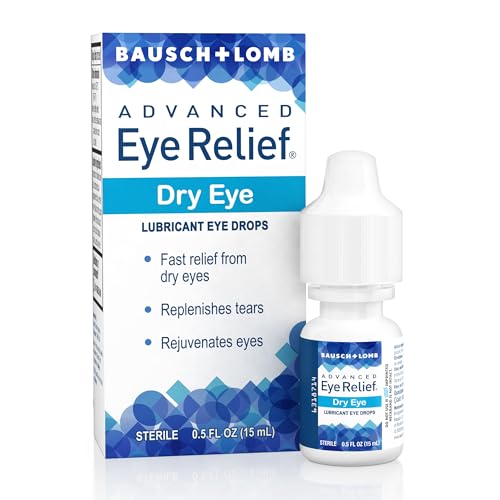
Bausch + Lomb Advanced Eye Relief offers a 15 mL bottle, the largest bottle volume among these options. The maker describes it as a lubricant for irritated eyes that replenishes tears and gives fast relief from dry-eye symptoms; the maker also says it can be used as often as needed. This is a straightforward choice for someone seeking a general dry-eye lubricant in a multidose bottle.
Bottom line: Choose this if you want a larger bottle for general dry-eye symptoms.
Blink Contacts Lubricating Drops

Blink Contacts Lubricating Drops is the specialized option for contact lenses, rather than a general screen-focused dry-eye formula. The maker says its hyaluronate formula moisturizes soft and RGP lenses, with electrolytes similar to those in natural tears, and is intended to keep lenses comfortable through the day. A 0.34 fl oz bottle suits lens wearers seeking a rewetting drop for their lenses. The use is contact-lens moisture; choose a general lubricant instead if lens rewetting is not the main need.
Bottom line: Choose this when you need lubrication specifically for soft or RGP contacts.
How to choose eye drops for screen-related dryness
For screen-related dryness, start with a lubricant labeled for that use, then decide between a bottle and single-use vials. Concentrated screen viewing can reduce blinking, which can leave the eye surface less frequently refreshed; regular breaks and deliberate blinking are practical complements to drops. A multidose bottle is convenient for repeated use, while preservative-free vials avoid preservatives and are discarded after opening. Preservatives can matter more with frequent dosing or sensitive eyes, so a preservative-free option is a common choice in those situations. Do not use redness-relief or medicated drops as a substitute for lubricants unless an eye-care professional recommends them. Persistent pain, light sensitivity, or blurred vision calls for professional advice rather than repeated self-treatment.
Eye drop formats and preservative choices
Multidose bottles and single-use vials differ mainly in handling and preservative exposure. Preservative-free vials are generally discarded after one use because they lack a preservative to limit contamination after opening; avoid touching the tip to the eye or fingers. Bottles with preservatives are designed for repeated use, but the bottle tip still needs to stay clean and the cap should be replaced promptly. Use this comparison to match format to routine.
| Format | Typical reason to choose it | Handling point |
|---|---|---|
| Multidose bottle | Repeated dosing from one container | Keep the tip clean and capped |
| Preservative-free vial | Preservative avoidance or individual doses | Discard after opening/use |
For contact lenses, use drops specifically labeled for lens rewetting; ordinary lubricants are not automatically suitable while lenses are in place.
How often to use lubricating eye drops
Use frequency depends on the formula: preservative-free artificial tears are commonly used more frequently, while preserved drops may irritate some eyes when used repeatedly throughout the day. When dosing is needed more than four times daily, many eye-care references favor preservative-free tears to limit preservative exposure. Follow the product’s label for its specific dosing and contact-lens directions, since formulas differ. If dryness remains despite regular lubrication for more than a few days, or symptoms include pain or vision changes, seek advice from an eye-care professional. Contact lens wearers should remove lenses if irritation develops and use only drops labeled as compatible with their lens type.
When screen-related eye discomfort needs more than drops
Dryness during screen work can be helped by reducing uninterrupted viewing: the 20-20-20 approach means looking 20 feet away for 20 seconds every 20 minutes. Position a screen slightly below eye level to reduce exposed eye surface, and avoid direct airflow from fans or vents. Lubricating drops can soothe dryness, but they do not correct an outdated glasses prescription, treat infection, or diagnose persistent eye pain. Redness accompanied by discharge, sudden vision changes, significant light sensitivity, or one-sided severe discomfort deserves prompt clinical evaluation. For contact lens users, stop wearing the lenses during significant irritation until the cause is clear.
Frequently Asked Questions
Can I use artificial tears while wearing contacts?
Only use drops labeled for contact-lens use while lenses are in place. Rewetting products for soft or RGP lenses are designed for that purpose; general lubricants may require lens removal.
How often can I use preservative-free eye drops?
Preservative-free artificial tears are commonly used as needed, and some people use them several times a day. Follow the individual product label and seek advice if frequent dosing does not ease persistent symptoms.
Why do my eyes feel dry after screen time?
Concentrated screen viewing often reduces blinking, so tears spread over the eye surface less often. Take regular breaks, blink deliberately, and consider a lubricant if dryness continues.
When should screen-related dry eyes be checked?
Get an eye-care professional’s advice if symptoms persist despite several days of lubrication. Sudden vision changes, significant pain, or light sensitivity merits prompt evaluation.
Can I keep an opened preservative-free vial?
Single-use preservative-free vials should be discarded after use rather than saved for later dosing. Without preservatives, an opened container can be more vulnerable to contamination.