
Best Silicone Grease for Plumbing O-Rings Compared

Danco 88693 Faucet Grease, 0.5 oz suits most faucet and valve repairs because it is specifically intended for stems, valves and cartridges and is marked NSF 61 approved. Choose another option if you need a larger container for pool equipment or prefer a product whose maker identifies NSF H1 status.
Silicone grease is a lubricant applied as a thin film to help O-rings seal and move smoothly during assembly.
We earn a commission if you buy through links on this page. As an Amazon Associate I earn from qualifying purchases. Products are compared on manufacturer specifications, not hands-on testing.
- Best overall: Danco 88693 Faucet Grease, 0.5 oz – Its purpose centers on faucet stems, valves and cartridges, and it is marked NSF 61 approved.
- Best for pool filters: KEZE Pool Lube, 8 oz – The 8-ounce tub is intended for pool and spa parts, including filters, unions and salt cells.
- Best for compact use: KEZE Waterproof Silicone Grease, 1 oz – The 1-ounce tube covers faucet, valve and filter applications and carries an NSF H1 claim.
- Best for multipurpose use: Captain O-Ring Silicone Grease, 1.76 oz – It lists plumbing alongside pool, spa, drinking-water systems and several other applications.
| Product | Best for | Container size | Temperature range | Stated use | Shop |
|---|---|---|---|---|---|
| Danco 88693 Faucet Grease, 0.5 oz | Faucet repairs | 0.5 oz | -40°F to 400°F | Faucets, valves, cartridges | Check Price on Amazon |
| KEZE Pool Lube, 8 oz | Pool filter upkeep | 8 oz | -40°F to 428°F | Pool, spa, filters, valves | Check Price on Amazon |
| KEZE Waterproof Silicone Grease, 1 oz | Small plumbing jobs | 1 oz | -40°F to 400°F | Faucets, valves, filters | Check Price on Amazon |
| Captain O-Ring Silicone Grease, 1.76 oz | Multi-use maintenance | 1.76 oz | -40°F to 400°F | Plumbing, pools, pumps | Check Price on Amazon |
| BTAS Silicone Grease, 1 oz | Hot-water applications | 1 oz | -40°F to 428°F | Faucets, pools, valves | Check Price on Amazon |
Silicone Grease for Plumbing O-Rings
Compare the applications, container sizes and temperature ranges to match the grease to your repair.
Danco 88693 Faucet Grease, 0.5 oz
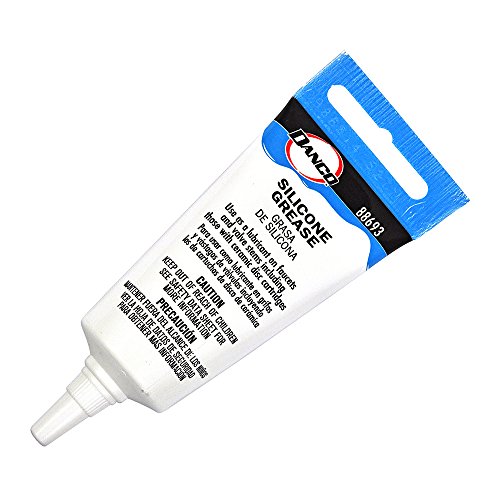
For faucet-specific work, this 0.5-ounce Danco tube focuses on stems, valves and cartridges rather than pool equipment. The maker says it is NSF 61 approved for use as a waterproof lubricant and safe for nitrite/rubber O-rings; it also gives a working range of -40°F to 400°F. Its odorless, colorless formula is intended for clean application. The small container suits occasional faucet repairs, but it may be a poor fit for frequent maintenance across multiple filters or pool components, where a larger container reduces the need to replenish supplies.
Bottom line: Choose this for faucet and valve repairs where its application and NSF 61 claim match your needs.
KEZE Pool Lube, 8 oz

The 8-ounce container is the largest of these options and is aimed at pool and spa maintenance, including filters, unions, salt cells and valves. The maker claims NSF approval and gives a temperature range of -40°F to 428°F, making its operating range wider at the upper end than the other products here. It is also described as compatible with most rubbers, plastics and polymers. Its pool-focused use and larger tub may be excessive for someone repairing a single faucet, so match the container and application to the work at hand.
Bottom line: Pick this for recurring pool or spa O-ring work that benefits from a larger tub.
KEZE Waterproof Silicone Grease, 1 oz

This 1-ounce option pairs a compact size with a broad mix of plumbing uses, including faucets, valve stems, cartridges, filters and toilet gaskets. The maker claims NSF H1 status and a -40°F to 400°F temperature range, and says the grease is water- and oxidation-resistant. It is also described as suitable for nitrite rubber O-rings. A small tube is practical for occasional household repairs, but it is less suited to maintaining several pool or spa components than the larger KEZE tub; choose based on the number and type of seals you expect to service.
Bottom line: Choose this for occasional household seal lubrication when a small tube and NSF H1 claim are priorities.
Captain O-Ring Silicone Grease, 1.76 oz

This 1.76-ounce container spans plumbing, faucets and valves as well as pool, spa, pump, marine and scuba uses. The maker identifies it as NSF H1 certified and gives a service-temperature range of -40°F to 400°F. Its high-viscosity formula is described as easy to apply and adhesive, with a claim that it will not harden or dry out. That breadth may suit people maintaining several kinds of equipment, but a single-purpose faucet repair may not need the extra application range; prioritize the specific seal and system requirements over the number of uses listed.
Bottom line: Select this when one grease is intended to cover plumbing and several other equipment types.
BTAS Silicone Grease, 1 oz

Among the 1-ounce choices, BTAS gives the highest upper temperature figure, with a range of -40°F to 428°F. Its maker lists O-rings, rubber seals, gaskets, cartridges, faucets, pool pumps and valves, and claims compatibility with a variety of polymers, plastics and rubbers. The grease is also described as colorless and food grade. The higher temperature limit may matter when choosing for a warmer operating environment, but the range alone does not establish compatibility with a particular seal material; verify that the grease suits the seal and system before applying it.
Bottom line: Consider this for a small tube with a upper range of 428°F, after checking seal compatibility.
How to choose silicone grease for plumbing O-rings
Start with the seal and system, then select a grease whose use and rating match them. A thin, even film is generally enough to lubricate an O-ring during assembly; excess grease can collect in small passages or attract debris. NSF 61 and NSF H1 describe different contexts: NSF 61 concerns products used in drinking-water system components, while H1 is for incidental food contact. One designation should not be treated as a substitute for the other. If the repair involves potable water, use the rating appropriate to that system and confirm the product is suitable for the seal material. For an ordinary faucet repair, favor a product explicitly intended for faucet stems, valves or cartridges over one focused only on pool equipment.
O-ring material and fit matter
Match lubricant to the O-ring material and the equipment maker’s requirements; an incompatible lubricant can damage a seal or compromise its fit. Plumbing seals commonly use elastomers such as EPDM or nitrile rubber, but replacement rings can vary by fixture and application. O-rings seal through compression, so a ring that is too large, too small or twisted can leak even when lubricated. Measure the old ring’s inside diameter and cross-section, or use the fixture’s part identification, rather than choosing by appearance alone. Keep the seal seated in its groove and avoid stretching it over sharp edges. Replace a cracked, flattened or permanently deformed ring instead of relying on extra grease to make it seal.
Silicone grease options by repair
Choose based on the application and the amount of work, not just the temperature range. The table compares the products’ stated uses and container sizes; temperature limits are not proof that a grease is right for every material or potable-water system. For occasional faucet service, a small tube aimed at faucet components is easier to store. For repeated pool-filter or spa work, a larger container is more practical. Check the system’s required approval before using any lubricant in drinking-water equipment.
| Repair need | Product fit | Container |
|---|---|---|
| Faucet stem or cartridge | Faucet-specific grease | 0.5 oz to 1 oz |
| Pool filter or spa parts | Pool/spa-focused grease | 8 oz |
| Several equipment types | Multipurpose grease | 1.76 oz |
Applying grease without damaging seals
Clean the groove and O-ring before assembly, then spread only a light coating over the seal. Grit trapped under an O-ring can scratch mating surfaces, while a twisted or pinched ring can leak after reassembly. Do not use petroleum jelly or petroleum-based grease as a substitute unless the equipment maker expressly approves it; petroleum products can swell or degrade some rubber seals. Keep grease out of water passages and electrical contacts, and wipe away excess. For potable-water systems, choose a product with the relevant system approval and follow fixture-specific guidance. If a new seal still leaks, inspect its size, material and seating rather than adding more lubricant.
Frequently Asked Questions
How much silicone grease should go on a plumbing O-ring?
Apply a thin, even film over the O-ring rather than filling its groove with grease. Excess lubricant can collect in narrow passages or attract debris, and it cannot correct a damaged or mismatched seal.
Can silicone grease be used on drinking-water plumbing?
Use only a grease with an approval appropriate to the drinking-water system. NSF 61 and NSF H1 address different uses, so an H1 food-contact claim alone should not be assumed to meet a system’s NSF 61 requirement.
Can petroleum jelly lubricate plumbing O-rings?
Avoid petroleum jelly unless the fixture maker approves it for the particular seal. Petroleum-based products can swell or degrade some rubber O-rings; use a compatible lubricant instead.
How do I know what size replacement O-ring to buy?
Measure the ring’s inside diameter and cross-section, or identify the fixture’s specified replacement part. A ring that is twisted, stretched or poorly matched can leak even when lubricated.
When should a plumbing O-ring be replaced?
Replace an O-ring that is cracked, flattened, brittle or permanently deformed. A light grease film helps assembly, but it cannot restore the ring’s shape or repair damage.