
Best Fenders for Gravel Bikes: 4 Sets Compared

SKS Speedrocker XL is the best choice for most gravel riders because it fits tires up to 52 mm wide, wider than the other full sets here. Gravel fenders are guards that limit spray from wet roads and trails; choose a narrower option if your tires are 42 mm or less and you want a lighter set.
We earn a commission if you buy through links on this page. As an Amazon Associate I earn from qualifying purchases. Products are compared on manufacturer specifications, not hands-on testing.
- Best overall: SKS Speedrocker XL – Its 57 mm fender width accommodates tires up to 52 mm, the widest fit range among these sets.
- Best for quick removal: SKS Speedrocker – Rubber straps and hook-and-loop fasteners attach the set without a permanent mount.
- Best for full coverage: RBRL Quick-Release Fender Set – The front and rear guards are lengthened and widened, with a fit range of 28–45 mm.
| Product | Best for | Tire width fit | Wheel compatibility | Weight | Shop |
|---|---|---|---|---|---|
| SKS Speedrocker XL | Wide gravel tires | Up to 52 mm | 700c and 650b | 454 g | Check Price on Amazon |
| SKS Speedrocker | Removable coverage | Up to 42 mm | 700c and 650b | 508 g | Check Price on Amazon |
| RBRL Quick-Release Fender Set | Adjustable fit | 28–45 mm | 28-inch | 150 g | Check Price on Amazon |
| ENLEE Reflective Fender Set | Narrow tires | 23–35 mm | — | — | Check Price on Amazon |
Gravel Bike Fenders Compared
Compare tire clearance, wheel compatibility and mounting style against your bike before choosing a set.
SKS Speedrocker XL

SKS Speedrocker XL accommodates the widest tires in this comparison: up to 52 mm, with a 57 mm fender width. The set has a 500 mm front guard plus a 210 mm extension and a 950 mm telescoping rear guard, giving it long coverage for wet gravel roads. It fits 700c and 650b wheels, and the pair weighs 454 g. The key limitation is brake compatibility: the maker specifies disc brakes only, so riders with rim brakes should choose another set. Check the tire and brake fit before ordering.
Bottom line: Choose this set if your gravel bike has disc brakes and tires wider than 42 mm.
SKS Speedrocker

SKS Speedrocker is the removable option in this group, attaching with rubber straps and hook-and-loop fasteners rather than a permanent mounting system. Its maker gives a tire limit of 42 mm and compatibility with 700c and 650b wheels. The front assembly measures 500 mm plus a 210 mm section, while the rear guard telescopes to 950 mm. The pair weighs 508 g. Riders with tires wider than 42 mm should look to a wider set; fender clearance also needs to account for mud and debris, not just the tire itself.
Bottom line: Pick this set if you want strap-on fenders and run tires no wider than 42 mm.
RBRL Quick-Release Fender Set

RBRL Quick-Release Fender Set covers a different tire range from the SKS sets, fitting tires from 28 to 45 mm and using a 28-inch size. The front guard measures 35.8 cm long and 5.5 cm wide; the rear is 53.1 cm long and 6.5 cm wide. Its PP construction is described by the maker as pressure-resistant and elastic, and the set is presented as quick-release and adjustable. The weight converts to about 150 g. The fit range does not confirm mounting compatibility with every frame, so verify your attachment points if your bike has limited clearance.
Bottom line: Choose this set for a 28-inch gravel bike with tires between 28 and 45 mm.
ENLEE Reflective Fender Set
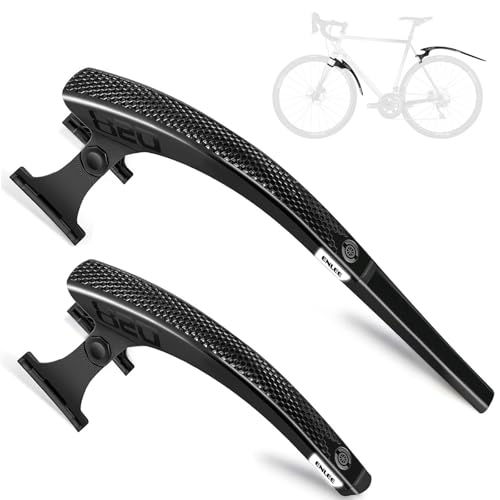
ENLEE Reflective Fender Set is the narrow-tire choice here, fitting 23–35 mm tires and requiring disc brakes. The maker supplies two installation methods for the rear wheel, including cable ties, plus anti-slip mats intended to protect the frame from scratches. Reflective marks appear on both sides of each fender. This range can suit a gravel bike set up with narrower road-style tires, but it will not fit tires wider than 35 mm. Wheel size and total set weight are not given as product specifications here, so check your bike’s tire width and mounting arrangement before choosing it.
Bottom line: Pick this set for a disc-brake gravel bike running tires no wider than 35 mm.
How to Choose Gravel Bike Fenders
Start with tire width, then check wheel size, brake type and the space available around the tire. A fender needs room beyond the tire itself: mud and small stones can clog a tight gap, so do not treat a maximum tire width as proof that every frame has enough clearance. A practical rule is to leave roughly 10–15 mm between tire and fender where the frame and mounting allow it, especially for muddy trails. Also check whether the bike has eyelets or needs strap-on mounting; a removable strap system can work where permanent fender mounts are absent. Choose longer guards if keeping spray off your back and drivetrain matters more than quick removal.
Gravel Fender Fit and Tire Clearance
Fender fit depends on actual tire width, not only the number printed on the sidewall: tires can measure wider or narrower on different rims. Measure the inflated tire at its widest point, then compare that number with the fender’s limit. Leave extra room for mud, gravel and wheel flex rather than aiming for a close fit. The sets here span 23–52 mm, so a 45 mm tire rules out the 23–35 mm and 42 mm options; a tire above 52 mm falls outside every fit range shown. Confirm brake compatibility as well: a set designed only for disc brakes will not suit a rim-brake bike.
Full-Coverage and Removable Gravel Fenders
Full-coverage fenders use longer guards to intercept spray from more of the wheel, while strap-on designs prioritize fitting and removal without dedicated mounting hardware. Longer coverage can help on sustained wet roads, but the frame still needs adequate space around each tire. Removable attachment is useful for riders who switch between dry-weather and wet-weather setups; straps and hook-and-loop fasteners can be removed more readily than hardware mounted to frame eyelets. For a quick choice, match the main need to the fender style:
| Riding need | What to prioritize |
|---|---|
| Wide tires | Stated clearance above your measured tire width |
| Frequent removal | Strap or hook-and-loop attachment |
| Less spray exposure | Long front and rear guards |
Fit and clearance remain decisive even when a fender style suits your riding.
Installing and Using Gravel Bike Fenders
Before installation, check that the fender cannot touch the tire, brake, fork or frame as the wheel turns. A tire can collect debris in wet gravel, so remove packed mud before it wedges between the tire and guard. Secure any straps or ties so they cannot reach the spokes; a loose fender or fastener near a moving wheel is a safety hazard. After fitting, spin each wheel by hand and inspect the gap at several points around the tire. Recheck attachment after the first ride and after rough roads, since vibration can shift removable mounts. Never ride with a fender rubbing the tire or obstructing a brake.
Frequently Asked Questions
How much clearance should gravel bike fenders have?
Aim for about 10–15 mm between tire and fender where the frame allows it, with more room useful in muddy conditions. Check clearance around the full wheel because tire shape and wheel flex can make one tight spot decisive.
Can gravel bike fenders fit wider tires?
Only if the fender’s tire limit and the bike’s frame clearance both allow it. Measure the inflated tire; a tire wider than 52 mm exceeds the largest limit among these sets.
Do gravel fenders work with disc brakes?
Many can, but compatibility is set-specific: some use frame or fork mounts, while others strap on, and the SKS Speedrocker XL is specified for disc brakes only. Confirm the fender avoids the caliper, rotor and moving wheel before riding.
Are removable gravel fenders stable on rough roads?
Strap-on fenders can shift under vibration, so secure every attachment point and check alignment after rough sections. A fender that can touch a tire or spokes should be adjusted before riding.
When should gravel bike fenders be cleaned?
Rinse off mud and grit after wet or dirty rides, especially from the space between the tire and guard. Debris trapped there can rub the tire or reduce clearance on the next ride.